Acemannan 101: Why This Aloe Component Matters in a Daily Supplement
Acemannan—not just 'aloe'—is the inner-leaf compound behind immune, gut and antioxidant support; check labels and processing.

If you buy an aloe supplement, the part you want to check is acemannan - not just the word “aloe” on the label.
I’d boil the whole article down to this:
- Aloe vera is the plant. Acemannan is one of its main inner-gel compounds.
- Not all aloe products contain much acemannan.
- Processing matters, because heat and harsh drying can change the compound.
- Daily-use research mostly points to immune support, gut support, and antioxidant activity.
- Aloin is the part to avoid for daily use, since it comes from the latex layer and acts as a stimulant laxative.
- The best labels usually show inner-leaf sourcing, low-aloin processing, and acemannan listed in mg or as a %.
Here’s the short version in plain English: if I wanted an aloe supplement for daily use, I’d look for stabilized inner-leaf aloe, low aloin, and a label that tells me how much acemannan is in each serving. A vague claim like “200:1 aloe” does not tell me that.
A few fast facts from the article:
- Aloe contains 75+ identified compounds
- Common labeled acemannan doses fall around 100 mg to 600 mg per day
- Acemannan may reach the colon and be fermented into SCFAs like butyrate, which helps support the gut lining
- A lot of the big disease-related claims come from animal and lab studies, not routine human supplement use
If you just want the bottom line, it’s this: the label, the source, and the processing tell you more than the word “aloe” ever will.
Acemannan: Aloe's Primary Active Polysaccharide
Acemannan matters because its structure shapes what it does in the body. In plain English, the aloe label by itself doesn't tell you much. The form of the compound is what counts.
What Acemannan Is Made Of
Acemannan is a mannose-rich polysaccharide with acetyl groups that affect its solubility and biological activity. Those acetyl groups are a big deal. When they’re removed, acemannan becomes less soluble and less active.
"The acetyl groups are considered important for bioactivity and stability, and processing can affect this structure." - Yingjie Bai et al., School of Stomatology, Dalian Medical University
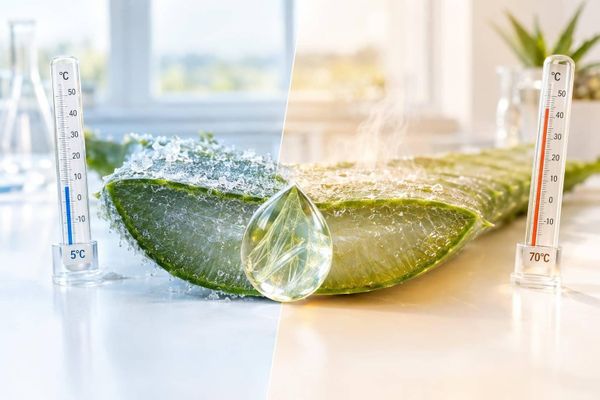
Heat and drying can strip away those acetyl groups and reduce activity. That helps explain why acemannan can interact with the immune system and the gut.
How Acemannan's Structure Drives Its Biological Activity
Its structure lets it interact with immune receptors such as CD206 and TLR-2/TLR-4, which helps support innate immune signaling. It also makes it through digestion, can reach the colon, and may act as a prebiotic. That’s why processed aloe and actual acemannan content matter in products people use every day.
sbb-itb-b88dd21
What Research Says About Acemannan's Wellness Benefits
For day-to-day use, the main takeaways land in three buckets: immune support, gut support, and antioxidant support. The big thing to sort out is what the research actually suggests for a daily supplement routine.
Immune Support and Balanced Immune Response
Acemannan helps with immune-cell signaling, including macrophages, T cells, and cytokine release. It also promotes M2 polarization in macrophages, which points to a more balanced immune response.
"Acemannan could regulate macrophage activation by targeting the PI3K/Akt/GSK-3β signaling pathway, enhancing macrophage M2 polarization and phagocytosis." - Yingjie Bai, School of Stomatology, Dalian Medical University
Some of the headline-grabbing findings, like antitumor activity, radiation protection, and antiviral effects, mostly come from animal studies and cell-culture work rather than routine human supplement use. So for daily use, the plain-English takeaway is immune support, not disease treatment.
Gut Health, Mucosal Support, and Prebiotic Potential
This polysaccharide activity matters in the gut too. When acemannan reaches the colon, gut microbes ferment it into short-chain fatty acids, or SCFAs, such as acetate, propionate, and butyrate. Butyrate helps support intestinal barrier integrity and mucosal health. That same fermentation also supports helpful bacteria like Bifidobacterium and Lactobacillus.
For someone taking it daily, that points to support for gut microbial balance and intestinal barrier health.
Antioxidant Activity and Tissue Resilience
Acemannan scavenges free radicals and helps reduce reactive oxygen species (ROS). It also promotes fibroblast proliferation and collagen synthesis. In practical terms, those actions may support mucosal and skin repair, though much of the evidence comes from topical and dental wound-healing research.
The table below turns those mechanisms into simple daily-use takeaways.
| Benefit Area | Primary Mechanism | Realistic Daily Wellness Outcome |
|---|---|---|
| Immune Support | Macrophage, dendritic cell, and T-lymphocyte activation | Immune support |
| Gut Health | Prebiotic fermentation and SCFA production | Gut support |
| Antioxidant | Free-radical scavenging and ROS reduction | Antioxidant support |
How to Choose an Aloe Supplement With Real Acemannan Content
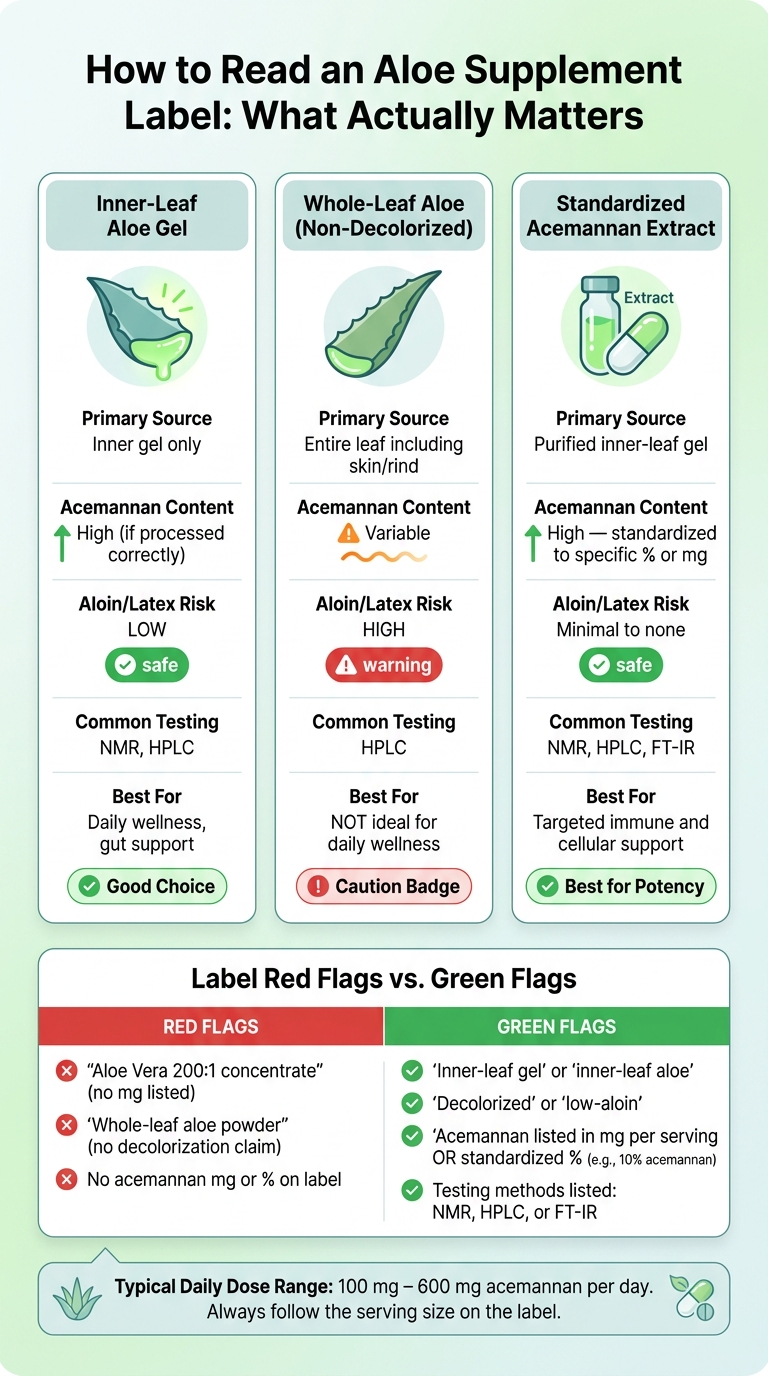
Aloe Supplement Label Comparison: Inner-Leaf vs. Whole-Leaf vs. Standardized Acemannan
A good aloe supplement is more than just “aloe vera.” What matters is whether the product keeps acemannan intact and keeps aloin low. And that’s where things get messy: two aloe labels can look almost the same while giving you very different acemannan levels. So if you want actual acemannan - not just nice packaging - the label is where the truth shows up.
Look for Stabilized Inner-Leaf Aloe and Low-Aloin Processing
Start with the source. Look for “inner-leaf gel” on the label, along with “decolorized” or “low-aloin.” Those terms usually mean the product was made to reduce the latex-rich outer parts of the plant.
If a product only says “aloe vera powder” or “whole-leaf aloe,” that’s a red flag unless it also says it was specifically decolorized. Why? Because whole-leaf products may include the outer rind and latex.
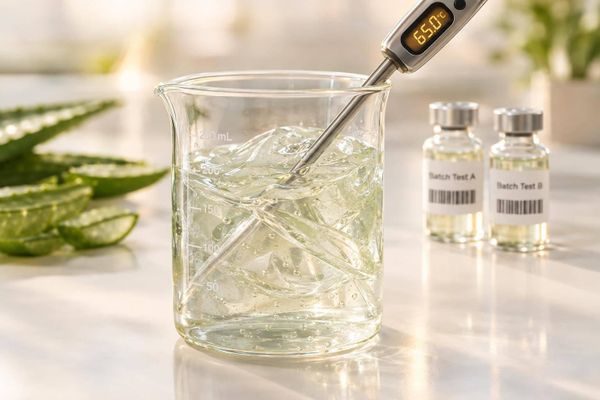
Processing matters too. Freeze-dried or low-heat stabilized aloe is a better bet, since heat can reduce acemannan activity.
Once you know where the aloe came from and how it was processed, the next thing to check is simple: how much acemannan are you actually getting?
Check Acemannan Amount, Purity, and Testing Claims on the Label
This is where many labels get vague. You’ll often see something like “Aloe Vera 200:1 concentrate.” Sounds strong, right? Not so fast. A concentration ratio by itself doesn’t tell you how much acemannan is in a serving.
What you want is a clear number in the Supplement Facts panel, such as:
- A stated acemannan amount in mg per serving
- A standardization claim, like “10% acemannan”
That kind of detail matters because some commercial powders contain much less acemannan than people expect. If the label doesn’t give a mg amount or a standardization percentage, you’re mostly guessing.
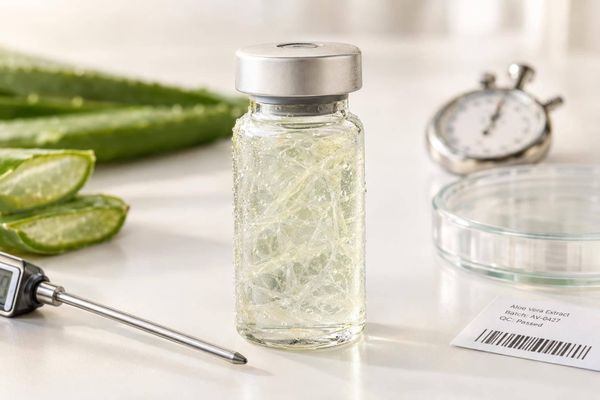
Testing claims can help too. Useful terms to look for include NMR, HPLC, or FT-IR. Those don’t guarantee a good product on their own, but they do suggest the company is at least trying to measure what’s in the bottle.
Aloe Supplement Label Comparison Table
The table below makes shelf labels a lot easier to read.
| Label Feature | Inner-Leaf Aloe Gel | Whole-Leaf Aloe (Non-Decolorized) | Standardized Acemannan Extract |
|---|---|---|---|
| Primary Source | Inner gel | Entire leaf including skin | Purified inner-leaf gel |
| Acemannan Content | High (if processed correctly) | Variable | High (standardized to a specific % or mg) |
| Aloin/Latex Risk | Low | High | Minimal to none |
| Common Testing | NMR, HPLC | HPLC | NMR, HPLC, FT-IR |
| Typical Fit | Daily wellness, gut support | Not ideal for daily wellness | Targeted immune and cellular support |
Once you’ve decoded the label, the next thing to check is serving size and day-to-day safety.
Daily Use Considerations and Key Takeaways
Typical Daily Serving Ranges and Product Forms
Once you’ve confirmed that the label lists actual acemannan content, the next step is simple: look at the dose, the form, and how the product is kept stable.
Common labeled doses usually fall between 100 mg and 600 mg per day, though the right amount depends on the product’s concentration and formula. The safest move is to follow the serving size printed on the label.
Form matters too. It can change how easy the product is to use and how well it holds up over time.
- Capsules are easy to measure and use.
- Powders give you more flexibility for mixing.
- Liquids can be convenient, but they may need refrigeration or added stabilization and often have a shorter shelf life.
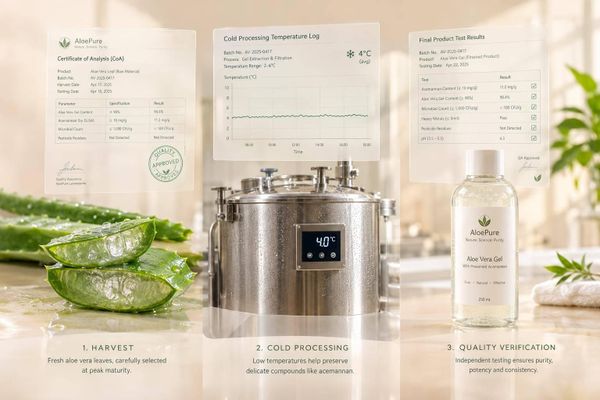
If you want acemannan better preserved, look for cold-processed or freeze-dried forms.
After dose and form, safety is the next thing to check.
Who Should Check With a Doctor Before Using Acemannan
Check with a healthcare provider before use if you are pregnant, breastfeeding, managing diabetes, have gastrointestinal disease, take prescription medications, or have autoimmune or immune-related concerns, since acemannan acts as an immunomodulator and can affect glucose response and gut motility.
Conclusion: Why Acemannan Stands Out as a Daily Supplement Ingredient
Acemannan is the main active polysaccharide in Aloe vera inner gel, and that’s a big reason aloe has drawn serious research interest. The research points to roles in immune balance, gut mucosal support, prebiotic activity, and antioxidant-related wellness - but there’s a catch. Those effects depend on whether the acemannan in the product is still intact and bioactive.
Its use as a daily supplement ingredient comes from its documented immunomodulatory, antioxidant, and gut-support activity. But none of that means much if sourcing and processing are poor.
In plain English, three things matter most: stabilized inner-leaf sourcing, a label that states acemannan content in mg or gives a standardized acemannan claim, and daily consistency. Pick a stabilized inner-leaf product with a clear acemannan claim and a serving size you can stick with day after day.
FAQs
How can I tell if an aloe supplement really contains acemannan?
Look for 100% pure inner-leaf extract. That’s the part where acemannan is most concentrated. Skip whole-leaf powder if you can, since it may contain less acemannan and more unwanted anthraquinones.
It also helps to check how the product was made. Cold-extracted or cold-processed methods are usually a better bet, since heat can affect the final material. And don’t stop at the label. Look for acemannan standardization, plus third-party testing or a Certificate of Analysis (COA) to verify potency and purity.
Is acemannan the same as aloe vera?
No. Aloe vera is the plant. Acemannan is one specific bioactive polysaccharide found inside it.
Put simply, they’re not the same thing.
Aloe vera contains many different compounds, and acemannan is one of the main active components. It’s found mostly in the inner leaf gel.
Why is low aloin important for daily use?
Low aloin matters for daily use because aloin comes from the aloe plant’s outer rind and latex layer. In larger amounts, or when used over time, it can lead to digestive upset and laxative effects.
Higher intake has also been linked to safety concerns involving the liver, kidneys, and reproductive health. Choosing aloin-free inner-leaf aloe helps you get acemannan without those risks.