Acemannan for Gut Health: Evidence and Insights
Lab evidence says acemannan may feed beneficial microbes and support gut barrier; human data remain limited.

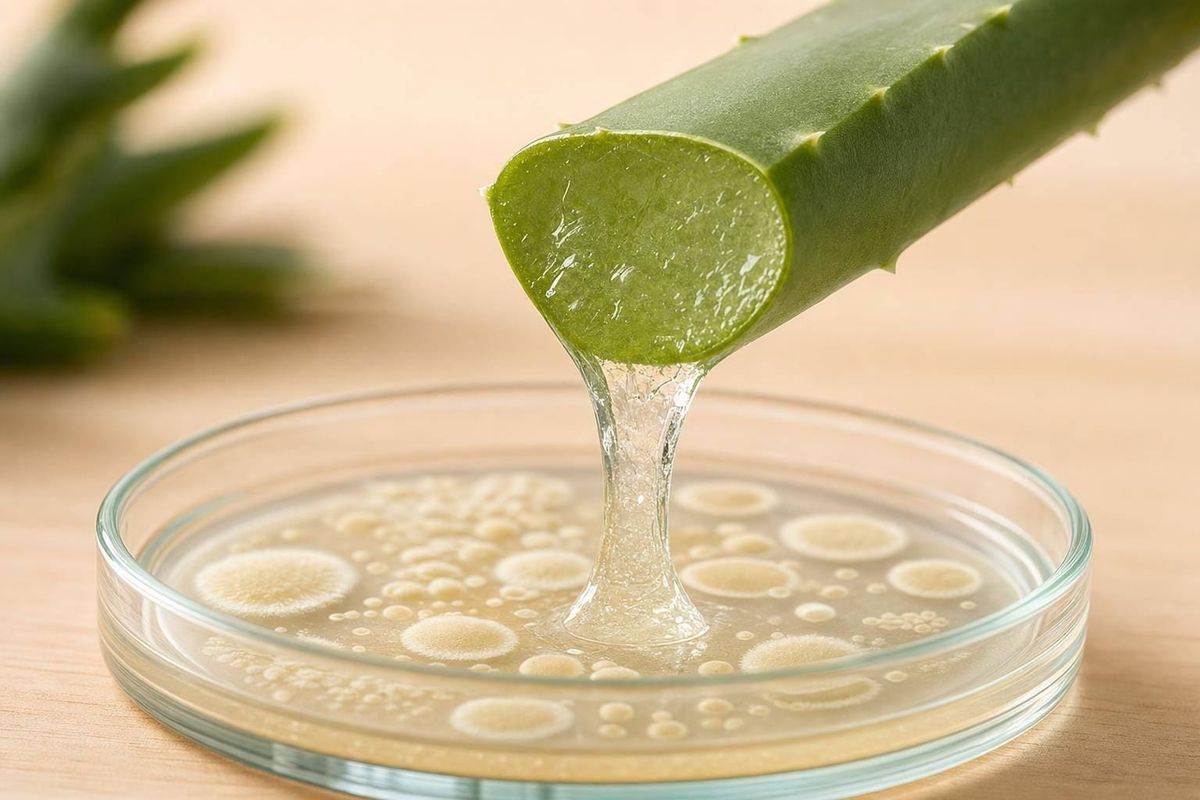
If you want the short answer: acemannan looks promising for gut health, but human proof is still limited. From what I see in the research, the best-supported points are inner-leaf aloe gel, lab signs of SCFA production, possible gut barrier support, and one small human trial in ulcerative colitis. What it does not show yet is clear proof that acemannan helps most gut problems in day-to-day use.
Here’s the article in plain English:
- What it is: acemannan is the main polysaccharide in the clear inner gel of Aloe vera
- What may happen in the gut: it may help with post-meal comfort, gut lining support, immune signaling, and microbe fermentation
- What lab studies found: more SCFAs like acetate and butyrate, lower colon pH, and shifts in gut bacteria
- What human studies found: some support for digestive comfort and a small trial in ulcerative colitis, but not enough for broad claims
- What matters for safety: use decolorized, purified inner-leaf aloe, not latex-containing aloe
- What matters for shopping: product form and processing matter more than price; some aloe drinks have very little acemannan
A few numbers stand out. One trial used 1 gram of acemannan in aloe juice and found lower post-meal blood fats. In lab and animal work, researchers also saw changes in tight junction markers and gut permeability. But most of that evidence is still from cells, mice, or fecal fermentation models - not large human trials.
So my takeaway is simple: acemannan has a decent early research story, but the human data is still thin. If you’re considering it, focus on standardized inner-leaf products, keep expectations modest, and be extra careful with any aloe product that may contain latex or aloin.
How Acemannan May Act in the Gut
Researchers are looking at how oral acemannan may affect digestion, the gut barrier, and immune signals.
Effects on Digestion, Sugar Absorption, and Post-Meal Comfort
Acemannan may slow starch digestion and soften the usual rise in blood sugar and blood fats after eating. In one randomized crossover trial, Aloe vera juice enriched with 1 gram of acemannan led to lower postprandial serum triglycerides and free fatty acids after a high-fat meal. Participants also reported feeling fuller and less hungry.
That’s interesting because it points to a possible how behind the effect, not just a surface-level result. Still, this was a dose-specific finding in a controlled setting. It does not yet show broad symptom relief across digestive disorders.
That brings up the next piece of the puzzle: can acemannan also help the gut lining itself?
Gut Lining Support and Immune Signaling
Preclinical work suggests acemannan may help support the intestinal barrier, which helps keep gut contents from leaking into the bloodstream. A study from Gachon University found that processed aloe vera gel (PAG) at 400 μg/mL strengthened tight junctions in Caco-2 human intestinal cells by increasing expression of the scaffold protein zonula occludens (ZO)-1. In a separate animal study, oral PAG at 143 mg/kg per day for 10 days lowered intestinal permeability in older mice, based on the urinary lactulose/mannitol ratio.
Acemannan fragments may also interact with mannose receptors on gut immune cells. That interaction could lower inflammatory signaling and shift immune activity toward a less inflammatory state. Another study ties acemannan to serotonin-related signaling: acemannan promoted the conversion of tryptophan into 5-HT (serotonin) through the microbiota-TPH1 axis, which helped regulate intestinal stem cell function and barrier integrity.
Taken together, these preclinical pathways suggest acemannan may act on the gut lining through several overlapping routes. These include MAPK/ERK-driven tight junction support, Wnt/β-catenin epithelial repair, and microbiota-TPH1-5-HT signaling.
Microbiome fermentation studies point to another possible route, which the next section examines.
sbb-itb-b88dd21
What Studies Show About the Microbiome and SCFAs
Fermentation Results from Lab-Based Research
Beyond its effects on the gut lining, acemannan may matter for another reason: microbes can ferment it in the colon. Put simply, there may be two paths here. One involves gut barrier support. The other involves what gut bacteria do with acemannan once it reaches the lower digestive tract.
Acemannan moves through the upper gut mostly intact. Once it reaches the colon, microbes can use it as a substrate. Lab work has shown a fairly steady pattern.
In in vitro fecal fermentation models that used human donor samples, acemannan led to a measurable drop in colon pH and a significant increase in short-chain fatty acids (SCFAs), especially acetate, butyrate, and 2-methyl-butanoic acid. Those SCFAs help feed colon cells and may support barrier function, though that part is still based on lab data.
A 2025 multi-omics study using fecal samples from 30 healthy volunteers found that acemannan selectively increased Bacteroides uniformis, which researchers identified as a primary degrader of the polysaccharide. The same study also found increases in Faecalibacterium prausnitzii and Parabacteroides distasonis. At the same time, opportunistic bacteria such as Escherichia-Shigella and Fusobacteriaceae went down, and the study reported lower levels of potentially harmful metabolites.
Mouse colitis models line up with that same pattern. Researchers saw increases in Akkermansia and Blautia, along with sustained SCFA production.
That sounds a lot like prebiotic activity. But there’s a catch: the human evidence is still thin.
What Prebiotic Potential Does and Does Not Mean
These findings point to prebiotic-like effects, not clinical proof. That distinction matters.
Human trials on acemannan have mostly looked at digestive comfort and satiety, not detailed microbiome sequencing. So while fecal fermentation models show specific shifts in bacteria, direct proof that the same shifts happen in living people, at scale, is still limited. The lab results are promising and they line up well across studies, but large human microbiome trials haven’t confirmed them yet. And just as important, these findings do not yet prove symptom relief in people.
Here’s what the current evidence shows, where it comes from, and how far it goes:
| Outcome | Observed Changes | Model Used | Strength of Evidence |
|---|---|---|---|
| Bacterial Growth | Increased Faecalibacterium, Bacteroides, Prevotella, Lachnospiraceae, and Coprococcus in vitro; increased Akkermansia and Blautia in mice; decreased Escherichia-Shigella and Veillonella | In vitro fecal fermentation (human donors) and mouse colitis models | Consistent in lab models |
| SCFA Production | Significant increase in total SCFAs, especially acetate; decrease in pH | In vitro fermentation and mouse models | Consistent across lab and animal models |
| Metabolite Profile | Increased 5-HT (serotonin); decreased indole, p-cresol, and BCFAs | Mice and in vitro | Early |
| Human Microbiome | Digestive comfort/satiety reported; microbiome data sparse | Human clinical trials | Limited human data |
The big open issue is simple: do these microbial shifts lead to measurable effects in people? Right behind that is another question - will human trials show the same microbiome pattern seen in the lab?
Human Evidence, Limits, and Safety
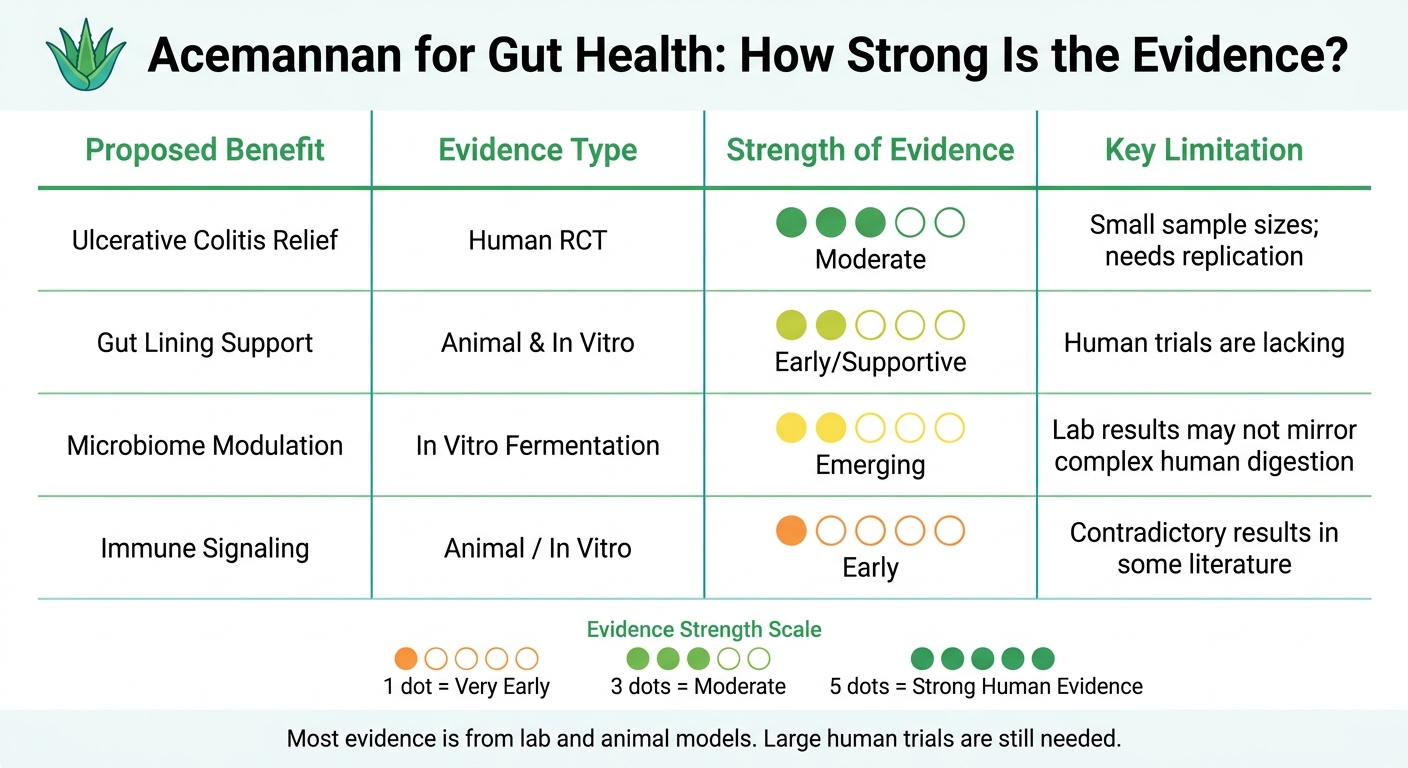
Acemannan for Gut Health: Evidence Strength by Benefit
What Human Studies Suggest About Digestive Comfort
Human research is still pretty thin compared with lab work. The clearest finding comes from a small randomized trial in ulcerative colitis: oral aloe gel helped improve remission and tissue scores.
That said, there’s an important detail here. The study used purified inner-leaf gel, not aloe products that contain latex. For other digestive uses, the evidence is still in the early stage.
Where the Evidence Is Still Early
Most of the data still comes from animal studies and lab work. Dose also matters. Barrier effects appear to change based on how much aloe is used: lower doses may help support tight junctions, while much higher doses may open them.
| Proposed Benefit | Evidence Type | Strength of Evidence | Key Limitation |
|---|---|---|---|
| Ulcerative Colitis Relief | Human RCT | Moderate | Small sample sizes; needs replication |
| Gut Lining Support | Animal & In Vitro | Early/Supportive | Human trials are lacking |
| Microbiome Modulation | In Vitro Fermentation | Emerging | Lab results may not mirror complex human digestion |
| Immune Signaling | Animal/In Vitro | Early | Contradictory results in some literature |
Safety Points for U.S. Readers
If you're looking at oral aloe, the big split is inner-leaf gel versus whole-leaf or latex-containing products. Aloe latex contains anthraquinones like aloin. Those compounds can cause diarrhea and, with regular use, lead to potassium depletion and possible kidney stress.
When checking a label, look for terms like:
- "decolorized"
- "purified inner-leaf gel"
- a charcoal-filtered processing method
People with diabetes should keep an eye on blood sugar, since aloe polysaccharides may have a hypoglycemic effect. And if you have kidney issues or a GI condition already, it’s smart to talk with a healthcare provider before starting. This matters even more if you take medications, because aloe has been flagged as a potential drug enhancer at high doses and may increase medication absorption.
Pregnant women, and anyone with undiagnosed abdominal pain, should avoid latex-containing aloe products. For regular oral use, that product difference matters a lot.
How Acemannan-Containing Aloe Products May Fit Into a Wellness Routine
Choosing Oral Aloe Forms That Contain Acemannan
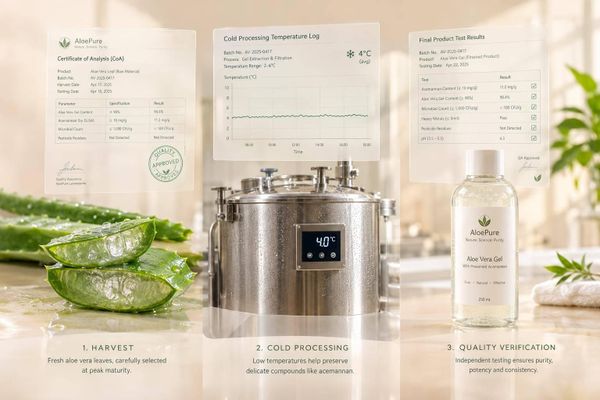
Acemannan levels can vary a lot from one aloe product to another. So when you look at the research, the product itself matters just as much as the findings. Not every aloe drink or supplement gives you a measurable amount of acemannan, and the way the aloe is processed can make a big difference. One thing that stands out: price is not a good clue. In commercial aloe beverages, a higher price does not mean more acemannan.
The oral forms most likely to contain measurable acemannan are decolorized inner-leaf gel, >99% inner-leaf aloe juice, and powders standardized for polysaccharides. By contrast, flavored aloe drinks - often made with 30% to 77% aloe - tend to contain less than 30 mg of acemannan per 100 g and often consist mostly of non-acemannan solids.
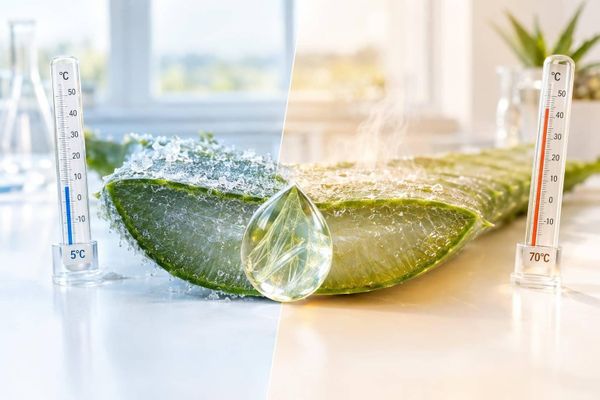
That’s why labels and processing details matter so much. A better label will tell you the amount of acemannan or total polysaccharides in milligrams (mg) per serving, instead of just listing a vague aloe extract. This matters because bioactivity depends on both the amount of acemannan and its acetylation. High-heat steps, including pasteurization, can reduce it.
Study-Informed Amounts and Realistic Expectations
There still isn’t a firm acemannan-specific dose for gut health. Even so, published human studies give a useful reference point for liquid forms. If you’re looking at a powder, it helps to choose one that lists the amount of polysaccharides in mg per serving.
It also helps to be realistic here. This isn’t the kind of supplement where you should expect an overnight shift. If someone uses it, consistency matters. A few weeks of regular use makes more sense than judging it after a day or two, especially for changes in comfort or regularity.
Conclusion: What Is Supported, What Is Uncertain, and What Comes Next
The main takeaway is pretty simple: standardized inner-leaf products line up best with the research. Acemannan has gut-related actions that make sense on paper, including fermentation, SCFA production, and support for tight junctions. In human research, the clearest signal still comes from purified inner-leaf aloe gel in ulcerative colitis.
Past that point, things get less settled. A lot of the evidence still comes from lab work. Microbiome findings look promising, but fermentation studies don’t always map neatly onto what happens in human digestion. Right now, the part consumers can control most is product quality, form, and steady use.
What the field still needs is better human trials with larger sample sizes, standardized acemannan doses, and longer follow-up periods before stronger claims make sense.
FAQs
Can acemannan survive digestion and reach the colon?
Yes. Acemannan isn’t absorbed into the bloodstream to any major degree, so it passes through the digestive tract and reaches the colon, where it works at the local level.
Once there, it can act as a prebiotic. Gut microbes may ferment it into short-chain fatty acids, which may help support beneficial bacteria and the intestinal lining.
How can I tell if an aloe product has meaningful acemannan?
Look for labels that mention inner-leaf extraction. That’s the part of aloe where acemannan is found.
Quality can shift a lot based on how the aloe is extracted and processed. So it helps to choose products that are lab-verified or standardized for acemannan content.
You’ll also want to check for latex-free or decolorized on the label. That usually means anthraquinones have been removed while the inner-leaf polysaccharides are kept in place.
Who should avoid acemannan-containing aloe products?
People who are pregnant or nursing should talk with a clinician before using aloe products that contain acemannan. The same goes for people with chronic inflammation. If you're thinking about adding it to your routine, get medical guidance first.
Also, avoid unprocessed aloe latex. It contains anthraquinones that have been linked to safety risks, including dehydration and electrolyte imbalances. A safer pick is an inner-leaf product standardized for low aloin content, which may help lower the chance of digestive irritation.