How Acemannan Supports Immune System Function
Acemannan activates immune cells, balances cytokines, supports gut and wound healing, and guidance on choosing effective aloe vera.

Acemannan, a key compound found in aloe vera, offers several ways to support your immune system. It activates immune cells like macrophages, dendritic cells, T cells, and NK cells, helping your body defend against pathogens. It also regulates cytokine production to balance inflammation and promotes gut health by encouraging beneficial bacteria. Research highlights its role in antiviral defense, wound healing, and even as a potential vaccine booster. To get the most out of acemannan, choose cold-processed aloe vera products labeled "100% Pure Inner Leaf" to preserve its effectiveness. Daily doses of 100–500 mg are generally safe and can be incorporated into your routine for immune support.
How Acemannan Works with the Immune System
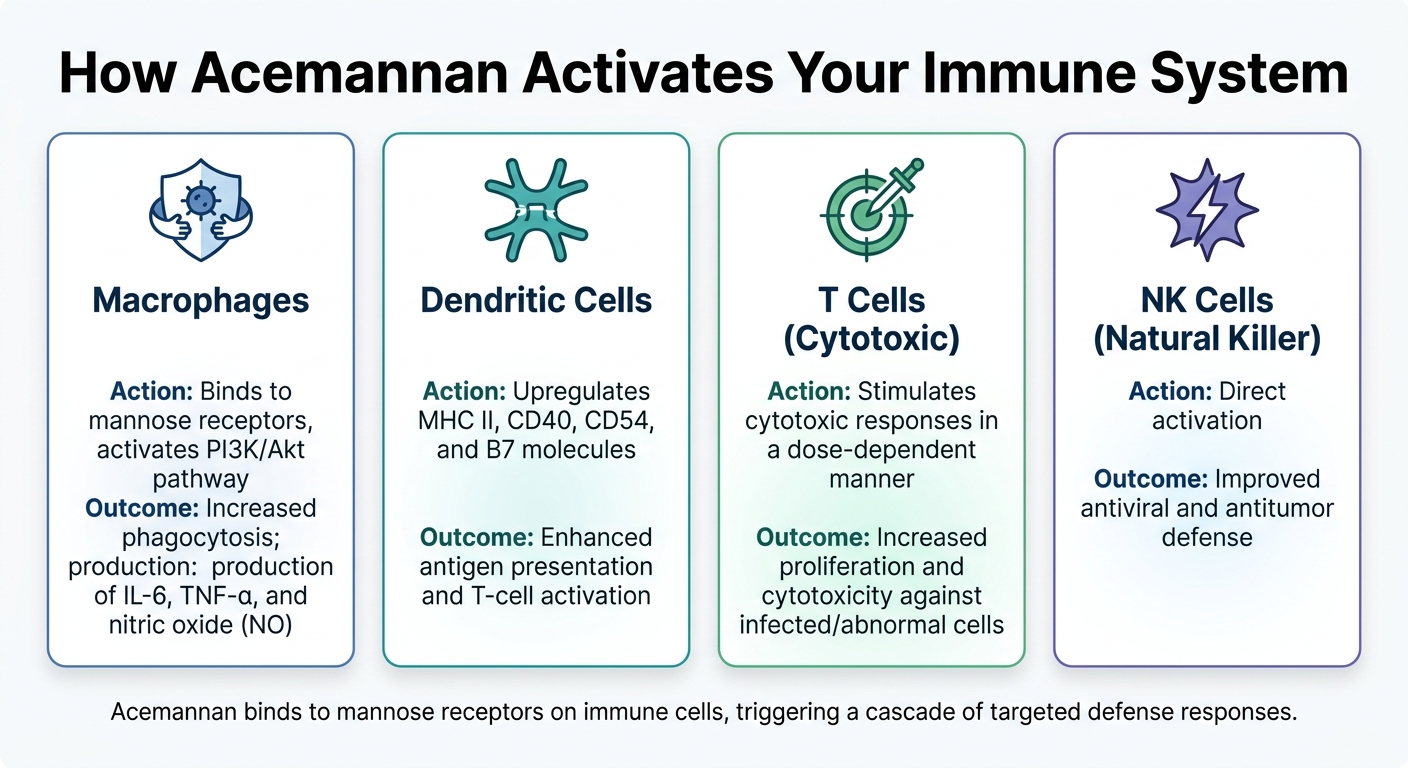
How Acemannan Activates Your Immune System
Acemannan interacts with the immune system at the cellular level, binding to mannose receptors on immune cells and setting off a series of defense mechanisms. This interaction activates immune cells, preparing them to combat potential threats.
How Acemannan Activates Immune Cells
Acemannan plays a role in activating several types of immune cells, including macrophages, dendritic cells, cytotoxic T cells, and natural killer (NK) cells.
- Macrophages are the immune system's frontline defenders. When acemannan binds to their mannose receptors, it stimulates these cells to engulf and destroy pathogens through phagocytosis. Additionally, macrophages release nitric oxide (NO), a molecule that helps eliminate harmful invaders. This effect becomes even stronger when acemannan works alongside interferon-gamma (IFN-γ).
- Dendritic cells serve as a bridge between the innate and adaptive immune systems. Acemannan encourages their maturation by increasing the expression of surface molecules critical for antigen presentation and T-cell activation.
"Acemannan induces maturation of DCs in vitro... evidenced by up-regulation of class II MHC molecules and co-stimulatory molecules such as B7-1, B7-2, CD40 and CD54." - Myung Koo Lee et al., International Immunopharmacology
- Cytotoxic T cells are stimulated by acemannan in a dose-dependent manner, enhancing their ability to target infected or abnormal cells.
- NK cells, part of the innate immune system, are directly activated by acemannan, boosting their antiviral and antitumor responses.
| Immune Cell | Acemannan's Action | Immune Response Outcome |
|---|---|---|
| Macrophages | Binds to mannose receptors, activates PI3K/Akt pathway | Increased phagocytosis; production of IL-6, TNF-α, and NO |
| Dendritic Cells | Upregulates MHC II, CD40, CD54, and B7 molecules | Enhanced antigen presentation and T-cell activation |
| T Cells | Stimulates cytotoxic responses in a dose-dependent manner | Increased proliferation and cytotoxicity |
| NK Cells | Direct activation | Improved antiviral and antitumor defense |
Next, let’s explore how acemannan influences cytokine production to further fine-tune immune responses.
How Acemannan Affects Cytokine Production
Cytokines are critical for coordinating immune activity, and acemannan has a direct impact on their production. It prompts macrophages to release cytokines like IL-1, IL-6, and TNF-α, which play a central role in the body’s immediate defense against infections. Similarly, acemannan encourages dendritic cells to produce IL-12, a cytokine essential for activating naive T cells and initiating adaptive immunity.
Beyond stimulating cytokine production, acemannan also regulates the PI3K/Akt/GSK-3β pathway. This regulation helps maintain a balance between pro-inflammatory and anti-inflammatory responses, ensuring the immune system acts effectively against threats while avoiding excessive inflammation.
sbb-itb-b88dd21
What Research Says About Acemannan and Immune Health
Scientific studies highlight acemannan's role in supporting the immune system, particularly in responding to threats like viral infections and tissue damage.
Antiviral and Antimicrobial Effects
Acemannan has been widely recognized for its ability to assist the immune system in combating harmful pathogens. Research indicates that it stimulates the production of nitric oxide (NO), a compound that directly combats viruses, bacteria, and fungi. Additionally, acemannan enhances the activity of macrophages, enabling them to effectively target Candida albicans via mannose-binding receptors on keratinocytes. This discovery is particularly relevant in addressing fungal infections.
Another significant finding is acemannan's role as a vaccine adjuvant. By boosting vaccine efficacy, it helps improve survival rates in animals infected with viruses. Researcher Chong-Kil Lee emphasized this dual action:
"Acemannan... has been known to have antiviral and antitumoral activities in vivo through activation of immune responses."
These studies suggest that acemannan not only strengthens general immune defenses but also enhances specific strategies for combating pathogens. Beyond its antimicrobial properties, it also plays a key role in tissue repair.
Wound Healing and Barrier Defense
Acemannan's benefits extend to tissue repair and barrier protection. It promotes the production of transforming growth factor-β (TGF-β) and fibroblast growth factor (FGF), both crucial for collagen production and tissue regeneration. This leads to faster wound healing and stronger skin and mucosal barriers.
When paired with chitosan, acemannan further accelerates wound closure by encouraging granular tissue formation and shifting macrophages to the M2 state, which focuses on repair. Nicholas J. Sadgrove of the Royal Botanic Gardens explained:
"Acemannan/chitosan combination accelerates the closure of wounds by promoting granular tissue formation, which creates a barrier between macrophages or neutrophils and the wound dressing."
Acemannan also plays a role in maintaining gut health by supporting epithelialization, which strengthens gastrointestinal barriers and enhances gut-based immunity.
How to Use Acemannan-Rich Aloe Vera Every Day
Knowing about acemannan's immune benefits is just the beginning. To truly harness its potential, incorporating acemannan-rich aloe vera into your daily routine is key. The trick lies in choosing the right product, using the correct dosage, and following safety measures.
How to Choose a Quality Aloe Vera Product
When shopping for aloe vera products, look for those labeled "100% Pure Inner Leaf". The inner leaf gel is where acemannan is concentrated, while the outer rind contains anthraquinones, which can lead to digestive issues or even toxicity in high amounts. Many cheaper products use whole-leaf powder, which not only reduces acemannan levels but also unnecessarily increases anthraquinone content.
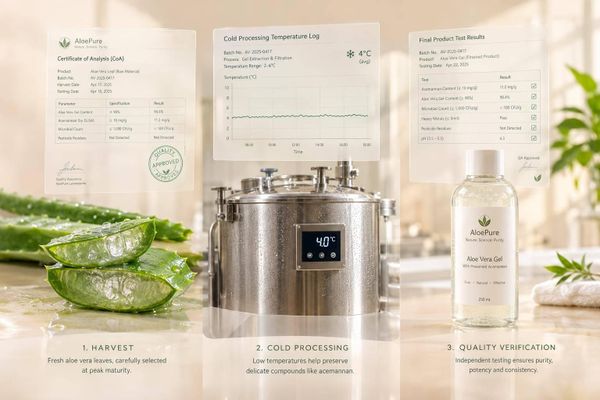
Processing methods matter, too. Avoid products that use heat-based processing, as it can destroy acemannan's bioactivity. Instead, select items labeled cold-extracted or cold-processed, which help preserve its beneficial properties.
Finally, check for a standardized acemannan content on the label. Generic labels like "aloe powder" don’t guarantee consistent quality. Third-party testing for purity and potency is another sign of a trustworthy product.
Dosage and Usage Guidelines
For daily immune support, most high-quality acemannan supplements recommend taking one capsule per day with water in the morning. This timing aligns with how the body naturally absorbs nutrients.
A 2023 triple-blind study involving 50 adults showed that taking one capsule daily increased influenza B-specific IgG levels by 15.6% (p = 0.0006) compared to a placebo. This demonstrates how consistent use of acemannan can boost immune function.
Interestingly, the effectiveness of acemannan depends on the size of its polymer chains. Research led by Professor Im found that medium-sized chains (between 5 and 400 KDa) are the most effective for immune modulation when taken orally. Chains larger than 400 KDa, however, showed only minor benefits. This highlights why careful extraction and processing are critical.
Safety and Precautions
Acemannan is generally safe and well-tolerated. Researcher Akira Yagi noted:
"Aloe polysaccharide or acemannan... has strong safety and tolerability records and is readily biodegradable."
The main concern with aloe products revolves around anthraquinones, which are found in the latex layer of whole-leaf preparations. These compounds can cause digestive discomfort and have been linked to potential toxicity when consumed in large amounts. Choosing products made from inner-leaf-only or decolorized aloe vera helps avoid this issue.
Additionally, acemannan interacts positively with the gut microbiome. Once in the colon, it is fermented by gut bacteria into short-chain fatty acids (SCFAs) like butyrate, which support gut health and immune function. This makes acemannan a great addition to probiotics or a daily multivitamin routine. However, if you’re on medication or managing a chronic condition, it’s always a good idea to consult your doctor before starting any new supplement.
Where Acemannan Research Is Headed
New Findings on How Acemannan Works
Building on its known role in supporting the immune system, researchers are now uncovering acemannan's broader effects at the molecular level. One significant discovery is how acemannan interacts with macrophages, key immune cells involved in tissue repair and inflammation control. Recent studies highlight that acemannan activates macrophages through the PI3K/Akt/GSK-3β pathway, encouraging them to adopt an M2 polarization. This shift helps resolve inflammation and promotes tissue healing, rather than exacerbating inflammatory responses.
Researchers at Dalian Medical University provided key insights:
"Acemannan could regulate macrophage activation by targeting the PI3K/Akt/GSK-3β signaling pathway, enhancing macrophage M2 polarization and phagocytosis."
Another exciting area of study is acemannan's potential role in the gut-brain axis. Once acemannan reaches the colon, gut bacteria ferment it into short-chain fatty acids (SCFAs), particularly butyrate. These SCFAs may impact insulin sensitivity, liver glucose production, and even neurological health as we age. This positions acemannan not only as an immune-supporting compound but also as a regulator of metabolic processes. Such findings could pave the way for optimized daily use to target both metabolic and immune health.
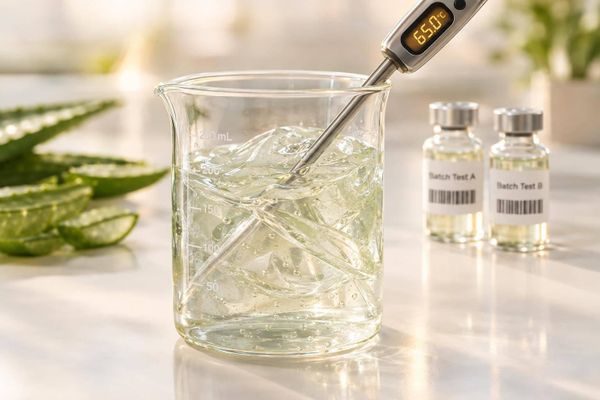
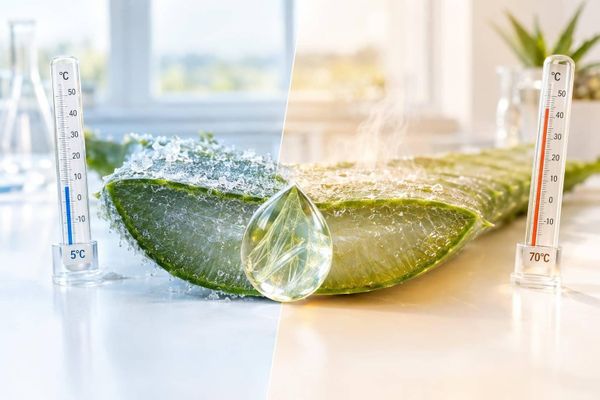
However, processing methods matter. High-heat processing above 80°C (≈176°F) causes over 46% deacetylation, significantly reducing acemannan's effectiveness. This highlights the importance of cold-extraction techniques to preserve its activity.
Possible Clinical Uses
Current research suggests three main areas where acemannan could have practical applications: vaccine adjuvants, chronic inflammation management, and tissue regeneration.
Emerging studies reveal that acemannan fragments can enhance vaccine efficacy by activating dendritic cells. Nicholas J. Sadgrove and Monique S. J. Simmonds from the Royal Botanic Gardens, Kew, noted:
"These fragments can intravenously boost vaccine efficacy or entrain the immune system to attack cancer cells by mannose receptor agonism of macrophage or dendritic cells."
For chronic inflammation, a 2021 study published in the International Journal of Biological Macromolecules demonstrated that aloe vera's carbohydrate fraction, including acemannan, suppressed pro-inflammatory mediators like TNF-α and IL-6. This was achieved by inhibiting the NF-κB and AP-1 signaling pathways in rats with Freund's adjuvant-induced paw edema. In animal models, crude aloe gel containing acemannan reduced paw swelling by as much as 65.59%.
The table below summarizes these emerging applications alongside their mechanisms and current research status:
| Application Area | Target Mechanism | Research Status |
|---|---|---|
| Vaccine Adjuvant | Dendritic cell maturation & IL-12 production | Active Research |
| Chronic Wound Care | M2 macrophage polarization | Active Research |
| Cancer Adjunct Therapy | Macrophage cytotoxicity via mannose receptor | Laboratory/Veterinary |
| Metabolic Health | SCFA production, insulin sensitivity | Emerging Research |
| Radiation Therapy Support | Free radical clearance & hematopoietic recovery | Laboratory Studies |
What connects all these applications is acemannan's ability to act across multiple systems rather than focusing on a single pathway. This versatility as a bioactive compound underscores its potential to enhance immune function and support overall health in various ways.
Conclusion: Using Acemannan to Support Your Immune Health
Acemannan has shown promise in supporting immune health through several mechanisms. It activates key immune cells, helps regulate cytokines, improves gut health, and may even enhance the effectiveness of vaccines. As highlighted in the Journal of Gastroenterology and Hepatology Research:
"Acemannan plays critical roles in immune system function and has strong safety and tolerability records and is readily biodegradable." - Akira Yagi and Byung P. Yu
To maintain its effectiveness, it's essential to choose a quality acemannan supplement that preserves bioactivity. Heat can reduce acetylation levels by 52%–70%, so look for cold-extracted, 100% pure inner leaf aloe vera gel that has been third-party tested and is free from aloin.
For daily use, a dose of 100–500 mg of standardized acemannan extract taken with water in the morning is recommended. Pairing it with probiotics or a multivitamin may enhance its benefits. However, if you have autoimmune conditions or take medications for diabetes or immunosuppression, consult your healthcare provider before starting.
While research is ongoing, current findings highlight acemannan's ability to energize immune cells, support tissue repair, and promote gut health. When properly processed and taken consistently, acemannan can be a valuable addition to your routine for maintaining a strong and balanced immune system.
FAQs
How fast does acemannan start working for immune support?
Studies indicate that acemannan stimulates immune cells such as macrophages and dendritic cells by interacting with mannose and Toll-like receptors. However, there isn’t a set timeframe for when you might notice its effects. To maximize its benefits, take your supplement daily with water, ideally in the morning. Regular use supports your immune system's natural balance and promotes effective cellular communication.
Can acemannan trigger flares in autoimmune conditions?
Current studies do not show that acemannan causes flares in autoimmune conditions. On the contrary, research points to its immunomodulatory and anti-inflammatory effects. It works by engaging innate immune pathways, including the stimulation of macrophages and dendritic cells, and is widely regarded as safe and well-tolerated. However, because immune responses differ from person to person, anyone with an autoimmune condition should speak with their healthcare provider before introducing new supplements into their regimen.
How can I tell if an aloe product still has active acemannan?
To find an aloe product with active acemannan, focus on ones that are standardized and tested by third-party labs. Quality products often rely on gentle methods, such as cold ethanolic extraction, to maintain acemannan's integrity. Always review batch documentation and look for a Certificate of Analysis (COA) to confirm the ingredient's strength and authenticity.