Acemannan: 7 Science-Backed Health Benefits
Seven science-backed benefits of acemannan: immune support, faster wound healing, prebiotic gut effects, antioxidant defense, bone and skin repair.

Acemannan, a key compound in aloe vera's inner gel, offers a variety of health benefits supported by research. Here's what you need to know:
- Immune Support: Activates immune cells like macrophages and dendritic cells, boosting the body's defense mechanisms.
- Wound Healing: Speeds up tissue repair by stimulating cell growth and pathways like AKT/mTOR.
- Gut Health: Acts as a prebiotic, promoting beneficial gut bacteria and strengthening the intestinal barrier.
- Antioxidant Protection: Neutralizes harmful free radicals, reducing oxidative stress and supporting overall cell health.
- Bone Regeneration: Encourages bone growth and repair, especially in dental and orthopedic applications.
- Oral Tissue Repair: Aids in healing gums, mucosa, and dental pulp, reducing pain and recovery time.
- Skin Hydration: Improves skin moisture and regeneration by enhancing keratinocyte activity.
These benefits are linked to acemannan's unique structure and biological activity, making it a valuable compound for health and wellness. For the best results, look for products with high-purity, cold-extracted acemannan.
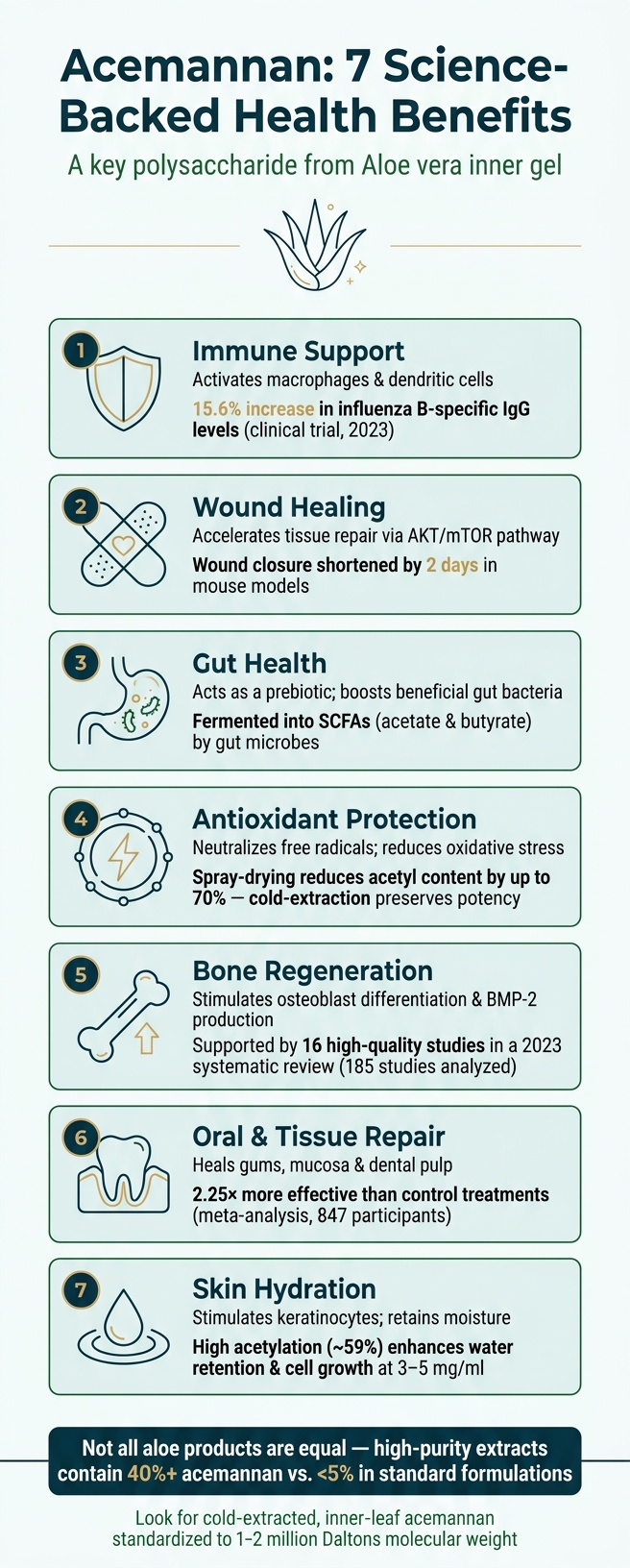
Acemannan: 7 Science-Backed Health Benefits at a Glance
What Is Acemannan?
Acemannan is a complex sugar, specifically a β-(1,4)-linked acetylated mannan, found in the inner gel of Aloe vera (Aloe barbadensis Miller). Its structure consists of mannose sugar units forming a long chain, with acetyl groups attached along the backbone. When purified, acemannan is made up of about 97% mannose and 3% glucose, with an average molecular weight generally exceeding 500,000 Da.
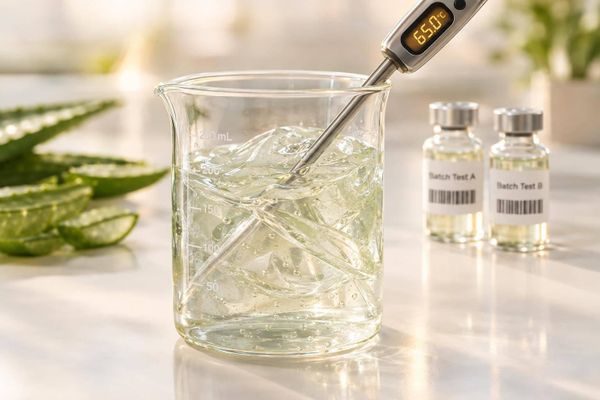
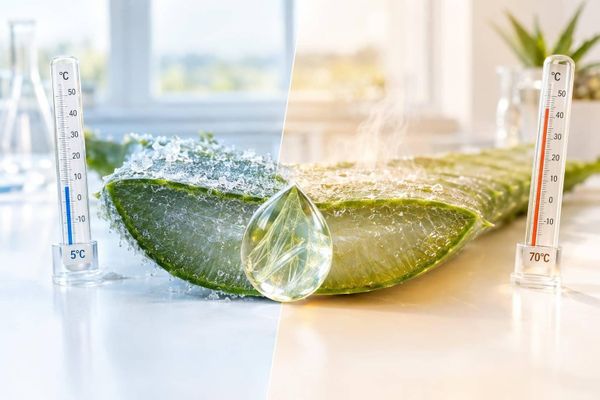
The size and structure of acemannan play a key role in its biological activity. However, how it's extracted can significantly influence its effectiveness. For instance, using spray-drying methods can reduce its acetylation levels by as much as 70%, compared to methods like cold or freeze-drying.
As Myung Koo Lee notes in International Immunopharmacology:
"Acemannan is a mixture of polymers of various length chains of β-(1,4)-linked acetylated mannan isolated from the gel of Aloe species plants."
Acemannan interacts with the body in several impactful ways. It binds to mannose receptors on immune cells, supports gut health as a prebiotic, promotes tissue repair through AKT/mTOR signaling, and fights oxidative stress with its acetyl groups. These mechanisms contribute to its wide-ranging health benefits, as shown below:
| Biological Role | Primary Mechanism | Effect on the Body |
|---|---|---|
| Immune modulation | Binds to mannose receptors on macrophages and dendritic cells | Enhances immune response and cytokine production |
| Tissue repair | Activates AKT/mTOR signaling and promotes collagen synthesis | Speeds up wound healing and tissue regeneration |
| Gut health | Fermented by gut microbes into short-chain fatty acids | Strengthens the intestinal barrier and microbiome balance |
| Antioxidant activity | Acetyl groups neutralize free radicals | Lowers oxidative stress and prevents cell damage |
1. Immune Modulation
Acemannan has been widely studied for its role in supporting the immune system. It interacts with mannose receptors on macrophages and dendritic cells, activating these key players in the immune response. This activation helps the body identify and respond to potential threats more effectively.
Dendritic cells act as the immune system's scouts, identifying invaders, while macrophages engulf harmful pathogens and release signaling molecules to alert other immune cells. Acemannan stimulates both these cell types, turning inactive immune cells into active responders. Research published in 2001 in International Immunopharmacology by Myung Koo Lee and colleagues showed that acemannan could stimulate immature mouse dendritic cells to mature, enabling them to initiate T-cell responses.
"Acemannan, a major carbohydrate fraction of Aloe vera gel, has been known to have antiviral and antitumoral activities in vivo through activation of immune responses." - Myung Koo Lee, International Immunopharmacology
This effect isn’t just theoretical. Clinical trials back it up. For example, a randomized, triple-blind, placebo-controlled trial conducted in April 2023 by Erin D. Lewis studied a nutraceutical formulation containing Aloe vera gel powder in 50 healthy adults aged 40–80. Over 56 days, participants experienced a 15.6% increase in influenza B-specific IgG levels (p = 0.0006) and a notable rise in circulating γδ T cells, which play a vital role in both innate and adaptive immunity. Additionally, acemannan has been USDA-approved as a vaccine adjuvant for chickens, cats, and dogs, further showcasing its ability to enhance antigen-specific antibody responses.
Here’s a quick breakdown of how acemannan impacts different immune components:
| Immune Component | Effect of Acemannan | Functional Outcome |
|---|---|---|
| Dendritic Cells | Promotes maturation; upregulates CD40, CD54, B7-1, B7-2 | Triggers primary T-cell responses |
| Macrophages | Boosts IL-1, IL-6, TNF-α, and nitric oxide production | Improves phagocytosis and pathogen elimination |
| T-Cells (γδ) | Increases circulating γδ T-cell populations | Strengthens both innate and adaptive immunity |
| B-Cells/Antibodies | Elevates antigen-specific IgG levels | Enhances vaccine effectiveness and long-term immunity |
These immune-activating properties highlight acemannan's potential for a wide range of therapeutic applications, which will be explored further in the following sections.
2. Wound Healing
In addition to its role in immune support, acemannan plays a key part in speeding up tissue repair. The process of wound healing - comprising inflammation, proliferation, and remodeling - is significantly accelerated by acemannan, which influences crucial cellular activities. By activating specific pathways, it helps wounds close faster, as highlighted in recent studies.
Acemannan triggers the AKT/mTOR pathway in fibroblasts, increasing cyclin D1 to promote cell division. It also stimulates EGFR, which enhances keratinocyte migration, speeding up the closure of wounds. Combined with its immune-modulating properties, this ability to encourage cell growth and repair underscores acemannan's importance in tissue regeneration.
Research backs up these findings. A study led by Xiang Xu, published in the Journal of Dermatological Science in August 2015, revealed that applying topical acemannan (2 mg/kg) shortened wound closure time by two days in mouse models. The increased presence of Ki-67, a marker for cell growth, confirmed heightened cellular activity.
"Acemannan promoted skin wound healing partly through activating AKT/mTOR-mediated protein translation mechanism, which may represent an alternative therapy approach for cutaneous wound." - Xiang Xu, Journal of Dermatological Science
Acemannan also influences the immune environment of wounds by encouraging M2 macrophage polarization, which shifts the focus from inflammation to repair. Additionally, it boosts the expression of vascular endothelial growth factor (VEGF) and keratinocyte growth factor-1, aiding in new blood vessel formation and re-epithelialization. These properties make acemannan especially helpful for managing difficult wounds like diabetic ulcers, radiation-delayed wounds, and high-exudate surgical wounds.
3. Gut Health and Prebiotic Effects
Acemannan passes through the stomach and small intestine without breaking down, reaching the colon intact. Here, beneficial bacteria ferment it into nutrients, making it a genuine prebiotic.
Among the key bacteria involved are Faecalibacterium prausnitzii, Parabacteroides distasonis, and Bacteroides uniformis. These microbes convert acemannan into short-chain fatty acids (SCFAs) like acetate and butyrate, which serve as an energy source for colon cells and help strengthen the intestinal lining. At the same time, acemannan helps suppress harmful microbes from the Fusobacteriaceae and Enterobacteriaceae families and reduces the production of toxic metabolites such as indole and p-cresol.
A study published in December 2025 in Food Chemistry, led by Yonggan Sun and Shaoping Nie, explored the effects of Aloe gel polysaccharides (AGP) on gut bacteria using in vitro fermentation with fecal samples from 30 healthy individuals. The findings revealed that Bacteroides uniformis played a central role in breaking down the polysaccharide, triggering a "Gear Effect." This effect restructured the microbial community, increased SCFA production, and decreased levels of harmful metabolites.
"AGP exhibits prebiotic [effects] by promoting Faecalibacterium and Parabacteroides... while inhibiting BCFAs, and indole." - Food Chemistry, ScienceDirect
This prebiotic function complements acemannan’s other health benefits by supporting a balanced gut environment, which is essential for overall health.
Beyond gut microbiota benefits, acemannan also strengthens the digestive barrier, a critical component of overall health. It activates the Wnt/β-catenin signaling pathway, which stimulates intestinal stem cells to repair and regenerate the epithelial lining - the protective layer of the digestive tract. Research from Nanchang University, published in September 2021, demonstrated that acemannan increased the number of Lgr5+ intestinal stem cells in mice and alleviated symptoms of chemically induced colitis. Nicholas J. Sadgrove from the Royal Botanic Gardens, Kew, also highlighted another practical benefit:
"The main advantage of dietary acemannan is the attenuation of the digestive process, increasing satiety, and slowing the release of sugars from starches." - Nicholas J. Sadgrove, Royal Botanic Gardens, Kew
4. Antioxidant Protection
Acemannan's acetyl groups play a key role in neutralizing harmful free radicals like DPPH and superoxide, shielding cells from oxidative damage caused by hydrogen peroxide.
Yingjie Bai from the School of Stomatology at Dalian Medical University highlights this property:
"As a good proton provider in polysaccharides, acetyl groups can inhibit free radical reactions and exert antioxidant activity."
One real-world example of this antioxidant effect is its ability to combat oxidative stress after consuming high-fat meals, a condition known as postprandial dysmetabolism. A February 2024 study published in the Journal of Functional Foods examined 16 overweight and obese men under various meal conditions. When participants consumed a high-fat meal supplemented with Aloe vera juice and 1 g of acemannan, researchers observed a marked improvement in postprandial antioxidant capacity. Additionally, plasma TNF-α levels dropped significantly at the 6-hour mark, alongside reductions in postprandial glucose and free fatty acids.
The degree of acetylation directly influences antioxidant effectiveness. However, processing methods can impact acetyl content. For instance, spray-drying can reduce acetyl levels by up to 70%, while radiant zone drying and refractance window drying lower it by 60% and 52%, respectively. To retain the highest antioxidant potential, cold-extracted or freeze-dried acemannan is recommended. This antioxidant power not only protects cells but also supports tissue repair and other health-promoting effects.
sbb-itb-b88dd21
5. Bone Regeneration
Acemannan plays an important role in bone repair, particularly in dental and oral surgeries. It works on two fronts: serving as a scaffold that supports new cell growth and acting as a signaling agent that encourages stem cells to differentiate into osteoblasts (bone-forming cells). These two functions - known as osteoinduction and osteoconduction - make it an essential tool in regenerative medicine and a subject of ongoing clinical research.
When applied to bone defects, acemannan boosts the production of key proteins involved in the healing process. These include Bone Morphogenetic Protein-2 (BMP-2), Vascular Endothelial Growth Factor (VEGF), and Type I Collagen. Together, these proteins help attract cells to the damaged area, encourage tissue formation, and support the development of a healthy blood supply at the repair site.
A 2014 study led by Pasutha Thunyakitpisal at Chulalongkorn University tested acemannan sponges on periodontal defects in dogs. The results were striking: acemannan significantly sped up the growth of new alveolar bone, cementum, and periodontal ligaments compared to untreated controls. Improvements were observed as early as 30 and 60 days after treatment.
"Acemannan significantly accelerated new alveolar bone, cementum and periodontal ligament formation in class II furcation defects." - Pasutha Thunyakitpisal, Research Unit of Herbal Medicine and Natural Product for Dental Application, Chulalongkorn University
Further evidence comes from a 2023 systematic review published in Progress in Biomaterials. This review analyzed 185 studies and found 16 high-quality articles that consistently supported acemannan's ability to promote bone healing. Lead researcher Javad Mehrani Sabet highlighted its benefits:
"The findings indicate that A. vera and acemannan promote osteogenic differentiation, reduce inflammation, and enhance bone healing, making them promising agents for dental and orthopedic applications." - Javad Mehrani Sabet, Progress in Biomaterials
Clinically, acemannan is available in different forms to suit various applications. Sponges with pore sizes ranging from 100–260 µm are particularly effective for periodontal and socket repairs because their porous structure supports cell adhesion and nutrient flow. For larger, irregular defects, acemannan particles provide a flexible solution that integrates well with the surrounding tissue.
6. Oral and Tissue Repair
Acemannan plays a key role in promoting oral health by aiding the repair of soft tissues such as gums, mucosa, and dental pulp. It achieves this by stimulating cellular healing processes, which can help manage various oral conditions.
One notable use of acemannan is in treating oral aphthous ulcers, commonly known as canker sores. A 2013 study published in the Journal of Alternative and Complementary Medicine by Kanokporn Bhalang, Pasutha Thunyakitpisal, and Nuttanit Rungsirisatean highlighted its effectiveness. The study showed that acemannan helped reduce the size and pain of ulcers while offering higher patient satisfaction compared to topical steroids. Additionally, a meta-analysis of nine trials involving 847 participants found aloe vera–based treatments, including acemannan, to be 2.25 times more effective than control treatments.
Acemannan's benefits extend beyond ulcers, particularly in post-dental procedure recovery. For instance, a 2002 study by Poor MR, Hall JE, and Poor AS demonstrated that using an acemannan hydrogel patch (known as the SaliCept patch) significantly reduced the incidence of dry socket after tooth extractions. This is achieved through rapid clot formation, aided by platelet and red blood cell agglutination.
On a cellular level, acemannan promotes the proliferation of gingival fibroblasts, which are essential for soft tissue repair. These fibroblasts produce critical components like Type I collagen, KGF-1, and VEGF, all of which contribute to tissue regeneration and dentin bridge formation during dental pulp therapy.
"Acemannan could be a candidate biomolecule for periodontal tissue regeneration." - Pasutha Thunyakitpisal, Research Unit of Herbal Medicine and Natural Product for Dental Application
The table below outlines how acemannan supports different oral tissues and the key biological mechanisms at work:
| Target Tissue | Biological Effect | Key Factors Involved |
|---|---|---|
| Gingival fibroblasts | Soft tissue repair, collagen synthesis | KGF-1, VEGF, Type I Collagen |
| Oral mucosa (ulcers) | Wound healing, epithelialization | VEGF, Type I Collagen |
| Dental pulp | Dentin bridge formation, mineralization | BMP-2, Alkaline phosphatase |
7. Skin Health and Hydration
Acemannan, a type of mucopolysaccharide, plays a key role in maintaining skin hydration by attracting and retaining water at the cellular level. This helps create the moist environment that is essential for tissue repair. Its impact on skin cells is just another example of its broad contribution to overall wellness.
At the cellular level, acemannan stimulates keratinocytes - the cells forming the skin's outermost layer, which are critical for its barrier function. A study published in Scientific Reports in 2025 revealed that human keratinocytes (HaCaT cells) treated with acemannan exhibited a concentration-dependent boost in cell migration and DNA synthesis. This treatment also triggered the upregulation of key barrier proteins such as involucrin, loricrin, and TGase 1 within 6 to 36 hours. By activating keratinocytes, acemannan not only enhances skin hydration but also strengthens the skin's resilience, complementing its broader role in tissue repair.
"ACE activates PKC, leading to keratinocyte differentiation and activates EGFR, contributing to keratinocyte proliferation and migration." - Scientific Reports
Acemannan's benefits extend beyond hydration to include promoting rapid skin regeneration. A 2015 study in the Journal of Dermatological Science led by Xiang Xu demonstrated that applying acemannan locally sped up skin cell renewal and repair. This highlights its potential as a therapeutic option for treating skin wounds.
"Acemannan promoted skin wound healing partly through activating AKT/mTOR-mediated protein translation mechanism, which may represent an alternative therapy approach for cutaneous wound." - Xiang Xu, Journal of Dermatological Science
The effectiveness of acemannan in skin health is closely tied to its acetylation levels. High acetylation (approximately 59%) enhances its ability to retain water and stimulate cell growth without causing cytotoxicity at concentrations of 3–5 mg/ml. On the other hand, deacetylation reduces its hydrophilic properties and its capacity to promote cell growth. These findings illustrate how acemannan supports skin hydration, regeneration, and overall tissue health.
Benefit Summary Table
The table below provides a concise overview of the seven benefits discussed earlier, along with the type of research backing each benefit and the main biological outcomes observed. These findings are supported by a variety of scientific studies, ranging from cellular experiments to human clinical trials.
| Benefit | Supporting Evidence Type | Main Biological Outcome |
|---|---|---|
| 1. Immune Modulation | In vitro, in vivo (animal), human clinical | Encourages dendritic cell maturation and macrophage activation; boosts IgG and γδ T cells |
| 2. Wound Healing | In vivo (mouse models), in vitro (fibroblasts) | Triggers AKT/mTOR pathway activation; promotes fibroblast proliferation through cyclin D1 |
| 3. Gut Health & Prebiotic Effects | Human crossover trial, microbial studies | Produces short-chain fatty acids (SCFAs) via fermentation; enhances satiety and slows sugar absorption |
| 4. Antioxidant Protection | Randomized crossover-controlled study | Elevates glutathione peroxidase (GSH-Px) levels; reduces plasma TNF-α and post-meal lipemia |
| 5. Bone Regeneration | In vitro, animal models | Stimulates bone marrow stromal cells (BMSCs) to proliferate and differentiate; aids mineralization |
| 6. Oral & Tissue Repair | In vitro (dental pulp cells), clinical | Promotes dental pulp cell differentiation; supports dentin formation and oral mucosal healing |
| 7. Skin Health & Hydration | In vitro (keratinocytes), topical studies | Encourages keratinocyte proliferation and faster re-epithelialization; boosts collagen production in fibroblasts |
This table highlights acemannan's diverse range of benefits, from immune system support to tissue repair and beyond. Immune modulation and antioxidant protection stand out with strong evidence from human clinical trials, while benefits like bone regeneration rely more heavily on lab and animal studies. While in vitro experiments showcase cellular potential, human trials validate these effects in real-world applications. As research progresses, the understanding of these benefits continues to grow.
Conclusion
Acemannan, a polysaccharide derived from aloe vera, has been extensively researched for its wide-ranging health benefits. It plays a role in immune support, wound healing, gut health, antioxidant protection, bone regeneration, oral repair, and skin hydration.
What sets acemannan apart is its remarkable versatility. This single compound influences processes as varied as macrophage activation and collagen production. As Aelius Naturals describes it:
"Acemannan is the superpower inside aloe vera - a natural compound that helps your body stay strong, balanced, and resilient."
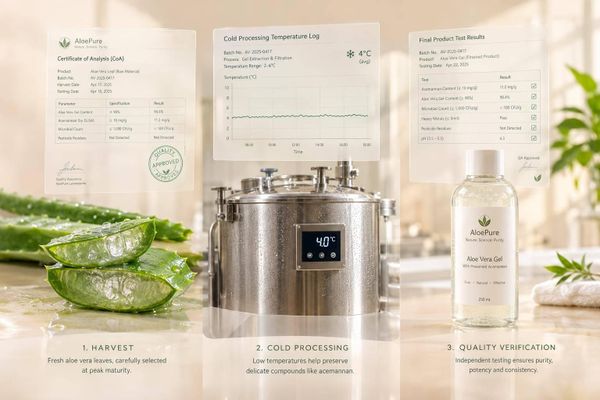
However, not all aloe vera products are created equal. Many standard formulations contain less than 5% acemannan, while high-purity extracts boast over 40% true acemannan. To reap the full benefits, look for cold-extracted, inner-leaf formulations standardized to a molecular weight of 1 to 2 million Daltons.
Research continues to uncover new possibilities for acemannan. Preclinical studies suggest exciting applications in bone regeneration and dental repair, while human trials affirm its immune-boosting and antioxidant properties. Backed by strong scientific evidence, acemannan remains a standout natural compound for supporting overall health.
FAQs
How is acemannan different from regular aloe vera gel?
Acemannan is a standout polysaccharide found in the inner leaf gel of aloe vera. Unlike the general mix of nutrients in regular aloe vera gel, acemannan is a long-chain sugar credited with therapeutic benefits, such as boosting the immune system and aiding in wound healing. While typical aloe products can lose their potency during processing, specialized methods of extracting acemannan help maintain its structure, ensuring it delivers its full benefits.
What should I look for on a label to get high-purity acemannan?
To ensure you're getting high-purity acemannan, look for products that specify standardized acemannan content or include a Certificate of Analysis. Prioritize options made from the inner leaf gel of aloe vera, as the outer leaf contains compounds like aloin, which act as laxatives. Additionally, select products that are processed to maintain consistent acemannan levels and avoid those with preservatives that might diminish its effectiveness.
Is acemannan safe to use daily with medications or health conditions?
Research indicates that acemannan is typically well-tolerated, even when taken in high doses over extended periods. However, everyone's health needs are different. It's always a good idea to consult your healthcare provider before adding it to your routine - especially if you're on medications or dealing with specific health conditions. A doctor can help assess whether acemannan aligns with your health goals and existing treatments.