Aloe Vera Intake Studies: Timing and Dose
Research shows aloe doses and timing vary by product form and processing; studies test specific products, not one universal dose.

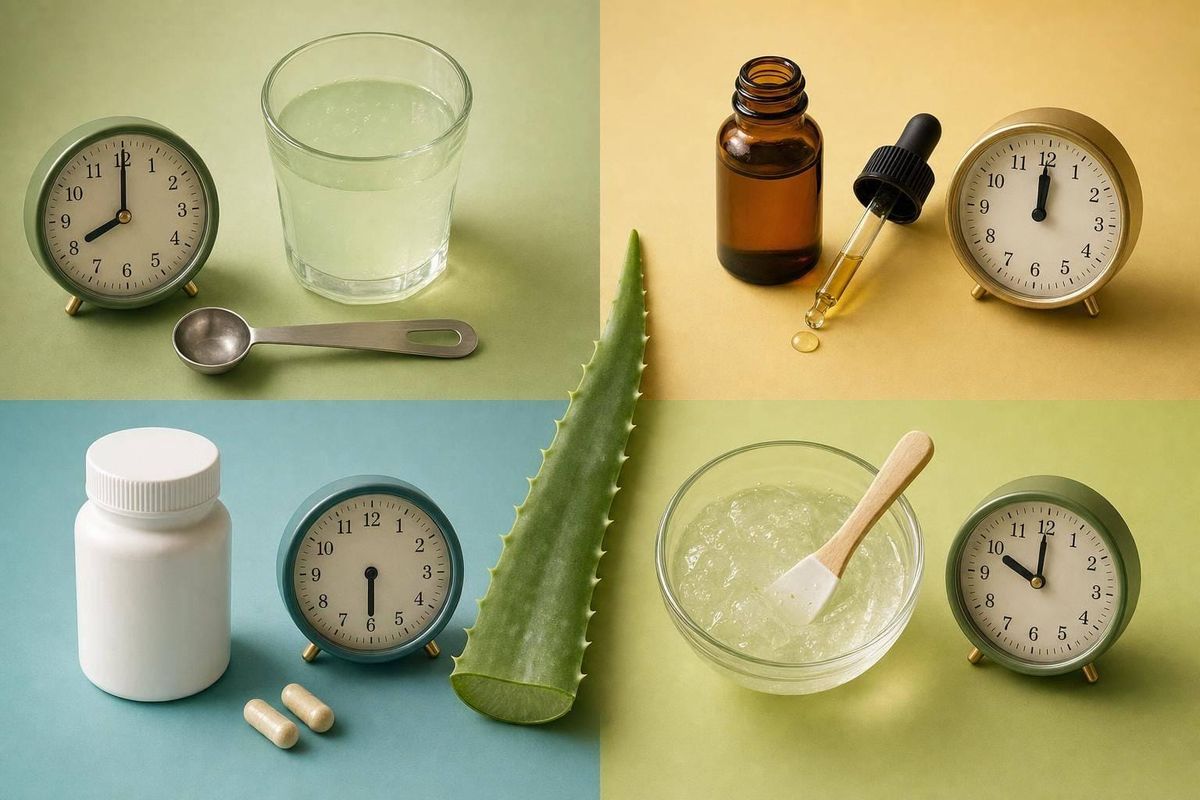
There is no one standard aloe vera dose or best time of day in the research. Studies used 10 mL syrup once daily, 100 mL gel twice daily, 300 mg to 500 mg capsules twice daily, 2 g to 4 g powder once daily, and 350 mL juice as a single dose. Most trials lasted 4 to 8 weeks, while one meal study tracked results for 6 hours.
If you want the short answer, here it is:
- Dose depends on the product form
- Timing depends on what the study tested
- Juice, gel, powder, capsules, and latex products are not the same
- Processing can change acemannan levels
- Results from one product do not transfer cleanly to another
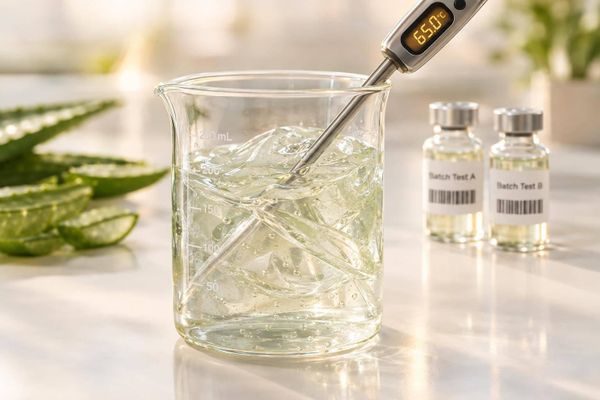
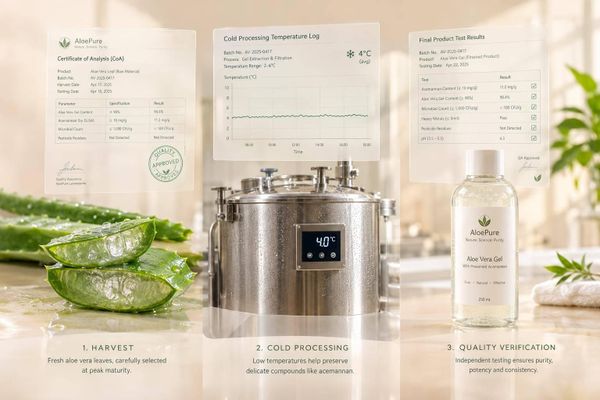
One reason this gets messy fast: an analysis of 18 commercial aloe products found only 9 with measurable mucilaginous polysaccharides, and only 3 of 9 leading gel powders had satisfactory acemannan levels. On top of that, heating above 140°F (60°C) can change acemannan and lower bioactivity.
Here’s the main takeaway for me: aloe vera studies show what was tested, not one rule for daily use. A trial that gives aloe after a high-fat meal is testing a meal response. A trial that uses twice-daily gel for 4 weeks is testing that setup for that condition. That’s very different from saying “this is the best way to take aloe.”
Quick comparison
| Form | Example dose used in studies | Timing used | Study length |
|---|---|---|---|
| Syrup | 10 mL | Once daily | Varies by trial |
| Gel | 100 mL | Twice daily | 4 weeks |
| Juice | 350 mL | With a high-fat meal | 6 hours |
| Capsules | 300 mg or 500 mg | After breakfast and dinner | 8 weeks |
| Powder | 2 g or 4 g | Once daily | 8 weeks |
Bottom line: when I look at this research, the only safe summary is that form, processing, dose, and timing all change the meaning of the result.
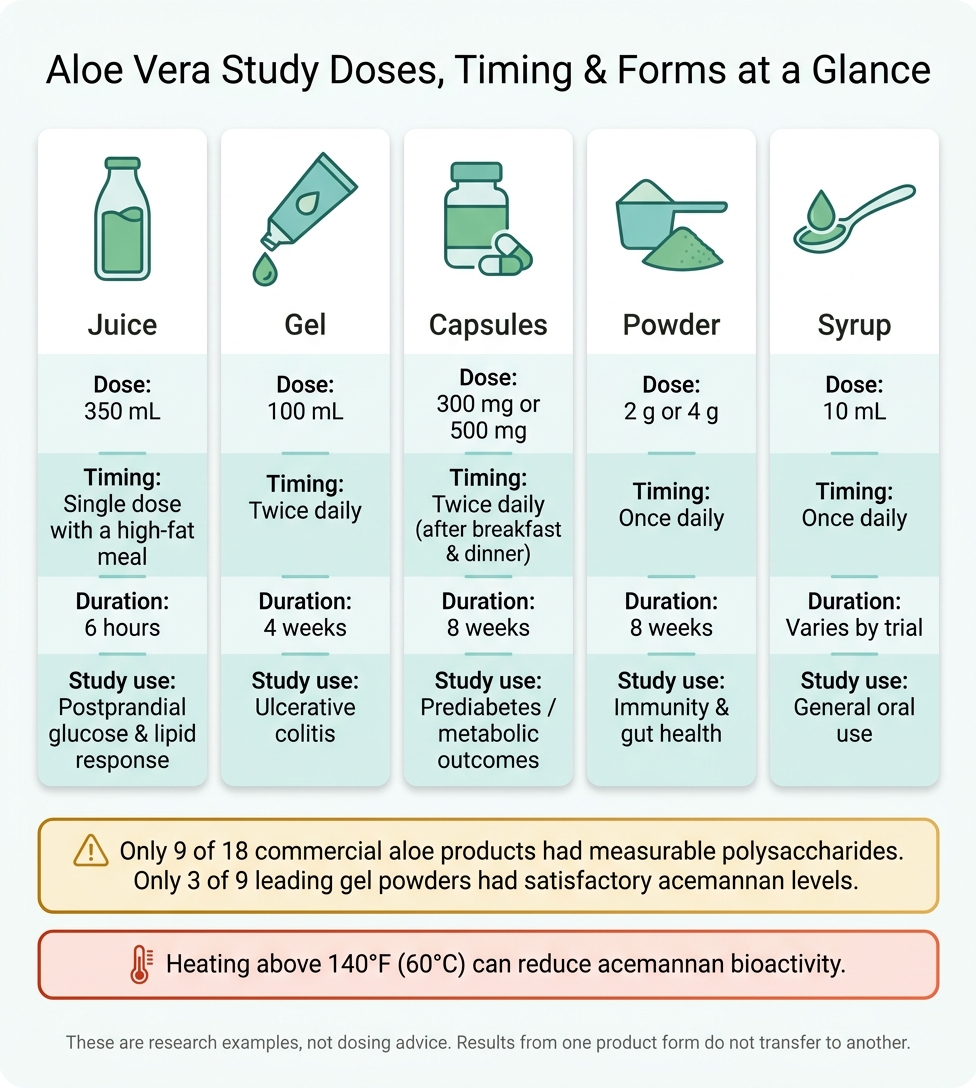
Aloe Vera Study Doses, Timing & Forms at a Glance
How Clinical Studies Used Aloe Vera: Dose, Frequency, and Duration
Common Oral Doses Reported in Studies
Human trials used very different doses of aloe vera. That changed based on the product form and what the study was trying to test.
Here’s the pattern in the research:
| Study Focus | Dose Form | Dose Amount | Frequency | Duration |
|---|---|---|---|---|
| Ulcerative Colitis | Oral aloe vera gel | 100 mL | Twice daily | 4 weeks |
| Metabolic Syndrome | Aloe-based drink | 165 g | Once daily | 4 weeks |
| Prediabetes | Capsules | 300 mg and 500 mg | Twice daily | 8 weeks |
| Immunity/Gut Health | Aloe-containing glyconutrient powder | 2 g and 4 g | Once daily | 8 weeks |
| Postprandial Response | Aloe vera juice | 350 mL | Single dose | 6 hours |
These are research examples, not dosing advice.
Once-Daily vs. Twice-Daily Schedules
Studies used both once-daily and twice-daily schedules. In most cases, the schedule matched the product form and the study goal.
For example, a 2022 metabolic syndrome study used a 165 g aloe-based drink once daily. By contrast, capsule studies often used twice-daily dosing. In one prediabetes trial, people took 300 mg or 500 mg twice daily, after breakfast and dinner, for 8 weeks.
So the timing wasn’t random. It followed the setup of each trial.
Study Length and Why It Matters
Most of the studies covered here lasted 4 to 8 weeks. That’s long enough to track short-term changes, but not long enough to say much about long-term use.
One trial was much shorter. A 2024 crossover study looked at post-meal effects for 6 hours after one 350 mL serving of aloe vera juice.
Study length changed because the research questions changed. Some trials looked at daily use over several weeks. Others focused on what happened after a single serving. In other words, dose and timing were built around what each study wanted to measure, not around one standard way to use aloe vera. That sets up the next issue: timing patterns.
sbb-itb-b88dd21
Timing Patterns in the Research
After Meals, Morning, Evening, and Bedtime Use in Studies
Beyond dose, timing also changed from study to study. In metabolic research, after-meal use shows up often because researchers want to track what happens to blood sugar, triglycerides, and insulin once food is in the system. So the timing usually follows the study goal, not the clock.
In a February 2024 crossover study, 16 overweight and obese men drank 350 mL of acemannan-rich aloe vera juice with a high-fat meal. Over the next 6 hours, after-meal glucose, triglycerides, and free fatty acids went down. That timing was picked to test the post-meal effect. It did not show that this is the best time for everyone.
Another trial in women with metabolic syndrome used an aloe vera gel complex split into two daily doses: after breakfast and after dinner. By contrast, bedtime use shows up mostly in studies of anthraquinone-containing aloe latex, where the aim is laxation rather than metabolic testing.
No Evidence for One Best Time of Day
No study here points to one best time of day. The pattern is pretty plain: researchers set the timing based on the outcome they wanted to measure.
| Study Focus | Timing Used | Reason |
|---|---|---|
| After-meal glucose and lipid response | After meals | After-meal response |
| Metabolic syndrome (chronic) | Twice daily (after breakfast and dinner) | Fixed trial schedule |
| Ulcerative colitis | Twice daily (100 mL) | Fixed trial schedule |
| Laxative use | Bedtime | Anthraquinone-based product |
Meal timing matters here because acemannan is being studied for how it may boost gut benefits and affect digestion and sugar release after eating. In other words, product form and study goal matter more than the time on the clock. Product form helps explain the rest of the timing differences.
Product Form Differences and Acemannan Context
Juice, Gel, Powder, Capsules, and Extract: How They Differ
Once you know the product form, dose comparisons make a lot more sense. That's because aloe study doses are not interchangeable. The form, how it's processed, and how much acemannan it contains can all change what the dose means.
The table below shows how the form used in a study shaped both the dose and how researchers interpreted it. This isn't about saying one product is better than another. It's about showing why you can't compare study doses by volume alone.
| Product Form | Example Studied Dose | Frequency | Duration | Main Research Use |
|---|---|---|---|---|
| Juice (with acemannan) | 350 mL | Once (Postprandial) | Single day | Postprandial lipemia/glucose |
| Inner-leaf gel | 100 mL | Twice daily | 4 weeks | Ulcerative colitis |
| Gel powder | 2–4 g | Once daily | 8 weeks | Immunity and gut health |
Gel-Based Polysaccharides vs. Anthraquinone-Containing Products
Gel products are studied mostly for metabolic and gut-related outcomes. Latex-containing products, on the other hand, are used for laxative effects and should not be treated as the same thing as gel. Whole-leaf extracts can include both parts unless they're filtered to remove anthraquinones.
That detail matters. If a study used gel, its dose and timing should be read in that context. If it used a product with latex components, the meaning of the results can shift quite a bit.
Where Acemannan Fits in the Evidence
Acemannan content varies a lot across commercial products, and most clinical trials do not standardize or directly measure it. So even if a study says it used "aloe vera juice", that doesn't mean readers can assume a fixed acemannan dose.
For readers who want more background on acemannan science and aloe gel, Advanced Acemannan goes into that topic in more detail.
Because study products are not standardized, the next section limits conclusions to what the evidence actually supports.
Bottom Line: What the Evidence Supports
What Studies Support
Taken together, the studies show a lot of variation in dose and timing. There isn't one standard aloe vera schedule that shows up across the research.
What the evidence does support is study-specific dosing, not one universal dose or one best time of day. That's a big reason product form matters just as much as timing. A capsule, juice, gel, or processed extract can make the same "dose" mean different things in practice.
What Studies Do Not Prove
These trials do not prove one dose, one form, or one time of day for every use. Most of the studies were small and short, so the findings are still preliminary.
There's another issue here: product processing and form can change what a dose actually means. Because of that, results from one study don't transfer neatly from one aloe product to another.
Key Points to Remember
The reported doses varied a lot from study to study. Different trials used different forms, doses, and schedules, and that doesn't add up to one best practice.
Commercial aloe products also vary a lot. So even when a study shows a result, that result doesn't map cleanly onto what you might find on a store shelf.
FAQs
Why do aloe vera study doses vary so much?
Aloe vera study doses vary for a simple reason: researchers often aren’t testing the exact same material.
One study might use a product processed one way, while another uses something quite different. Even common processing steps like pasteurization can alter acemannan. On top of that, many store-bought products don’t clearly standardize or list the levels of active compounds. So when you compare one paper to another, you’re not always comparing apples to apples.
Researchers also use different aloe forms, including:
- whole leaf extract
- decolorized extract
- acemannan isolates
That shifts both potency and composition. And once those change, the results get harder to line up side by side, which makes one universal dose tough to pin down.
Can I compare aloe juice, gel, and capsules directly?
No. Aloe juice, gel, and capsules vary a lot in composition, concentration, and quality, so you can't compare them head-to-head.
Research also shows that acemannan levels can differ a lot from one product to another. Things like plant age, harvest season, irrigation, and processing can all affect it. And in many cases, labels don't spell out those details.
What can processing change in aloe vera products?
Processing can change aloe vera’s physical and biological properties. For example, cellulase treatment can lower the molecular weight of acemannan by breaking larger native polysaccharides into smaller fragments, including modified aloe polysaccharides (MAP).
Extraction, purification, and deacetylation can shift structure and bioactivity too. In plain terms, once the material is processed, it may not behave the same way it did at the start. That can shape how the product interacts with the body, including immune-related effects and absorption through intestinal tight junctions.