The Difference Between Aloe Juice, Aloe Gel, and Acemannan Supplements
A clear comparison of aloe juice, inner-leaf gel, and acemannan supplements—uses, safety, and how to pick the right form.

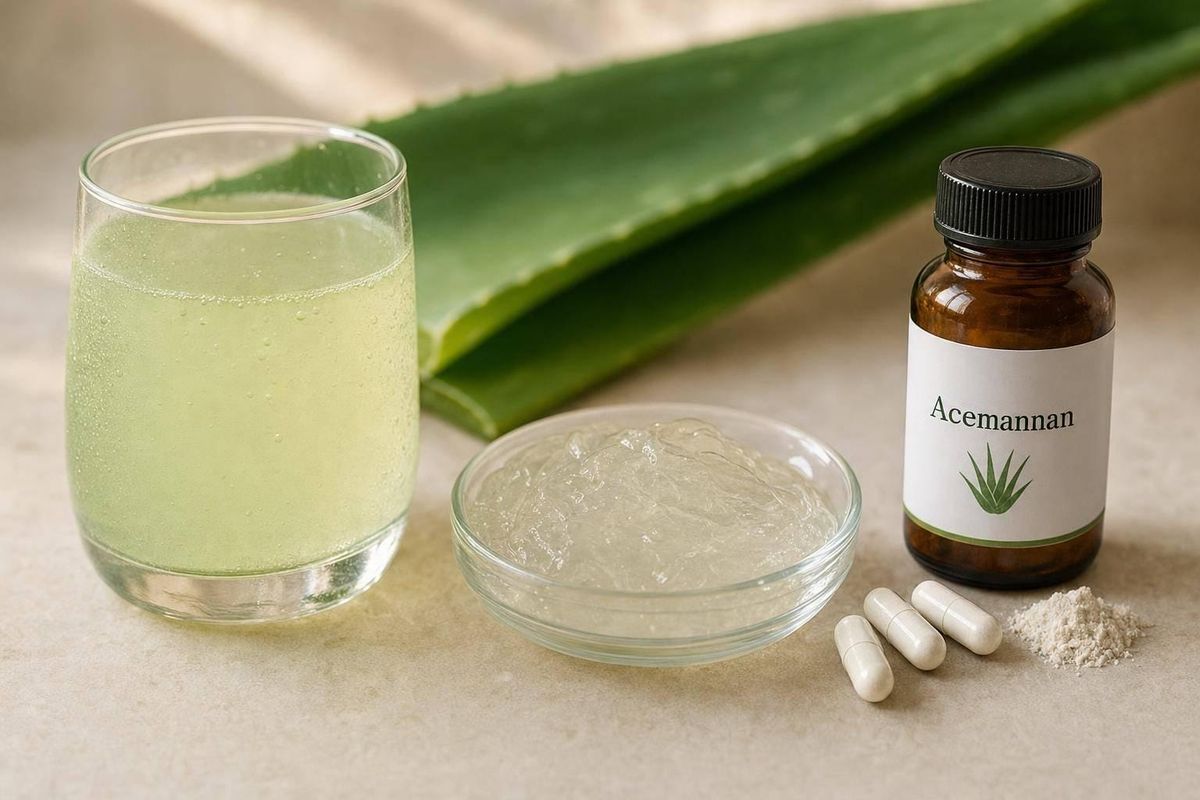
These three aloe products are not the same: aloe juice is for drinking, aloe gel is usually for skin or labeled oral use, and acemannan supplements focus on aloe’s main polysaccharide.
If I want the short answer, it’s this:
- Aloe juice = a drink made from the inner leaf, often used for hydration or stomach support
- Aloe gel = the thicker inner-leaf form, used on skin or taken by mouth only if the label says so
- Acemannan supplements = a more concentrated aloe extract aimed at gut and immune support
A few facts matter right away:
- Inner-leaf aloe is about 98%–99% water
- The aloe latex layer contains anthraquinones like aloin
- “Decolorized” or “purified” usually means aloin was filtered down to trace levels
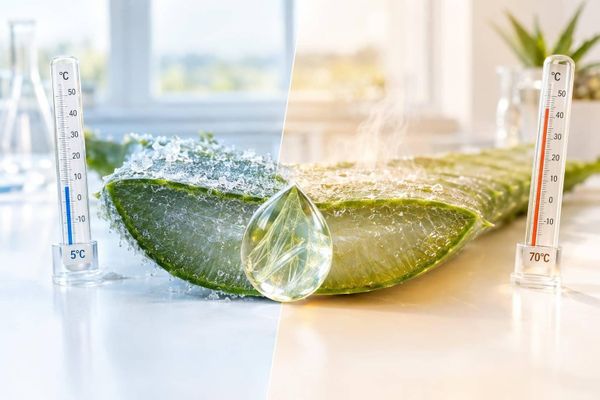
- Heating aloe above 140°F (60°C) can lower polysaccharide content
The main point: pick the form based on your goal, not the name on the front of the bottle.
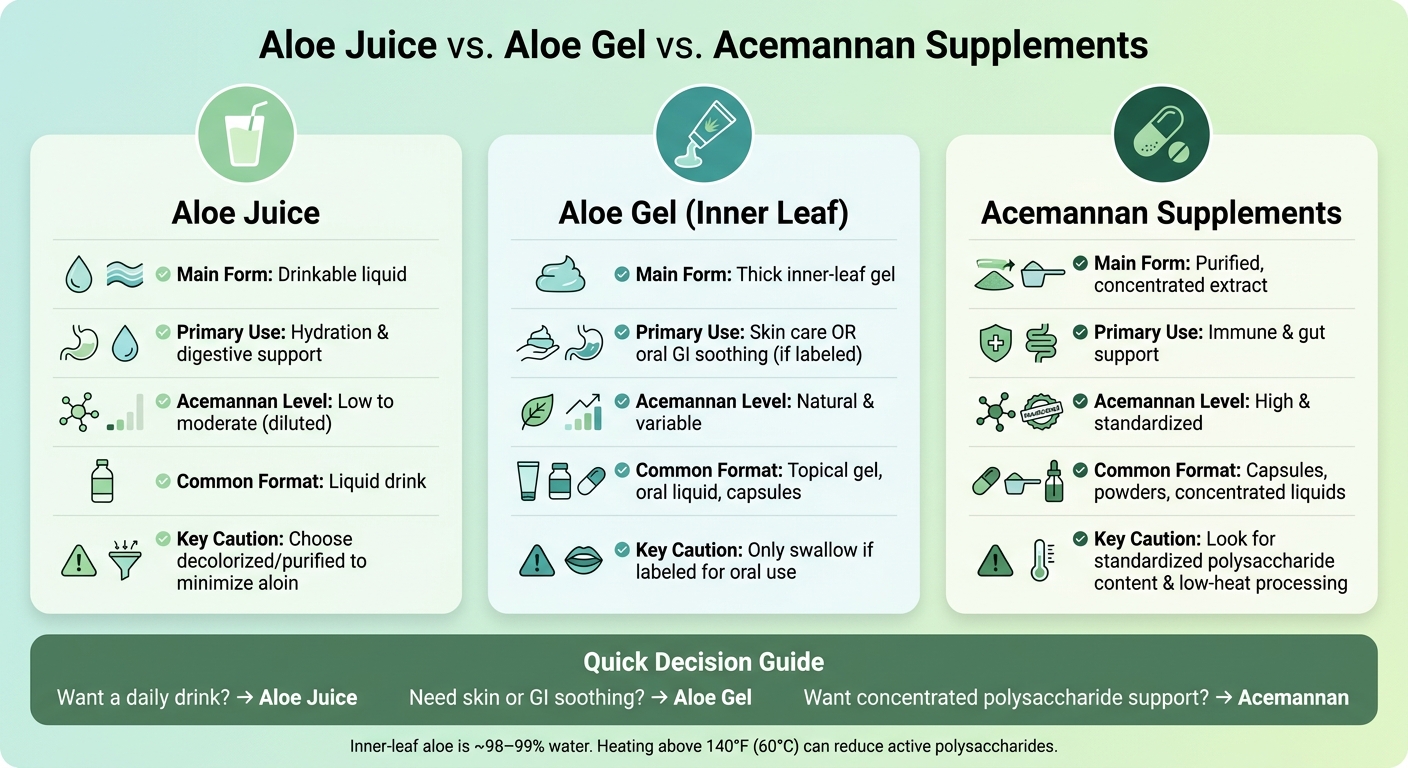
Aloe Juice vs. Aloe Gel vs. Acemannan Supplements: Which Is Right for You?
Quick Comparison
| Product | Main form | Common use | What to watch for |
|---|---|---|---|
| Aloe Juice | Drinkable liquid | Hydration, digestive support | Choose decolorized/purified if possible |
| Aloe Gel | Thick inner-leaf gel | Skin use or oral use if labeled | Don’t swallow products marked external use only |
| Acemannan Supplements | Capsules, powders, extracts | Gut and immune support | Check for standardized polysaccharide content |
If I were choosing fast, I’d think of it this way: juice is the broad option, gel is the thicker inner-leaf option, and acemannan is the more focused supplement form.
sbb-itb-b88dd21
Aloe Juice: A Drinkable Aloe Product for Digestive Support
Aloe juice is the drinkable form of aloe. It’s made for people who want an inner-leaf product they can take by the spoonful or sip by the ounce. To make it, producers remove the rind from Aloe barbadensis Miller, collect the inner gel, and filter out fiber.
What Aloe Juice Contains
Aloe juice contains variable levels of polysaccharides, including acemannan. The wording on the label matters. It tells you whether the product may still contain aloin.
“Inner leaf” refers to the clear center gel. “Decolorized” or “purified” means anthraquinones such as aloin have been removed through activated carbon filtration, which brings them down to trace levels. That’s different from whole-leaf products that are not labeled as decolorized, which may still contain these compounds.
Aloe juice also contains less acemannan than a concentrated acemannan supplement.
How Aloe Juice Is Commonly Used
People often use aloe juice for digestive comfort and hydration, but the evidence for digestive benefits is mixed. That’s why the serving size on the label matters so much. Active levels can vary a lot from one product to another.
Aloe gel is different. It’s a thicker inner-leaf product used topically or, in some forms, orally.
Aloe Gel: Inner-Leaf Gel for Skin or Oral Use
That thicker inner-leaf product is aloe gel. It’s the clear gel from inside the leaf, used for skin care or, if the label says so, oral use. It’s mostly water and contains polysaccharides, including acemannan.
Topical Gel vs. Oral Gel: Key Differences
In the U.S., aloe gels are not all made for the same job. Some are for skin only. Others are processed and labeled for oral use. Put simply: the label tells you how the gel should be used.
| Feature | Topical Aloe Gel | Oral Aloe Gel |
|---|---|---|
| Purpose | Skin hydration and soothing | Digestive support |
| Processing | May include thickeners or preservatives | Purified for oral use |
| Safe to Swallow? | Only if labeled for oral use | Yes, when properly labeled |
Topical gels may include thickeners or preservatives.
Where Aloe Gel Fits Best
Topical aloe gel works well for day-to-day skin needs. For internal use, oral-grade aloe gel is used for internal support when it’s labeled for oral use. Do not swallow gel labeled "for external use only."
If you want a more concentrated polysaccharide option, acemannan supplements narrow the focus even more.
Acemannan Supplements: Concentrated Aloe Polysaccharide Support
If you want a more concentrated polysaccharide option, acemannan supplements narrow aloe's focus even more. Acemannan is a key aloe polysaccharide found in inner-leaf gel. Aloe juice and gel include acemannan as part of the plant’s broader makeup. Acemannan supplements, by contrast, are made to concentrate that polysaccharide profile.
What Sets Acemannan Supplements Apart
Instead of delivering the full aloe matrix, acemannan supplements zero in on a more specific polysaccharide profile. That can matter because raw aloe products don’t always match up in quality or content. In one analysis of 18 commercial aloe products, only 9 contained measurable amounts of mucilaginous polysaccharides, and only 3 of 9 leading gel powders showed satisfactory acemannan levels.
Supplements are usually purified to reduce aloin. They also tend to come in capsules, powders, or measured liquid extracts, which makes it easier to take a consistent serving.
Wellness Goals Commonly Associated with Acemannan
Most research interest is tied to immune and gut support, but the evidence is still early. Acemannan may interact with mannose receptors on macrophages and dendritic cells, which may help support immune signaling. In the colon, gut microbes ferment it into short-chain fatty acids (SCFAs), which support the intestinal lining.
There’s also early-stage research looking at acemannan’s role in cellular communication. The science looks promising, but it makes sense to keep expectations grounded until more large-scale human trials are available.
Next, compare all three forms side by side.
Side-by-Side Comparison and How to Choose
Comparison Table: Aloe Juice vs. Aloe Gel vs. Acemannan Supplements
| Feature | Aloe Juice | Aloe Gel (Inner Leaf) | Acemannan Supplements |
|---|---|---|---|
| Source | Filtered inner-leaf liquid | Inner-leaf parenchyma | Purified, concentrated extract from aloe gel |
| Primary Composition | Mostly water with variable polysaccharides | Water, polysaccharides, and enzymes | Concentrated acemannan and other polysaccharides |
| Intended Use | Hydration and general digestive support | Topical skin care and oral gastrointestinal soothing | Immune and gut support |
| Acemannan Level | Low to moderate, often diluted | Natural and variable | High and standardized |
| Common Format | Liquid drink | Topical gel, oral liquid, capsules | Capsules, powders, concentrated liquids |
| Practical Cautions | Check for aloin/latex content | Confirm oral-safe labeling before ingesting | Look for standardized polysaccharide content |
Which Option Fits Your Wellness Goal
The table gives you the quick snapshot. Here’s the plain-English version.
Aloe juice works well if you want a simple daily drink for digestion support or hydration. It’s usually the easiest form to add to a routine. When you shop, go for a decolorized or purified product.
Aloe gel makes more sense for skin use and for oral products made to calm the gastrointestinal lining. That label part matters. Only swallow gels that are clearly marked for oral use, since topical versions can include additives that aren’t meant to be taken by mouth.
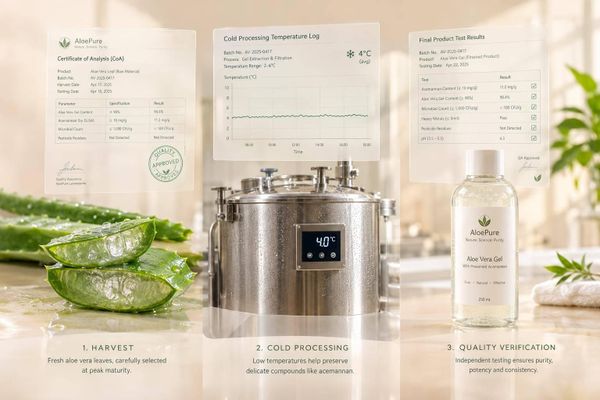
Acemannan supplements are a better fit if you want a more consistent, concentrated amount of aloe’s main active polysaccharide for immune and gut support. Processing matters here. Low-heat processing is worth checking for because heating aloe above 140°F (60°C) can reduce the active polysaccharides.
The Simplest Way to Choose the Right Aloe Form
If you want the fastest shortcut, think of it this way: juice is the broadest option, gel is more concentrated, and acemannan is the most focused.
Match the product label to your goal. And if you take diabetes medications or blood thinners, check with your clinician before using oral aloe.
FAQs
Which aloe form is best for my goal?
- Aloe juice: best for digestive support and internal wellness.
- Aloe gel: best for topical, skin-focused support, like soothing and wound healing.
- Acemannan supplement: best if you want a concentrated option for immune and overall wellness support.
Is aloe gel safe to swallow?
Aloe gel is considered possibly safe for short-term oral use. In studies, people used 15 mL per day for up to 42 days.
Still, talk with a healthcare professional before you swallow it. That matters even more if you're pregnant, breastfeeding, or have diabetes or autoimmune issues.
Also, check the label closely. You want inner leaf gel. Not the outer leaf. The outer leaf contains latex, which may cause side effects.
What should I look for on the label?
Check the aloe form before you buy: gel, juice, or whole-leaf/latex. If your goal is acemannan, stay away from anything that mentions aloe latex or anthraquinone laxatives.
With acemannan supplements, a few label details matter a lot. Look for:
- A COA or certificate of analysis
- Standardized testing
- An inner-leaf gel source
- An aloin/latex safety statement
Also, be careful with products that don’t say how much acemannan they contain. The same goes for formulas packed with fillers or extra additives.