Why Extraction Method Matters When Choosing an Aloe Product
Inner-leaf sourcing, cold extraction, and standardized acemannan affect aloe purity, aloin levels, and daily-use quality.

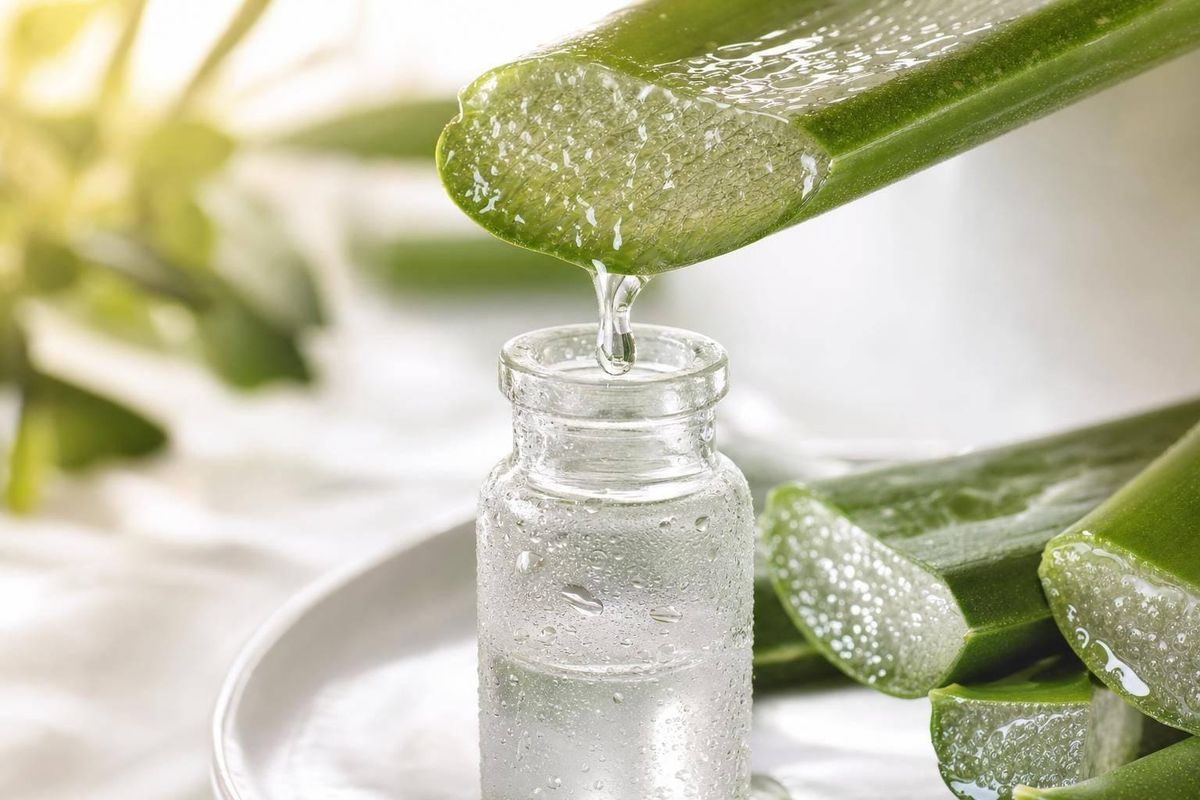
Not all aloe products are the same. If I want aloe for daily use, I’d look at how it was extracted before I trust the front label.
Here’s the short version:
- Inner-leaf aloe is usually the cleaner choice because it avoids most of the outer rind, where aloin comes from.
- Cold processing helps keep acemannan in better shape.
- Whole-leaf products may need more filtering because aloin starts in the rind and latex.
- High heat and spray drying can damage acemannan.
- Some research suggests well-processed acemannan may increase total SCFA production by up to 145%.
- If a label just says “aloe vera extract” or “aloe powder” without acemannan details, I’d treat that as a warning sign.
If I had to narrow it down fast, I’d check for:
- “100% Pure Inner Leaf”
- “Cold Extracted” or “Cold Ethanolic Extraction”
- Standardized acemannan listed as mg or %
- Third-party testing such as GMP or NSF
Quick Comparison
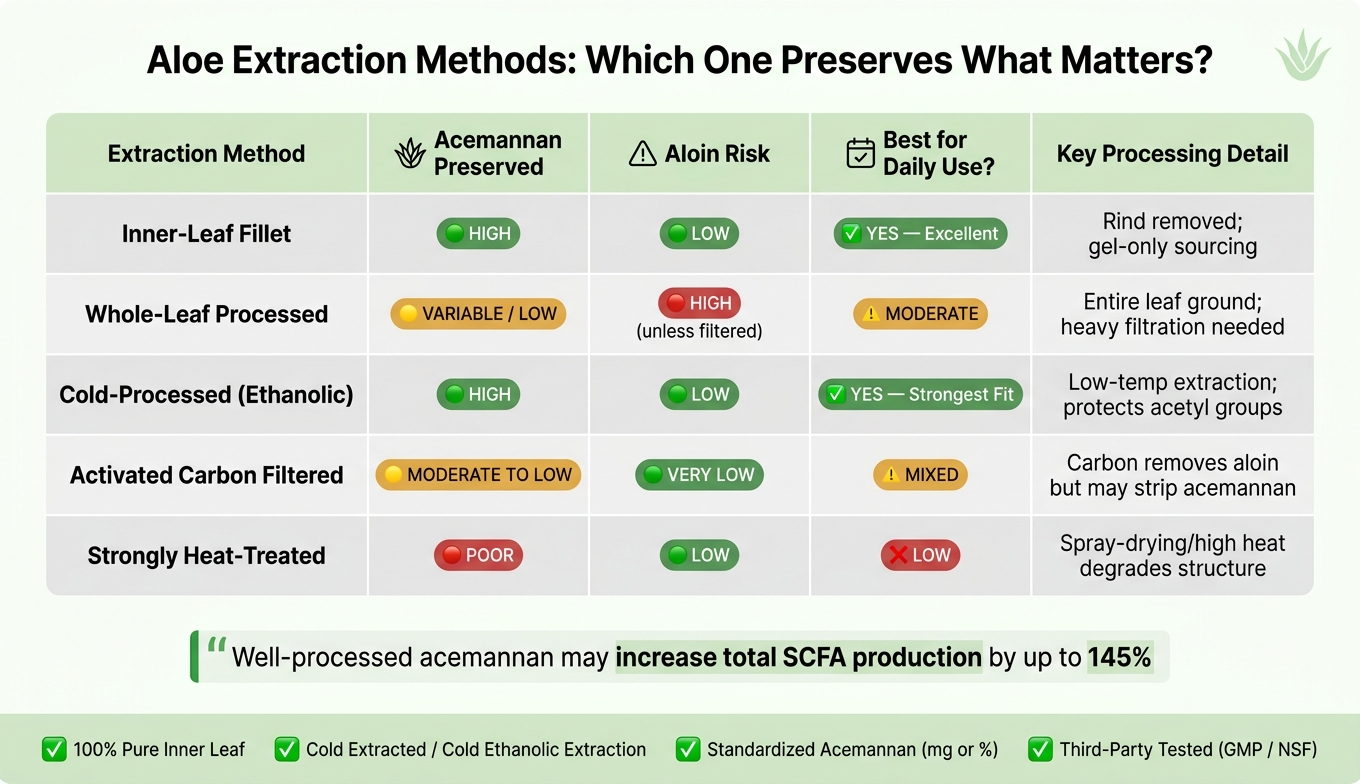
Aloe Extraction Methods Compared: Acemannan, Aloin & Daily Use Fit
| Method | Acemannan Kept Intact | Aloin Risk | Best Fit for Daily Use |
|---|---|---|---|
| Inner-leaf fillet | High | Low | Yes |
| Whole-leaf processed | Lower or mixed | Higher unless filtered | Maybe |
| Cold-processed | High | Low | Yes |
| Activated carbon filtered | Medium to low | Very low | Mixed |
| Strong heat-treated | Low | Low | Less ideal |
So if I’m judging aloe fast, I’d use one simple rule: look past “Aloe Vera” on the label and check the process. That usually tells me more than the marketing copy does.
sbb-itb-b88dd21
How Extraction Methods Affect Purity, Aloin, and Active-Compound Integrity
Inner-Leaf Filleting vs. Whole-Leaf Processing
The aloe leaf has two very different parts: the clear inner gel and the tough outer rind. With inner-leaf filleting, the rind and latex layer are removed, so you're left with the gel where acemannan is naturally concentrated. By contrast, whole-leaf processing grinds the entire leaf, rind included, into a slurry.
That difference matters for a simple reason: the outer rind and latex contain aloin (anthraquinones). So when a product uses whole-leaf processing, it usually needs extra filtration to bring aloin down. After that, the next step is how the gel is cleaned and stabilized.
Cold Processing vs. Heat-Treated Extraction
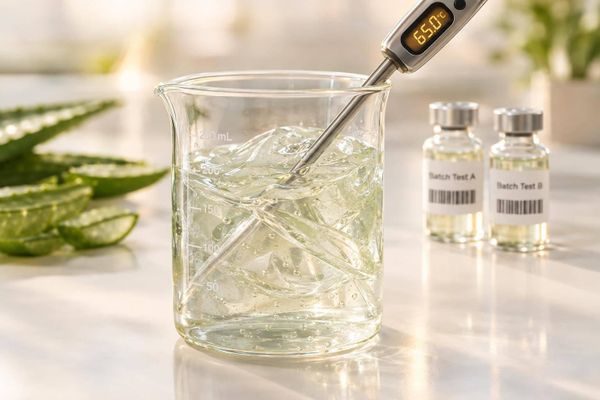
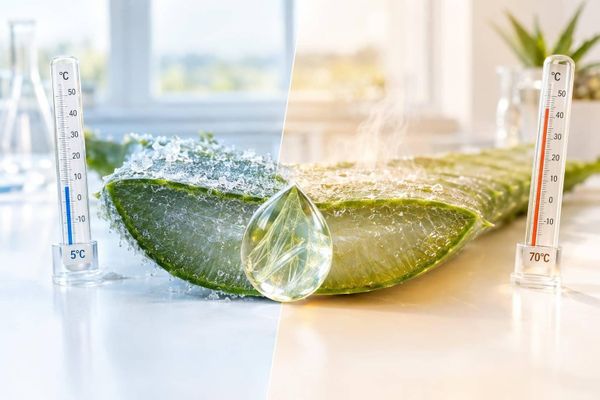
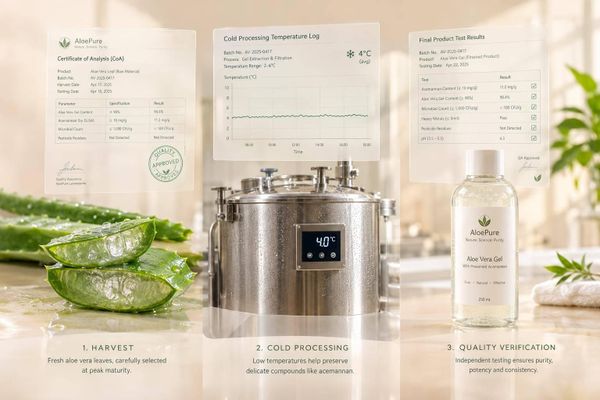
Heat can damage acemannan's structure and lower its activity. Cold extraction using ethanol is meant to limit thermal stress and help protect acemannan's native structure, acetylation, and the molecular weight range linked to activity.
On the flip side, high heat, spray drying, and aggressive concentration can degrade acemannan's structure and reduce its functional value.
Put simply, cold extraction is better at preserving acemannan's native structure and activity. Heat-treated processing can weaken both.
The extraction method shapes whether acemannan stays structurally intact. In many cases, those processing choices show up later in the label terms.
Which Processing Methods Work Best for Daily Wellness Use
Aloe Processing Methods Compared Side by Side
How aloe is processed shapes two things that matter most here: how much acemannan stays intact and how much aloin is left behind. You can see those tradeoffs most clearly when the main methods are lined up next to each other.
| Extraction/Processing Method | Typical Acemannan Preservation | Aloin/Anthraquinone Risk | Key Processing Steps | Routine-Use Fit |
|---|---|---|---|---|
| Inner-Leaf Fillet | High | Low (naturally avoided) | Manual or mechanical removal of outer rind; uses only inner gel | Excellent - targets bioactives while minimizing laxative effects |
| Whole-Leaf Processed | Variable/Low | High (unless filtered) | Grinding the entire leaf; requires heavy filtration | Moderate - often diluted and requires aggressive processing |
| Cold-Processed (Ethanolic) | High | Low | Low-temperature extraction to protect acetyl groups and molecular weight | Strongest fit - preserves the native structure for immune and gut goals |
| Activated Carbon Filtered | Moderate to Low | Very Low | Passing liquid through carbon to remove aloin/color | Useful for lowering aloin, but less ideal for acemannan retention |
| Strongly Heat-Treated | Poor | Low | Spray-drying or high-heat pasteurization | Low - heat lowers acemannan's structural integrity |
Why Gentle Processing Better Supports Acemannan-Focused Goals
The pattern is pretty simple: the more heat and heavy filtration involved, the harder it is for acemannan to stay in good shape.
"High-heat processing, spray drying, and aggressive concentration steps can break down acemannan or strip away critical acetyl groups from its structure - turning a promising polysaccharide into little more than generic plant fiber."
Cold processing matters because it helps preserve acemannan’s active structure. That’s also why inner-leaf processing tends to be a cleaner starting point for routine use.
For day-to-day wellness use, the best fit is processing that helps keep acemannan intact while keeping aloin low. In many cases, those details show up only in the label language, which is where the next section gets more practical.
How to Read Aloe Labels and Spot Better Processing Claims
Label Terms That Signal the Extraction Method
Once you understand how aloe gets processed, the label starts to tell a much clearer story. A few terms can point to the source of the aloe, how it was handled, and whether key compounds were measured.
"100% Pure Inner Leaf" is one of the strongest signals to look for. It points to gel-only sourcing, which is the clearest starting point for lower aloin risk. "Cold Extracted" or "Cold Ethanolic Extraction" points to low-temperature processing used to help protect acemannan. "Standardized" means each serving includes a guaranteed amount of acemannan.
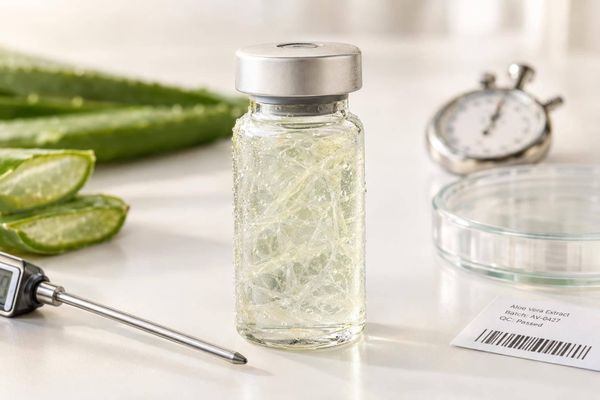
It also helps to look for third-party certifications like GMP and NSF. These can help confirm the product's label claims and quality standards.
If those terms don't appear, judging the product gets a lot harder.
Warning Signs When Processing Details Are Vague
Some labels sound fine at first glance but leave out the details that matter. For example, a label that says "aloe vera powder" or "aloe vera extract" without a standardized acemannan amount skips an important quality signal. You can't tell how much acemannan you're actually getting.
The same goes for "whole leaf" products that never explain how aloin was removed. Whole-leaf processing uses the outer rind, so it usually needs more filtration to bring aloin down. If the label stays silent on that point, it's worth taking a closer look.
No process detail at all is a red flag. And if there's no third-party certification anywhere on the package, there's no independent check on the label claims.
| Quality Signal | Strong Indicator | Red Flag |
|---|---|---|
| Leaf Part | 100% Pure Inner Leaf | Whole Leaf (no aloin removal detail) |
| Bioactive Content | Standardized acemannan (mg or %) | "Aloe Powder" with no specifics |
| Processing | Cold Ethanolic Extraction | Heat-Processed / Spray Dried |
| Verification | Third-Party Tested (NSF/GMP) | No independent certification |
Those clues can quickly narrow the field and show which products make more sense for daily use.
How to Match the Product to Your Wellness Goal
If you're looking for daily immune and gut support, which can be enhanced by foods that boost acemannan's benefits, the clearest fit is a product that combines inner-leaf sourcing, cold extraction, and a standardized acemannan amount per serving. Put those three details together, and you have the strongest label signs that the product was made to preserve acemannan.
When those details are missing, the label leaves too much unsaid. At that point, the next move is to choose the aloe product whose label lines up most closely with your goal.
Conclusion: The Best Aloe Choice Starts With How It Was Extracted
Once you know what to check on the label, the extraction method becomes the fastest way to judge quality. It tells you two big things: how much acemannan made it through processing, and how much aloin may still be there.
High heat, spray drying, and harsh concentration can damage acemannan and reduce its activity.
Inner-leaf sourcing and cold extraction are the better signs to look for because they help protect the compounds this article has already covered. They lower aloin risk, help keep acemannan intact, and make dosing more consistent. Put simply, the best-looking label is the one supported by gentle processing.
The label is your fastest quality check. Terms like "100% Pure Inner Leaf," "Cold Ethanolic Extraction," and a standardized acemannan amount suggest the product was made to preserve what makes aloe useful. If those processing details are missing, quality gets much harder to judge.
Match the label to your goal, and pick the extraction method that protects the compounds you want. For daily wellness use, that difference matters. It separates aloe that only sounds good from aloe that was made with care.
FAQs
How can I tell if an aloe product is low in aloin?
Check the source. Products made only from inner-leaf gel tend to be low in aloin by nature. If you're looking at a whole-leaf product, the label should say it was decolorized or purified to remove the laxative latex layer.
Most importantly, ask for a batch Certificate of Analysis (COA) that shows the aloin level is under 10 ppm for oral use. Be careful with vague claims like "aloin-free" when there's no exact number to back them up.
Why is acemannan listed in mg or percent important?
Listing acemannan in milligrams or as a percentage makes it much easier to check a supplement’s dose and strength. That matters because aloe gel is about 99% water, so dry-weight measurements usually give a clearer, more standardized view of how much bioactive content you’re getting.
Without those numbers, it’s tough to know if a product has a meaningful amount of acemannan or if it’s mostly filler. It also helps to see whether the listed amount is as-is or based on dry weight, since those two figures can paint very different pictures.
Is whole-leaf aloe a good choice for daily use?
Whole-leaf aloe can work for daily use only if it’s processed for safety. The reason is simple: it uses the entire leaf, including the rind. And that part of the plant has more anthraquinones, such as aloin, which act as strong laxatives.
If you plan to use whole-leaf aloe by mouth every day, look for products labeled purified or decolorized. It also helps to check for a certificate of analysis that lists a specific aloin result. A good target is 10 ppm or less.