5 Signs You’re Looking at a Premium Aloe Supplement
Spot high-quality aloe supplements by checking acemannan levels, cold processing, inner-leaf extract, batch CoAs, and clear sourcing.
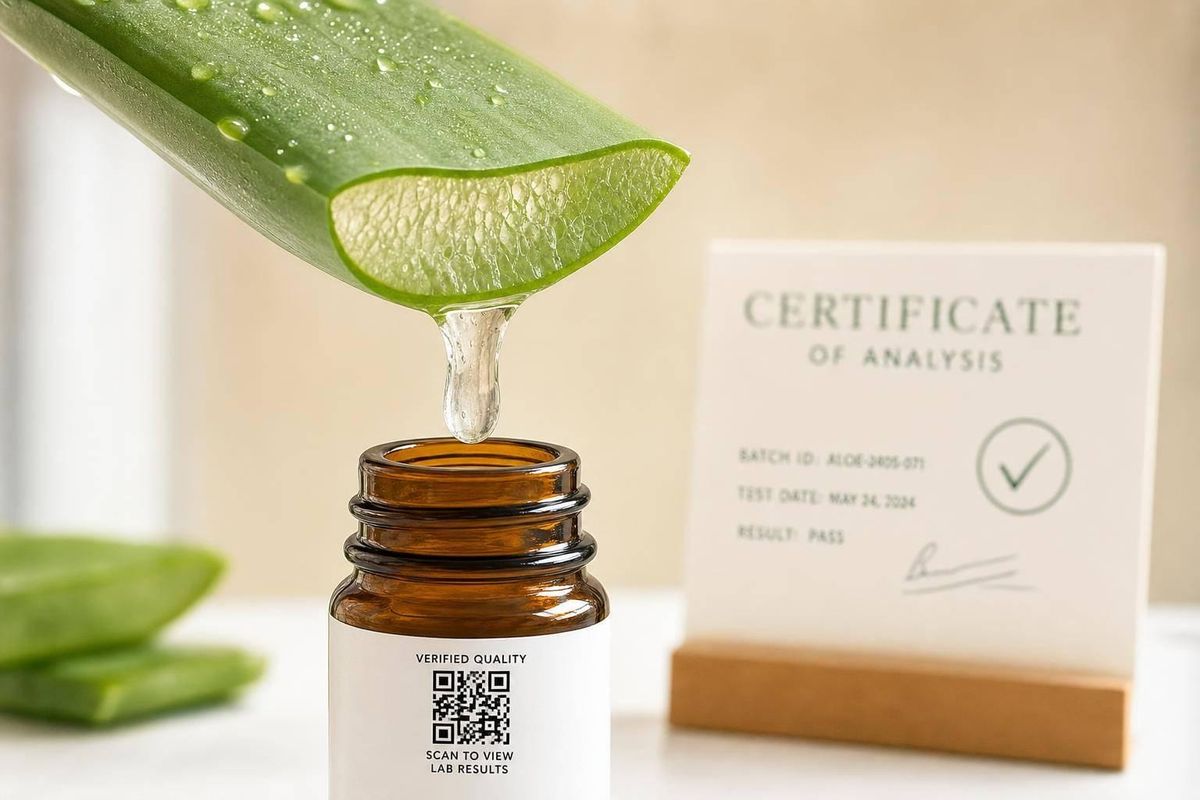
Most aloe supplements don’t tell you the one thing that matters most: how much acemannan is still in the product. If I were checking a bottle fast, I’d look for five things right away: a stated acemannan amount, low-heat processing, a plain label, batch testing, and clear source details.
Here’s the short version: if the label only says “aloe vera extract,” that’s not enough. I want to see inner leaf aloe, acemannan listed in mg per serving or as a standardized %, a batch-specific CoA, and details on how the aloe was processed. If those details are missing, I move on.
What I’d check first:
- Acemannan listed clearly on the label or CoA
- Cold-processed or cold-extracted aloe, not spray-dried
- Inner leaf instead of vague whole-leaf blends
- Third-party batch testing for acemannan, heavy metals, and microbes
- Clear dosage and traceable sourcing tied to the lot number
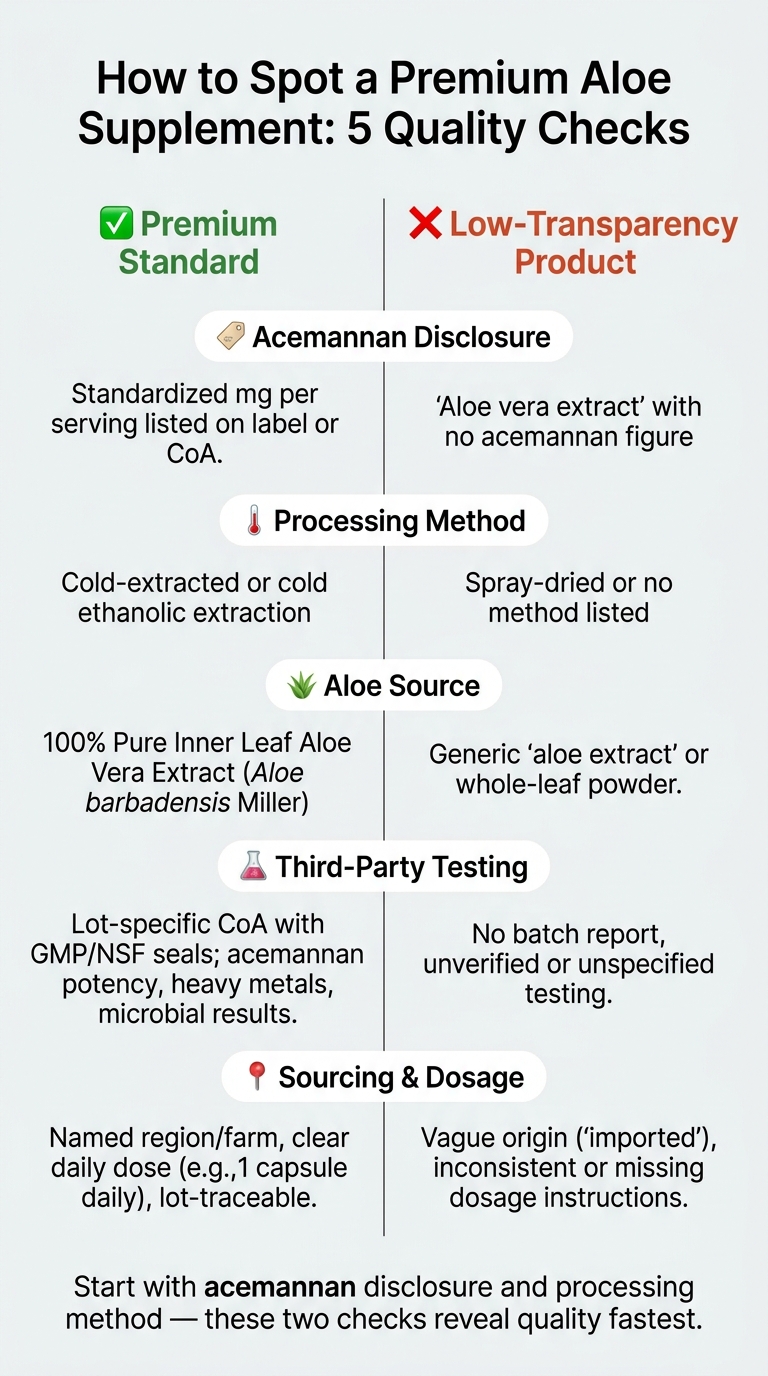
Premium vs. Low-Quality Aloe Supplement: 5 Key Quality Markers
Quick Comparison
| Check | What I want to see | What I avoid |
|---|---|---|
| Acemannan | Standardized amount in mg per serving or % | No acemannan number |
| Processing | Cold-extracted, low-heat methods | Spray-dried or no method listed |
| Aloe source | 100% pure inner leaf aloe vera extract | Generic aloe extract or diluted whole-leaf powder |
| Testing | Lot-specific CoA with batch match | No batch report |
| Label clarity | Species, plant part, dose, short ingredient list | Vague wording and extra fillers |
| Sourcing | Named region, farm, or batch trace | No origin details |
In short, I’d trust the label + lab report, not the front-of-bottle claims.
sbb-itb-b88dd21
Why Acemannan Content and Processing Matter Before You Buy
Acemannan breaks down fast after harvest, so processing matters just as much as the aloe itself. Its structure can start to fall apart within hours, which means a label claim doesn't say much unless someone has checked it. That's why the first thing to look for is verified acemannan content.
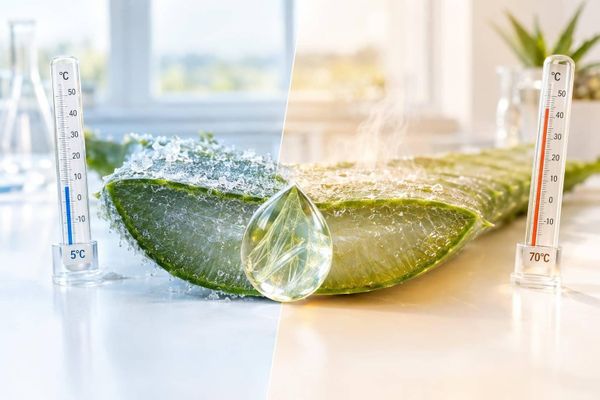
High heat, spray drying, and harsh concentration methods can damage acemannan and strip away acetyl groups that help define its structure.
Processing also affects cleanliness. Aloin comes from the outer rind, so inner-leaf extracts are usually the better pick. They tend to be cleaner and often provide more acemannan.
You can check these details in a few places:
- The Supplement Facts panel
- The package
- The brand's website
- The Certificate of Analysis (CoA)
Look for a stated acemannan percentage, the extraction method, and third-party test results. Start with the claim that's easiest to check: verified acemannan content.
1. Verified Acemannan Content
A premium aloe supplement label gives you a specific acemannan amount in milligrams or a stated acemannan percentage right on the Supplement Facts panel. That sounds simple, but there’s a catch: the number only means something if the processing kept it intact.
A generic “aloe vera” label doesn’t tell you how much acemannan is in the product. That’s the problem. A better label usually includes the word “standardized” - for example, “standardized acemannan content.” In plain English, that means the manufacturer measured it and confirmed a set acemannan dose.
You’ll also want to check how the aloe was processed. Look for methods meant to preserve acemannan, such as cold extraction or cold ethanolic extraction. If the label says nothing about extraction, that’s a gap worth noticing.
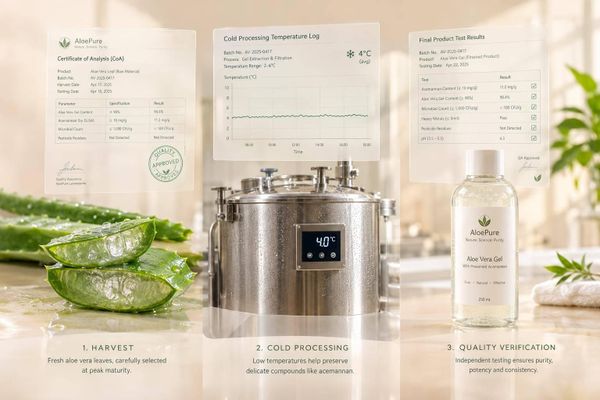
The CoA should back up what the label says. If the bottle lists an acemannan amount, the CoA should show the same thing. Otherwise, the claim is just sitting there on its own.
The next sign is whether that stated amount survived minimal processing.
2. Minimal, Aloe-Appropriate Processing
Once acemannan is verified, the next step is simple: did the processing keep it intact? A product can name the right compound, then lose much of its value during manufacturing. Heat-heavy methods like spray drying can damage acemannan or remove key acetyl groups from its structure.
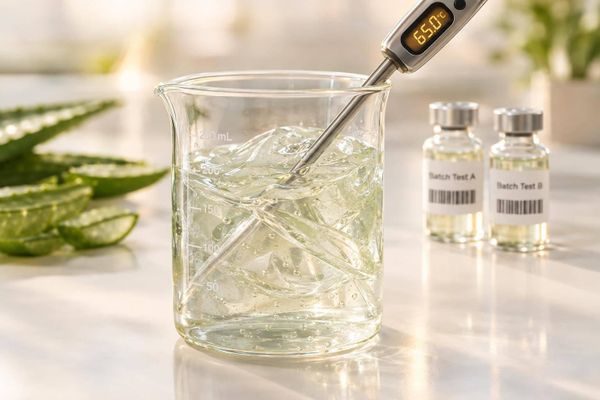
That’s why it helps to look for terms like "cold-processed", "cold-extracted," or "cold ethanolic extraction." These methods limit heat exposure and help preserve acemannan’s original structure. If the label says "spray-dried," take that as a warning sign.
The source material matters too. 100% pure inner leaf aloe vera extract is usually a better pick than whole-leaf powder, which may be more diluted and tougher to purify.
A solid label should also note the extraction method and any stabilization step. If the process isn’t listed at all, that weakens the product’s case.
Next, check whether the Supplement Facts panel matches that processing claim.
3. Clear Supplement Facts and Ingredient Labels
The Supplement Facts panel should tell you three things right away: the aloe species, the plant part, and the acemannan dose. For the species, look for Aloe vera (L.) Burm. f. or Aloe barbadensis Miller. That confirms you’re getting the right aloe source. If the label only says “aloe extract,” skip it.
Then check how clearly the product names the aloe source. A label like “100% Pure Inner Leaf Aloe Vera Extract” is a good sign. Vague wording like “aloe extract” isn’t enough. Better products spell out the plant part, not just the ingredient name. Once that’s clear, the panel should also show exactly how much acemannan is in each serving.
The main number to look for is the standardized acemannan amount per serving. If acemannan per serving isn’t listed, the claim is incomplete. After that, read the rest of the panel with a skeptical eye. The Other Ingredients list should stay short. Hypromellose (HPMC) capsules are a plus because they’re plant-based and moisture-stable. Fillers, sweeteners, and synthetic prebiotics are red flags.
4. Third-Party Testing and Purity Checks
After label claims, knowing how to choose a quality acemannan supplement requires checking independent testing. Premium brands don’t just make claims on the bottle. They back them up with outside testing.
Look for GMP and NSF seals as baseline manufacturing checks. If neither seal appears, that’s worth flagging. These facility seals matter, but the lot-specific CoA matters more.
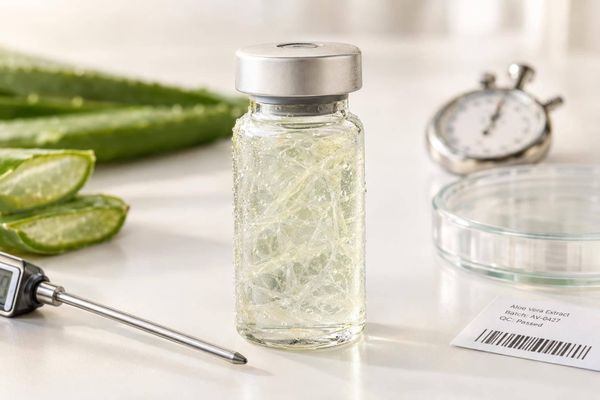
Beyond manufacturing certifications, look for lot-specific Certificates of Analysis (CoAs). A lot-specific CoA applies to the exact batch in your bottle. A strong CoA should show:
- acemannan potency
- heavy metals screening
- microbial contamination
It should also match the bottle’s exact lot number and the stated acemannan claim.
Polysaccharide testing is an even stronger sign of quality control. It goes past a basic potency check by confirming acemannan’s structural integrity. Put simply, it helps show that the key compound is still what it’s supposed to be. Batch-level lab reports and polysaccharide data are good signs that the brand is paying close attention to quality.
Next, check whether the supplement gives clear dosage instructions and traceable sourcing.
5. Clear Dosage Instructions and Traceable Sourcing
A premium aloe supplement should tell you exactly how much to take and where the aloe came from. Look for a clear daily dose and a named origin.
On the dosage side, check for plain directions such as "1 capsule daily." That level of detail shows the brand has set a defined serving size. Capsules can also help deliver a steady dose and protect acemannan from moisture and air. This ensures you receive the full health benefits of acemannan. Then compare that dose with the lot number on the package.
On the sourcing side, vague labels are a red flag. Phrases like "a named region or farm" or simply "aloe vera extract" tell you very little. Better brands give more detail by naming the region, farm, and growing method. That makes it much easier to match the bottle to the paperwork.
Batch-level traceability lets you connect the bottle to its lot number and source details. When the dose, source, and lot number all match, that’s a strong sign the product was made for consistency, not just marketing. Use those details to read the label and lab report line by line.
How to Read Labels, Seals, and Lab Reports
Use this quick scan to check a premium aloe supplement before you buy. Start with the Supplement Facts panel, the seals, and the CoA.
On the Supplement Facts label, look for standardized acemannan content with a milligram amount per serving. If acemannan isn't listed, move on.
Here’s a fast way to tell the difference between a strong label and a weak one:
| Label Element | Strong Wording | Weak Wording |
|---|---|---|
| Aloe source | 100% Pure Inner Leaf Aloe Vera Extract | Aloe vera extract, aloe powder |
| Processing method | Cold-Extracted / Cold Ethanolic Extraction | No processing method listed |
| Acemannan disclosure | Standardized acemannan content (mg per serving) | Aloe vera extract with no acemannan figure |
| Sourcing detail | Named region, farm, or growing method | No origin listed |
Also check for NSF and GMP marks. Those marks point to manufacturing oversight, but they do not confirm potency. For that, go straight to the CoA.
Then match the bottle’s lot number to a batch-specific CoA. On the CoA, check purity, potency, and safety results from a named third-party lab.
Quick Comparison Table for Shoppers
Use this as a fast filter when label claims start to blend together. If the bottle and CoA feel packed with details, compare the basics side by side.
| Quality Marker | Premium Standard | Low-Transparency Product |
|---|---|---|
| Acemannan Disclosure | Standardized mg per serving | "Aloe vera extract" with no acemannan figure |
| Processing Method | Cold ethanolic extraction | Heat-processed or spray-dried |
| Botanical Identity | Aloe vera / Aloe barbadensis Miller, inner leaf | Generic "aloe" or whole-leaf powder |
| Inner Leaf vs. Whole Leaf | 100% pure inner leaf aloe vera extract | Whole leaf or diluted blend |
| Third-Party Testing | Lot-specific CoA; GMP/NSF seals | Not verified or unspecified |
| Aloin and Purity | CoA confirms <10 ppm aloin; no fillers | No aloin data; fillers often present |
| Daily Dose | Clear directions (e.g., 1 capsule daily) | Vague or inconsistent instructions |
| Sourcing Transparency | Named region or farm | "Imported" or no origin listed |
Start with acemannan disclosure and processing method. Those two points usually tell you a lot fast. Then use the rest of the table to check if the product holds up.
Conclusion
Now that the five checks are on the table, the choice gets pretty simple: look at what the label and lab report can actually prove.
A premium aloe supplement should show its quality with clear, checkable details:
- verified acemannan
- minimal processing
- transparent labeling
- third-party testing
- clear sourcing
If acemannan isn't listed, you have no way to verify potency.
And when both acemannan and processing details are missing, that's usually a red flag for weak transparency.
For one last side-by-side review, use the table above. Pick the product that passes all five checks. Skip the ones that miss the core checks.
FAQs
How do I verify a batch-specific CoA?
Look for hard numbers, not fuzzy wording like “pass” or “conforms.” A reliable CoA should list the exact batch number so you can match it to your product.
It should also include:
- A numeric acemannan result
- A numeric aloin result, ideally below 10 ppm for oral-use products
- The test method used
- Proof of ISO/IEC 17025 lab accreditation
If those details aren’t there, the CoA doesn’t tell you much.
Why is inner leaf aloe preferred over whole leaf?
Inner-leaf aloe comes from the clear, gel-filled center of the plant, after the rind and latex are removed. Because of that, it’s naturally lower in aloin - the anthraquinone compounds found mainly in the outer rind and latex.
Whole-leaf aloe is made from the entire leaf, including the rind. So it tends to contain more aloin and usually needs more purification before it’s used in oral products.
Does spray-dried aloe always mean lower quality?
Not always. Spray-drying doesn’t automatically mean lower quality, but it can cut down aloe vera’s biological activity in a big way.
Research shows it may reduce acemannan acetylation by as much as 70%. Since acemannan is heat-sensitive, the drying method plays a direct role in how much of its bioactive structure stays intact.
That’s why label details matter. Check for clear information about the drying method and any added carriers, such as maltodextrin.