How to Choose a Quality Acemannan Supplement
Choose acemannan supplements by verifying inner-leaf gel, acemannan %, low aloin, cold processing, and a third-party COA.
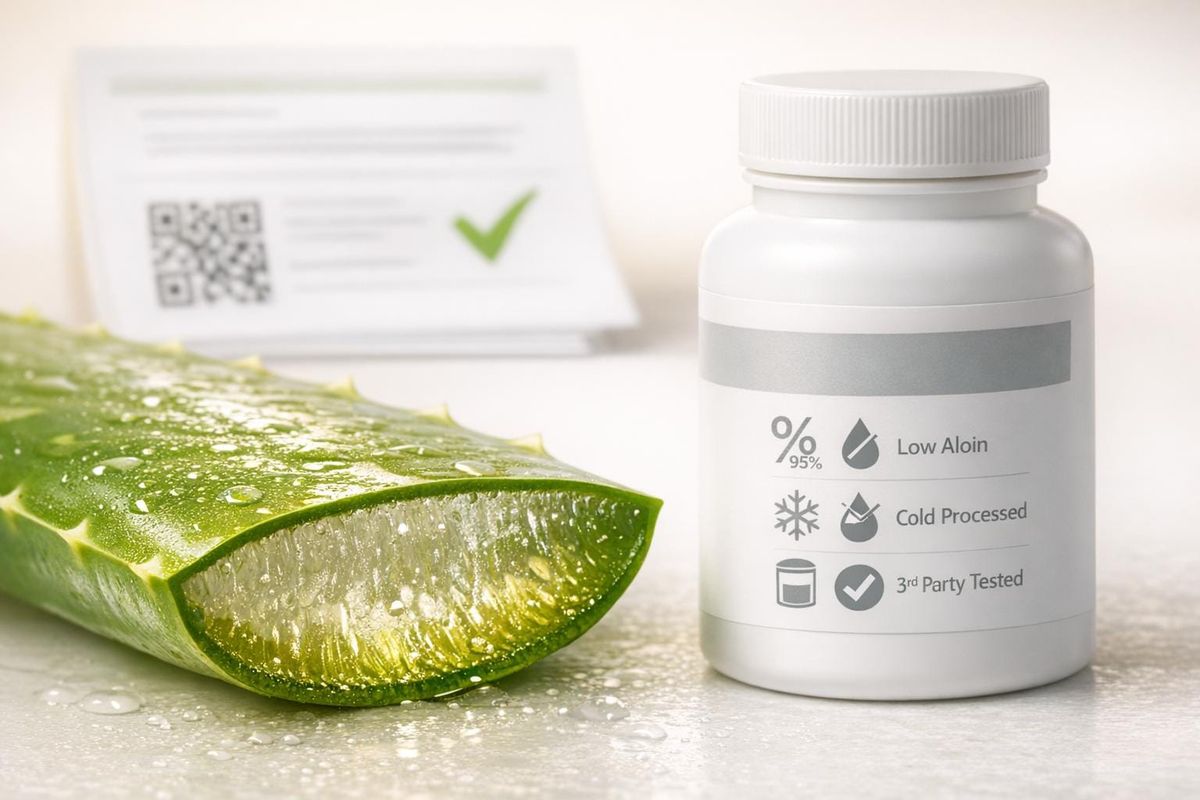
Acemannan, a key compound in Aloe vera, supports immune and digestive health. But not all supplements are created equal. To ensure you're getting a product that works, focus on these essentials:
- Source: Choose supplements made from inner-leaf gel, not whole-leaf, to avoid aloin (a laxative compound).
- Standardization: Look for clear acemannan content (e.g., 40% or more for powders).
- Processing: Opt for cold-processed or freeze-dried products to preserve bioactivity.
- Certifications: Verify quality with IASC certification and request a Certificate of Analysis (COA).
- Label Transparency: Ensure the label specifies botanical name (Aloe barbadensis Miller), acemannan content, and aloin levels (<10 ppm).
Capsules and powders are ideal for consistent dosing, while liquid gels may vary in quality. Always check for third-party testing to confirm safety and effectiveness.
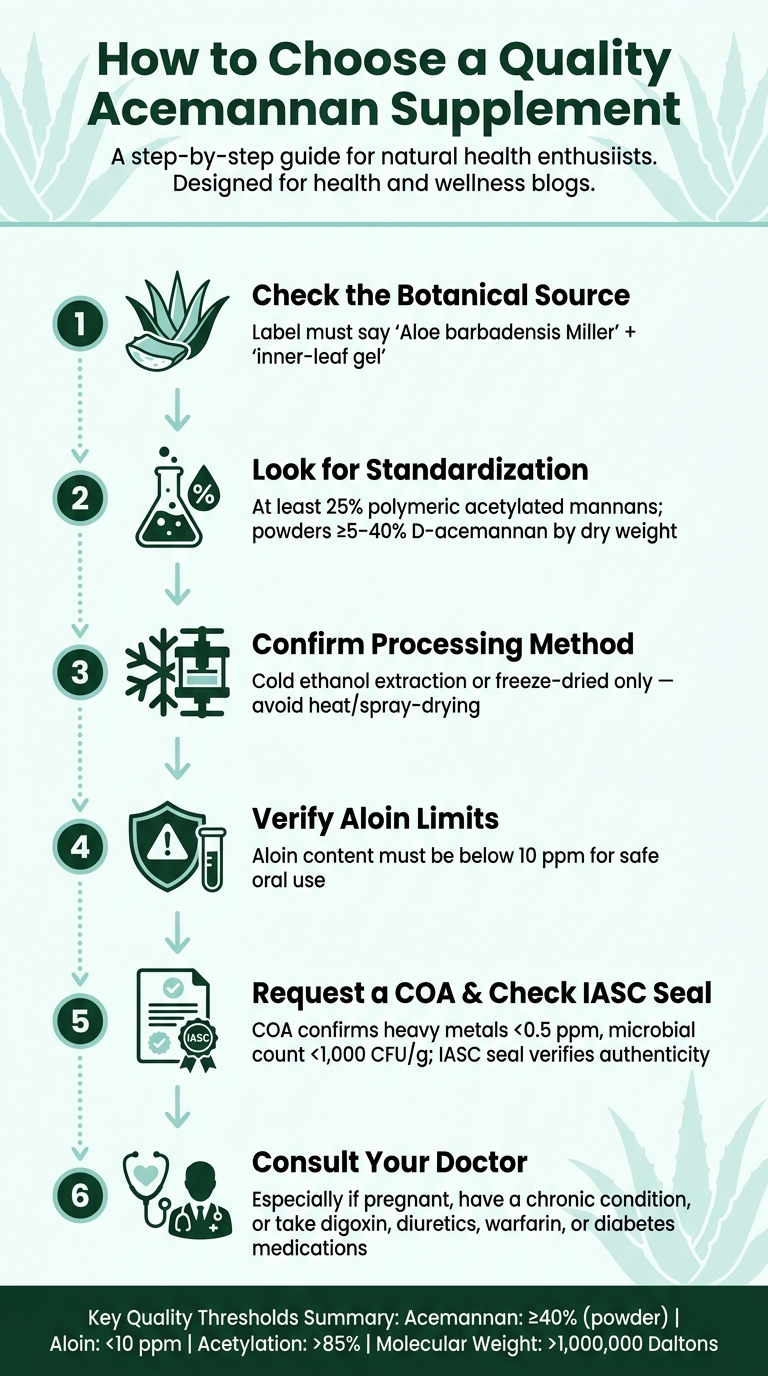
How to Choose a Quality Acemannan Supplement: Step-by-Step Checklist
What to Look for in a Quality Acemannan Supplement
When evaluating an acemannan supplement, the key factors to focus on are the aloe source, acemannan concentration, and the transparency of the labeling.
Purity and Aloe Vera Sourcing
Start by ensuring the supplement uses only inner-leaf gel. The outer leaf contains latex with anthraquinones, specifically aloins, which act as stimulant laxatives and may cause abdominal discomfort. To ensure safety, check that the aloin content is under 10 parts per million (ppm) - a critical threshold for safe daily oral consumption.
Two structural markers indicate the purity of the product. Look for a degree of acetylation above 85% and a molecular weight exceeding 1,000,000 Daltons, as these characteristics confirm high biological activity. Additionally, inspect the "Other Ingredients" section for fillers like maltodextrin, which can indicate a lower-quality aloe source.
Next, confirm that the acemannan content is clearly standardized.
Standardized Acemannan Content
Be wary of vague labels that only mention "aloe vera extract." Instead, look for a specific amount of acemannan or polysaccharides, either listed in milligrams or as a percentage. For powders, the baseline standard is at least 5% D-acemannan by dry weight, with high-potency extracts reaching up to 40% or more. For liquid supplements, aim for a minimum of 0.25 mg of D-acemannan per mL.
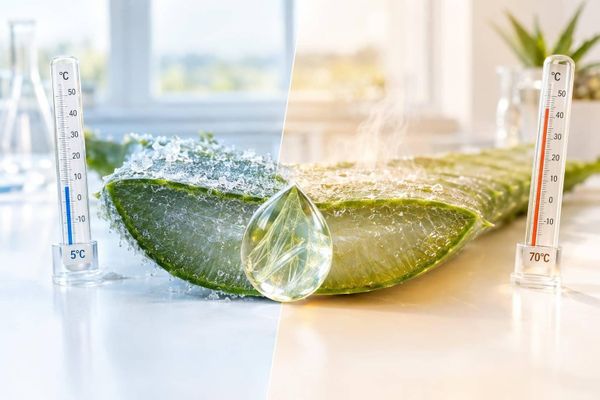
The extraction process also plays a critical role. Methods like cold ethanol extraction and freeze-drying help preserve the acetyl groups and maintain the high molecular weight that contribute to acemannan's effectiveness. Avoid products processed with heat-based methods, such as spray-drying, as these can degrade the acetyl groups and break down the polysaccharide chains, reducing their biological activity.
Finally, the label should provide enough detail to confirm the product's quality.
Label Transparency
A reliable product label should clearly outline what you're purchasing. At the very least, it should include the correct botanical name - Aloe barbadensis Miller - and confirm that the supplement uses inner-leaf gel, not whole-leaf material. The acemannan content should be explicitly stated, avoiding vague terms like "proprietary blend."
| Label Detail | What to Look For |
|---|---|
| Botanical name | Aloe barbadensis Miller |
| Plant part | Inner-leaf gel (not whole-leaf) |
| Acemannan content | Specific % or mg (e.g., 40% assay) |
| Aloin levels | < 10 ppm confirmed |
| Extraction method | Cold ethanol extraction or freeze-dried |
| Additives | No maltodextrin or unnecessary fillers |
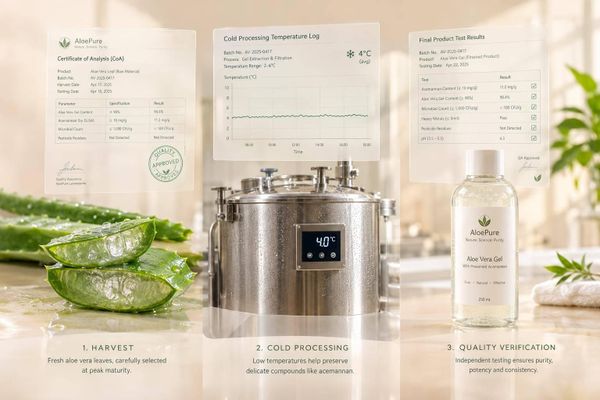
A trustworthy brand will also provide a Certificate of Analysis (COA) upon request. This document, issued by an independent lab, confirms critical details such as acemannan content, aloin levels, and safety checks for heavy metals and microbes. If a COA isn't available, consider it a clear warning sign.
sbb-itb-b88dd21
Certifications and Testing: How to Verify Quality and Safety
When it comes to aloe-based products, claims on labels can sometimes be misleading. To ensure you're getting a high-quality and safe product, it's important to verify these claims through certifications and independent testing. Let’s break down the certifications and testing protocols that help confirm these standards.
Certifications Worth Looking For
One of the most trusted seals in the aloe industry is the International Aloe Science Council (IASC) Certification. This certification ensures that the product contains genuine aloe vera in effective amounts, sourced from approved facilities, and labeled accurately.
"The IASC Certification Seal indicates that quality aloe vera has been used to formulate the product, and guarantees that the product has met the IASC certification standards for quality and purity of aloe vera." - International Aloe Science Council
In addition to IASC certification, other labels can provide assurance of quality. Look for:
- Good Manufacturing Practices (GMP): Indicates compliance with strict production standards.
- USDA Organic: Confirms pesticide-free sourcing.
- Kosher or Vegan Certifications: Useful for meeting specific dietary preferences.
It's always a good idea to check the IASC website to confirm the current status of a product’s certification, as these can expire.
Third-Party Testing and Certificates of Analysis (COA)
Certifications are a good start, but independent lab testing goes a step further by providing batch-specific details. A Certificate of Analysis (COA) is a document that verifies the contents and quality of a specific batch of product. For aloe vera supplements, a reliable COA should confirm:
- Acemannan Content: At least 40% by dry weight, verified through HPLC or AOAC 2018.14 standards.
- Contaminant Levels: Lead and arsenic should be below 0.5 ppm, and microbial counts under 1,000 CFU/g.
If a manufacturer cannot provide a COA, it’s a major warning sign. Additionally, check for acetylation data in the COA. Acetyl groups are critical to acemannan’s biological activity, so look for a degree of acetylation above 85%.
Certified vs. Non-Certified Products: A Side-by-Side Comparison
The gap between certified and uncertified products is more than just a matter of documentation. Certified products undergo rigorous scrutiny, while uncertified ones may lack transparency or quality assurance.
| Feature | Certified / Third-Party Tested | Non-Certified / Generic |
|---|---|---|
| Acemannan Content | Verified minimum (e.g., 40% for powders) via HPLC/AOAC | Vague "aloe" claims; often little to no acemannan |
| Aloin Levels | Controlled below 10 ppm | Risk of high latex content causing gastric distress |
| Bioactivity | Acetylation degree confirmed (>85%) | Often deacetylated due to heat processing |
| Safety Testing | Heavy metal and microbial screening | Inconsistent or absent contaminant testing |
| Traceability | Full documentation (COA, TDS, SDS) | Limited transparency on sourcing or processing |
| Label Accuracy | Validated by independent professionals | Labels may lack specific assay data or be misleading |
This comparison highlights why certifications and third-party testing are essential for ensuring both safety and efficacy in aloe-based products.
Picking the Right Form and Brand
Forms of Acemannan Supplements
Acemannan comes in various forms, including capsules, tablets, freeze-dried powders, liquid gels, and juices. Capsules and tablets are convenient because they offer pre-measured doses, typically containing a concentrated extract with around 80% acemannan purity. They’re also shelf-stable for up to two years if stored in a cool, dry place.
Liquid gels and juices, on the other hand, can vary greatly in quality. Standard pasteurization processes may degrade acetyl groups, which are critical for bioactivity, while cold-processing methods help preserve them. A study analyzing 15 aloe beverages found that flavored drinks with 30–77% aloe content delivered less than 30 mg of acemannan per 100 g, and many unflavored options had acetylation levels below 35%. These levels fall short of what's needed for meaningful biological effects.
"The bioactivity of these products may be determined not only by the amount of acemannan but also by its degree of acetylation, which can be seen as a measure of its quality." - Francesca Comas-Serra et al., University of the Balearic Islands
Additionally, heat treatments can reduce acemannan’s bioactivity. Freeze-drying is a better option for preserving its beneficial properties.
Once you’ve decided on a format, it’s essential to evaluate the brand’s transparency and manufacturing practices.
How to Assess a Brand's Reliability
When choosing a brand, look for clear information about its acemannan content, extraction methods, and aloe source. High-quality products typically use inner-leaf gel, which ensures safety by keeping aloin levels below 10 ppm. If a product doesn’t specify its acemannan percentage or standardization, it’s likely lower in quality.
Reliable brands prioritize consistency by following cGMP standards and using non-thermal processing to preserve acemannan’s structure. Companies that oversee the entire production process - from aloe farming to bottling - are more likely to deliver consistent results.
"Many low-cost formulas use diluted whole-leaf powders with minimal standardized Acemannan, so you may be paying for filler rather than functional ingredients." - Aelius Naturals
Before purchasing, ask for a Certificate of Analysis (COA) or Technical Data Sheet (TDS). These documents should confirm acemannan levels (tested via HPLC or AOAC methods), ensure heavy metals like lead are below 0.5 ppm, and verify microbial safety.
Capsules vs. Liquid Supplements: A Side-by-Side Comparison
Here’s a quick look at how capsules/tablets compare to liquid gels/juices:
| Criterion | Capsules / Tablets | Liquid Gels / Juices |
|---|---|---|
| Dose Accuracy | Pre-measured, standardized doses | Variable, depending on concentration |
| Convenience | Shelf-stable and portable | Often needs refrigeration after opening |
| Bioactivity | Cold-processing retains bioactivity | Heat processing may degrade bioactivity |
| Additives | Minimal additives | May contain sweeteners or preservatives |
| Standardization | Standardized (~80% acemannan) | Levels can vary widely |
| Shelf Life | Up to 24 months in dry storage | Shorter once opened |
Making a Well-Informed Choice
Matching Your Supplement to Your Health Goals
Choosing the right acemannan supplement means aligning its form and potency with your specific health objectives. For immune support, standardized capsules or powders are ideal, as they provide consistent doses. Acemannan supports immunity by activating TLR2/TLR4 receptors on macrophages. For gut health, decolorized inner-leaf gel is a better choice, as it soothes the digestive system without causing laxative effects. If your focus is on metabolic health, research suggests using standardized oral extracts in doses ranging from 50–400 mg per day to help maintain healthy fasting glucose and HbA1c levels. These recommendations reflect the processing standards discussed earlier, ensuring the acemannan remains bioactive.
| Health Goal | Recommended Form | Key Consideration |
|---|---|---|
| Immune Support | Capsules / Standardized Powder | Standardized acemannan, cold-processed |
| Gut Health | Decolorized Inner-Leaf Gel | Aloin-free (<10 ppm) |
| Metabolic Health | Standardized Oral Extract | 50–400 mg/day range used in research |
| Skin & Wound Healing | Topical Gel (90–100% inner-leaf) | Apply 2–4 times daily to affected area |
Safety Considerations and Precautions
Once you've matched the supplement to your goals, it’s crucial to review safety measures to avoid potential risks. The safety of aloe products heavily depends on how they are processed. The greatest risk comes from products containing aloe latex (the outer leaf), which includes aloin. Aloin is an anthraquinone compound that can lead to severe dehydration, low potassium (hypokalemia), and, in rare cases, liver damage with prolonged use. Proper processing ensures acemannan’s bioactivity while minimizing such risks.
"Oral use should favor decolorized, standardized products; avoid chronic ingestion of anthraquinone-containing latex due to dehydration, hypokalemia and rare hepatotoxicity risks." - DietarySupplementDB
Another important factor is the possibility of drug interactions. If you take medications like digoxin, diuretics, warfarin, or diabetes drugs, consult your doctor before starting an acemannan supplement. Aloe can either enhance or interfere with these medications’ effects. For topical products, roughly 1%–6% of users may experience contact dermatitis. To avoid this, perform a patch test on a small area of skin before broader application.
Step-by-Step Checklist for Choosing a Quality Acemannan Supplement
Here’s a quick checklist to help you select a high-quality acemannan product:
- Check the botanical source. Ensure the label lists Aloe barbadensis Miller and specifies "inner-leaf gel." Whole-leaf extracts are acceptable only if clearly marked as "decolorized".
- Look for standardization. The product should indicate the percentage of acemannan or total polysaccharides, with at least 25% polymeric acetylated mannans.
- Confirm processing method. Choose products that are cold-processed or freeze-dried to preserve acetyl groups.
- Verify aloin limits. For oral use, ensure the aloin content is below 10 ppm to avoid gastrointestinal discomfort and electrolyte imbalances.
- Request a COA and check for the IASC seal. A Certificate of Analysis (COA) confirms safety standards, such as heavy metal levels (e.g., lead below 0.5 ppm) and microbial safety. The International Aloe Science Council (IASC) seal verifies aloe authenticity and acemannan content.
- Consult your doctor if you are pregnant, have a chronic condition, or take prescription medications.
FAQs
How can I tell if an acemannan label is trustworthy?
To determine if an acemannan label is reliable, closely inspect the Supplement Facts and accompanying technical details. Ensure that acemannan is specifically listed as the active ingredient - avoid products that use ambiguous terms like "aloe extract." Additionally, check for a Certificate of Analysis (CoA) that is no older than six months. This document should provide key details, including the percentage of acemannan, the validated testing method (such as HPLC-SEC), and results of heavy metal testing with detection limits at or below 0.1 ppm.
What should a COA show for acemannan and aloin?
A Certificate of Analysis (COA) should verify that the product contains at least 5% acemannan content by dry weight, ensuring it meets established quality standards. Additionally, it must confirm that aloin levels are under 10 parts per million (ppm) to guarantee safety and prevent any laxative effects. A reliable COA serves as scientific evidence that the supplement is genuine, safe, and thoroughly purified for consumer use.
What dose of acemannan should I start with?
There’s no one-size-fits-all starting dose for acemannan since individual needs and product formulations can differ. It’s essential to follow the instructions provided by the manufacturer of your chosen supplement. For instance, Advanced Acemannan suggests taking one capsule daily with water, ideally in the morning to aid absorption. As always, consult a healthcare professional before beginning any supplement to ensure it aligns with your health requirements.