New Research on Acemannan: What a 2024 Medical Journal Study Suggests
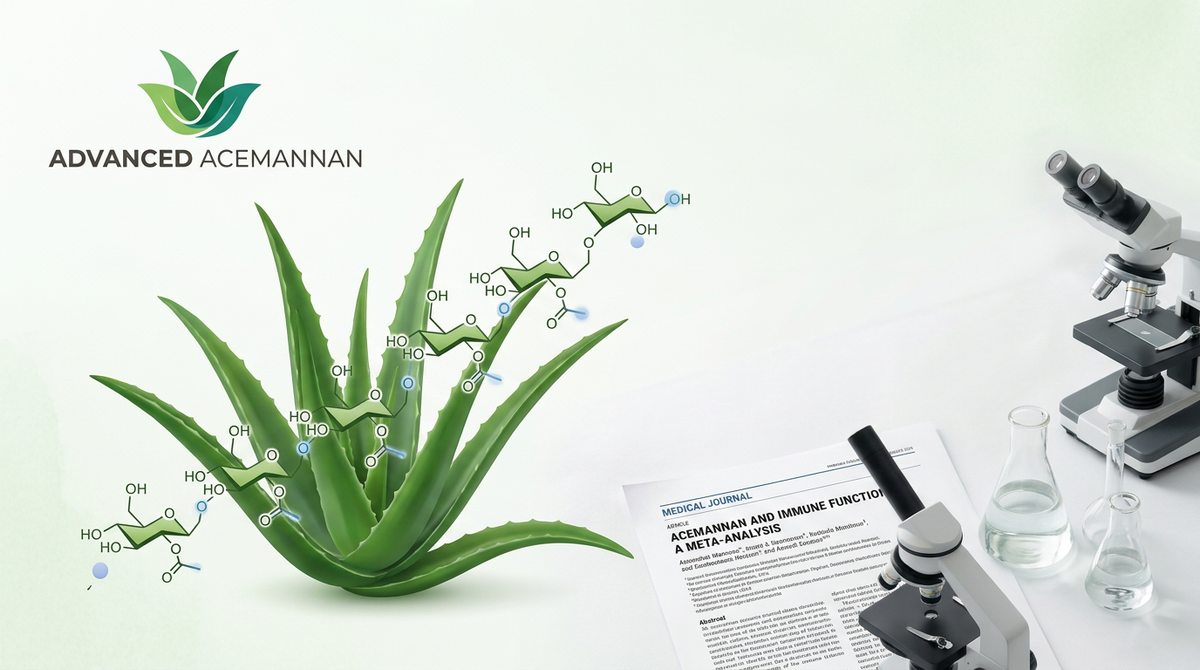
A new randomized crossover-controlled study published in a medical journal adds timely insight into how acemannan may work in the body. In the trial, overweight and obese men consumed aloe vera juice with acemannan, and the researchers reported improvements in antioxidant status, a decrease in plasma TNF-α, and a stronger feeling of fullness after a meal. Link
That matters because acemannan is one of the best-known bioactive polysaccharides in Aloe vera, and recent reviews continue to describe it as a molecule of interest for immunomodulation, gut-related activity, and wound-healing research. At the same time, the science is still evolving, so it is best to frame acemannan as a promising ingredient under study rather than as a proven treatment. Link
One of the clearest takeaways from the newer research is that acemannan may have value beyond traditional aloe use. The study’s findings on antioxidant status and post-meal satiety suggest possible relevance for metabolic wellness conversations, especially when paired with broader research interest in acemannan’s biological activity. Link
Researchers have also explored acemannan in other areas, including immune signaling and tissue repair. A review in the biomedical literature describes acemannan as a natural polysaccharide with biodegradability and biocompatibility, while older studies have shown it can influence dendritic cell maturation and immune response pathways. Link
For readers, the practical message is simple: acemannan is gaining more attention in medical research, but its role is still being defined. The most responsible way to talk about it is as a science-backed aloe compound with encouraging early evidence, not as a cure or guaranteed outcome. Link