Acemannan Structure and Antioxidant Effects
Acetylation and molecular weight determine acemannan's antioxidant activity; heat and processing can reduce acetylation and alter efficacy.

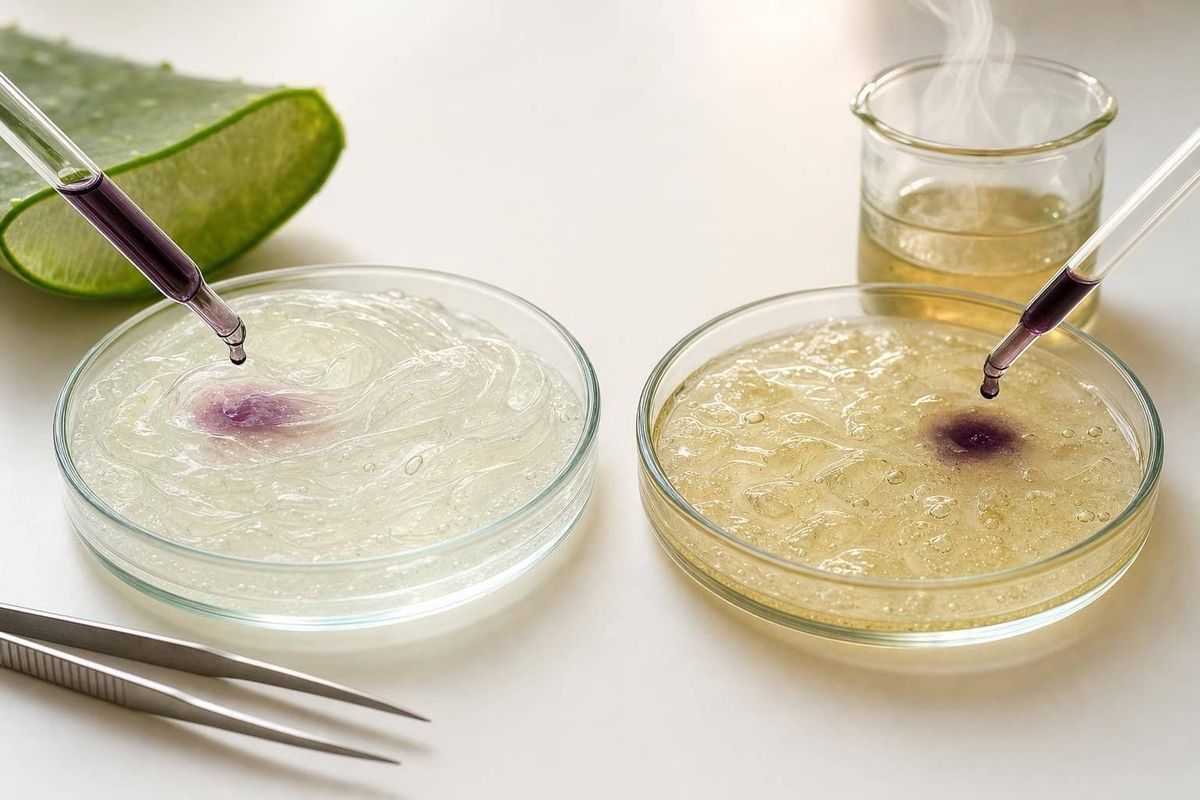
If acemannan’s structure changes, its antioxidant effect can change too. From the research, the main drivers are acetylation, molecular weight, and keeping the β-(1→4) backbone intact.
Here’s the short version:
- Acemannan is an acetylated glucomannan from aloe vera gel.
- Higher acetylation is linked with stronger free-radical scavenging in lab tests.
- Molecular weight can vary from about 30 to 150 kDa, based on extraction and purification.
- In one DPPH assay, acemannan showed 45% radical scavenging and kept activity longer over 24 hours than CoQ10 and malvidin.
- Heat, drying, acid, and pH can strip acetyl groups or break the polymer chain.
- In one extraction comparison, 25°C (77°F) water extraction gave 69.4% recovery, while 90°C (194°F) gave 46.3%.
- After processing, material around 150 kDa can drop to about 30 kDa.
- When structure shifts, solubility, viscosity, gel behavior, and water-binding can shift too.
So if you’re looking at antioxidant data, I’d keep one point front and center: “acemannan” is not one fixed material. The way it’s processed can change what it does.
This summary pulls the article into one simple line: acetylation and polymer size help explain why acemannan’s antioxidant results differ across studies and products.
Acemannan structure in published studies
Published studies point to the same core polymer, but the way acemannan is extracted can change its acetylation, size, and purity. That matters, because those shifts help explain the antioxidant findings in the next section.
Acetylated glucomannan backbone
Acemannan is a β-(1→4)-linked acetylated glucomannan. It contains mostly mannose, with smaller amounts of glucose and galactose. The mannose residues in the backbone are acetylated at the C-2 and C-3 positions, and the acetylation level is often reported at about 1.2.
That acetylation level affects solubility, molecular shape, and biological activity. To verify composition, acetylation, and bond type, researchers commonly use HPLC, GC, FTIR, and NMR.
Molecular weight and polysaccharide form
Reported molecular weight falls in a range of about 30 to 150 kDa, depending on the extraction and purification method used. Researchers measure molecular-weight distribution with size-exclusion chromatography.
This size spread isn't just a lab detail. It can shift how acemannan performs in antioxidant assays, which helps explain why results can vary from one study to another.
What changes after deacetylation or degradation
When acetyl groups are removed, acemannan changes in both physical behavior and bioactivity. Deacetylated material tends to move toward partial crystallinity and lose solubility, and that can affect its biological effects.
Prolonged acid hydrolysis can also damage the polymer. For example, treatment beyond 4 hours with 2M TFA can cleave β-(1→4) glycosidic bonds and degrade released sugars, which lowers total bioactive sugar content. Since these bonds resist human digestion, keeping the structure intact matters in oral formulations. In plain terms, processing can reshape the material itself - and when that happens, measured bioactivity can shift too.
So when you look at the antioxidant data that follows, two structural factors sit at the center of it: acetylation and molecular weight.
sbb-itb-b88dd21
How structure relates to antioxidant effects
Now that acemannan’s structure is on the table, the next step is simple: which parts of that structure seem to change its antioxidant activity?
Antioxidant assays used to study acemannan
Researchers often use DPPH (2,2-diphenyl-1-picrylhydrazyl) radical scavenging assays to measure acemannan’s antioxidant capacity. In cell-based work, they also use H₂O₂-induced stress models and MTT readouts to see whether acemannan helps preserve cell viability.
In DPPH testing, acemannan showed 45% radical scavenging and kept working longer over 24 hours than CoQ10 and malvidin. Malvidin performed better during the first 30 minutes, but acemannan did better between the 21-hour and 24-hour marks. That timing matters. It suggests acemannan may not act with the same early burst as malvidin, but it holds up better over time. And that points back to two structural factors: acetylation and chain size.
Why acetylation can improve antioxidant performance
Acetyl groups sit at the center of acemannan’s antioxidant activity. Higher acetylation is linked with stronger radical-scavenging activity, as well as greater viscosity and thermal stability. Reported acetylation degree for acemannan in common Aloe species is about 1.202.
So this isn’t just a small chemical detail. Those acetyl groups appear to shape how acemannan behaves under stress, including how long it can stay active in an assay.
Acetylation is one part of the story. Polymer size is the other.
How molecular weight and conformation affect activity
Branching and chain conformation also affect how acemannan performs in antioxidant assays. If processing alters the backbone or strips away acetyl groups, the structure changes, and measured activity can change with it. In plain terms, when the molecule’s shape shifts, its behavior can shift too.
Chain size and branching pattern directly influence how this polysaccharide interacts with free radicals under different assay conditions. That helps explain why antioxidant results can vary depending on how acemannan is prepared, processed, and tested.
Processing and formulation variables that preserve activity
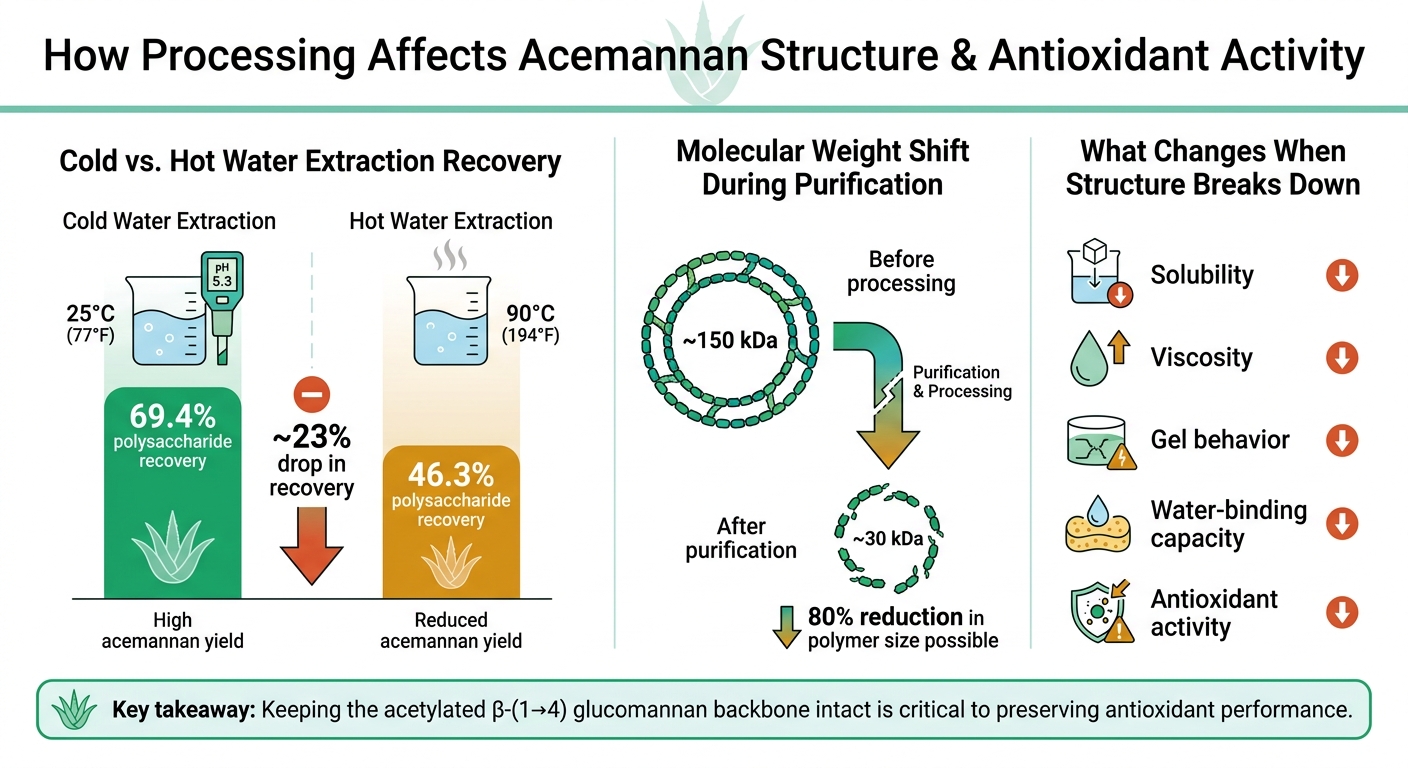
Acemannan Antioxidant Activity: How Processing Affects Structure & Performance
Manufacturing can change acemannan’s acetylation and molecular weight, which can shift its antioxidant activity. So process control isn’t just a production issue. It directly affects how the ingredient performs.
Drying, heat, and pH effects on acetylation and molecular weight
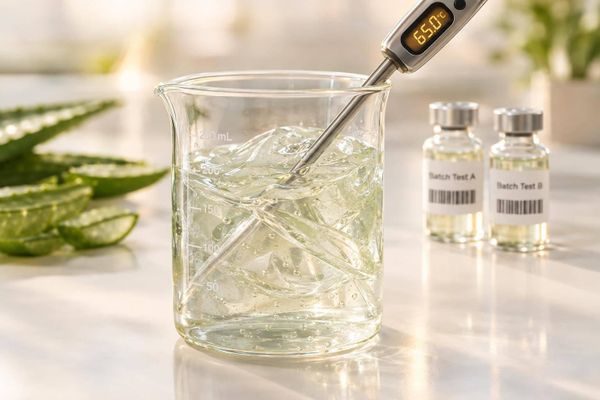
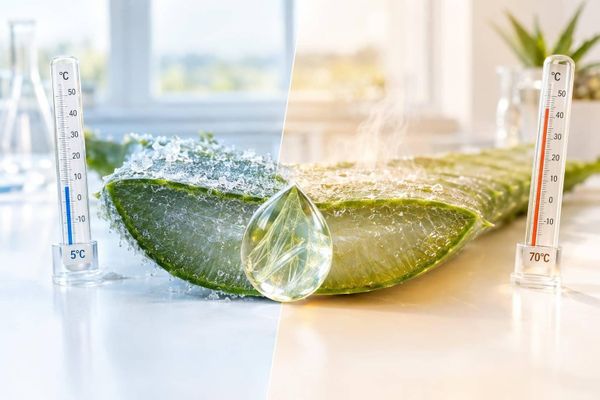
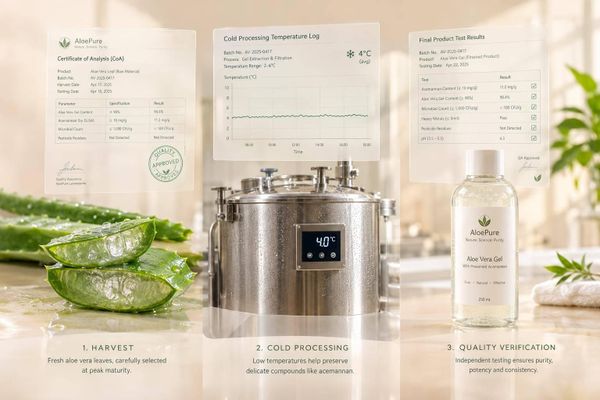
Drying, heat, and pH can all change acemannan’s acetylation and molecular weight. In one comparison, cold-water extraction at 77°F (25°C) and pH 5.3 delivered 69.4% polysaccharide recovery, while hot-water extraction at 194°F (90°C) dropped recovery to 46.3%. Processing can also shrink molecular weight. Crude extracts at about 150 kDa can fall to roughly 30 kDa during purification.
That shift matters for a simple reason: the structure you start with may not be the structure you end up formulating.
Why structural integrity matters in nutraceutical and topical systems
Researchers check whether processing changed the polymer by using size-exclusion chromatography. This helps confirm that molecular weight has not shifted and that the polymer distribution has not widened during processing. They also track the polydispersity index (Ip), which usually ranges from 1.0 to 1.6 for processed aloe fractions.
When acetylation drops or molecular weight falls, several functional traits can change at the same time, including:
- solubility
- viscosity
- gel behavior
- water-binding capacity
For formulation scientists, the target is clear: keep the acetylated glucomannan backbone intact while removing impurities.
Comparative context, research limits, and conclusion
How acemannan compares with other antioxidant polysaccharides
When you place acemannan next to other polysaccharides, one thing stands out fast: acetylation appears to be the main feature tied to its activity. That comparison helps make sense of why acemannan behaves the way it does.
For example, coffee mannans with similar acetylation patterns show comparable immunostimulatory activity. By contrast, non-acetylated galactomannan does not show much bioactivity. That points to acetylation as the main functional difference, rather than the polysaccharide backbone by itself.
Gaps in current study methods
That structure-activity pattern comes through, but the evidence base is still uneven. Studies do not report degree of acetylation and molecular weight in a consistent way, which makes head-to-head comparison hard. Because reporting varies so much, it is still difficult to pin down a clear activity threshold. On top of that, most of the evidence still comes from in vitro or preclinical work, while human trials remain limited.
Conclusion: key structure-activity points
Across the research, three structural factors keep showing up as the main drivers of acemannan's antioxidant performance: degree of acetylation, molecular weight, and an intact β-(1→4) backbone structure. For formulation work, the practical issue is pretty simple: the question is not whether acemannan shows activity, but whether processing keeps the structure that seems tied to that activity.
FAQs
Why does acetylation matter so much?
Acetylation matters because acetyl groups help shape acemannan’s biological activity, physical properties, and overall structure. Put simply, these groups influence how acemannan behaves and how well it holds up.
The degree of acetylation also affects antioxidant capacity, immune response, and molecular stability. It can increase viscosity and thermal stability too, which matters during production and storage.
That’s why processing needs a careful touch. Methods like high heat can cause deacetylation, which strips away those acetyl groups and may weaken acemannan’s effect in wellness and immune support.
How does processing affect acemannan activity?
Processing can change how acemannan works because it affects its molecular weight and degree of acetylation. And that matters a lot.
Heat-based processing is one of the main issues. At temperatures above 176°F (80°C), acemannan can go through major deacetylation, which lowers its bioactivity.
Drying and pasteurization can shift its structure too, including its side chains and molecular weight. Since acetyl groups help support viscosity, thermal stability, and biological performance, keeping the original structure intact is a big deal.
What should formulators test after extraction?
After extraction, formulators should test:
- acemannan concentration
- molecular weight distribution
- degree of acetylation
These checks help confirm that the extraction process kept acemannan’s structure and function intact. They should also ask for stability data for the intended topical or oral use, since acemannan can be sensitive to pH and temperature.