How to Compare Aloe Supplements: Purity, Potency, and Processing Matters
Compare aloe supplements by source, acemannan content, aloin limits, processing, and COAs for safer, effective choices.
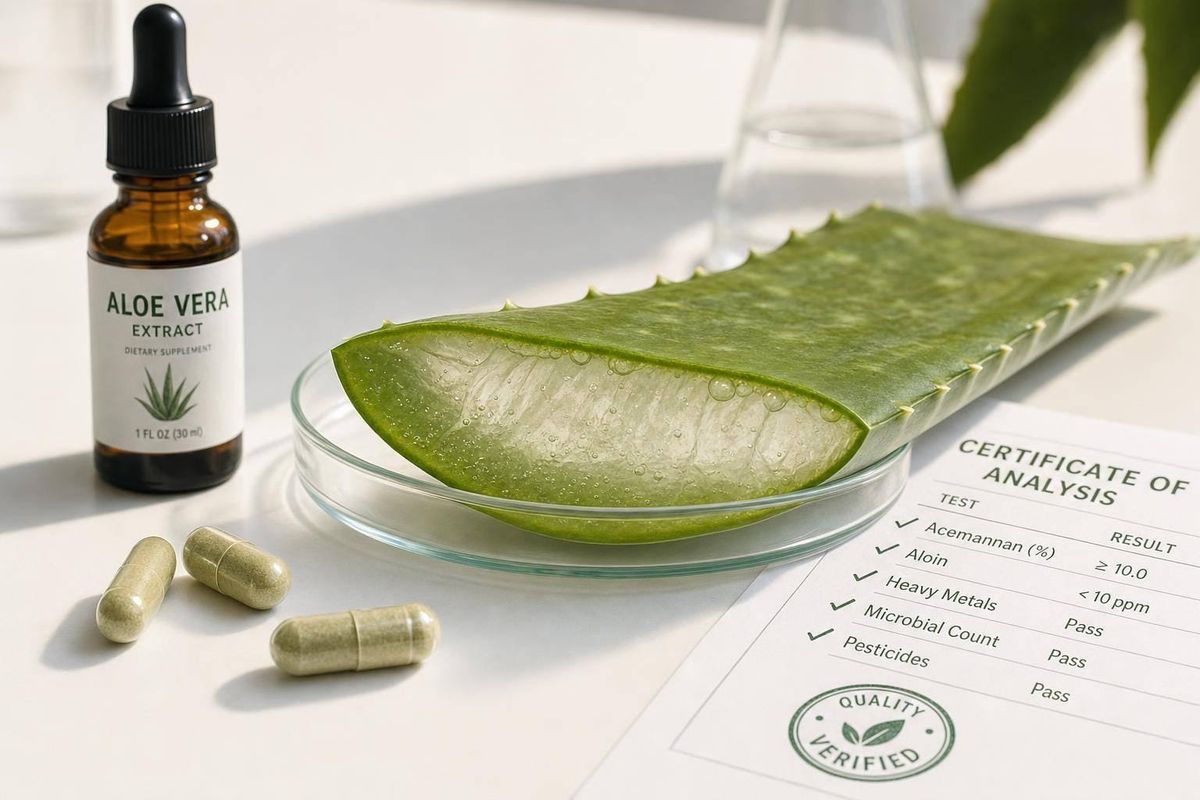
Most aloe supplements are easy to compare once I check 3 things: purity, acemannan level, and processing. If the label does not name the aloe source, does not show a measurable acemannan amount, or hides aloin results, I skip it.
Here’s the short version:
- Purity comes first. I check for Aloe barbadensis Miller, the plant part used, and any added carriers.
- Inner-leaf aloe is usually lower in aloin. Whole-leaf products need extra cleanup, and I want to see aloin A/B under 10 ppm for oral use.
- “100X” or “200X” does not show strength. It only shows concentration versus liquid, not actual acemannan.
- Acemannan is the main marker to compare. I look for a percent standardization or a milligram amount per serving.
- Processing can change what ends up in the bottle. One study found spray-drying cut acemannan acetylation by 70%.
- A batch COA matters. I want numbers for acemannan, aloin, and heavy metals, not vague pass/fail language.
If you want a simple way to shop, think of it like this: clean source, measured actives, and clear processing beat flashy front-label claims.
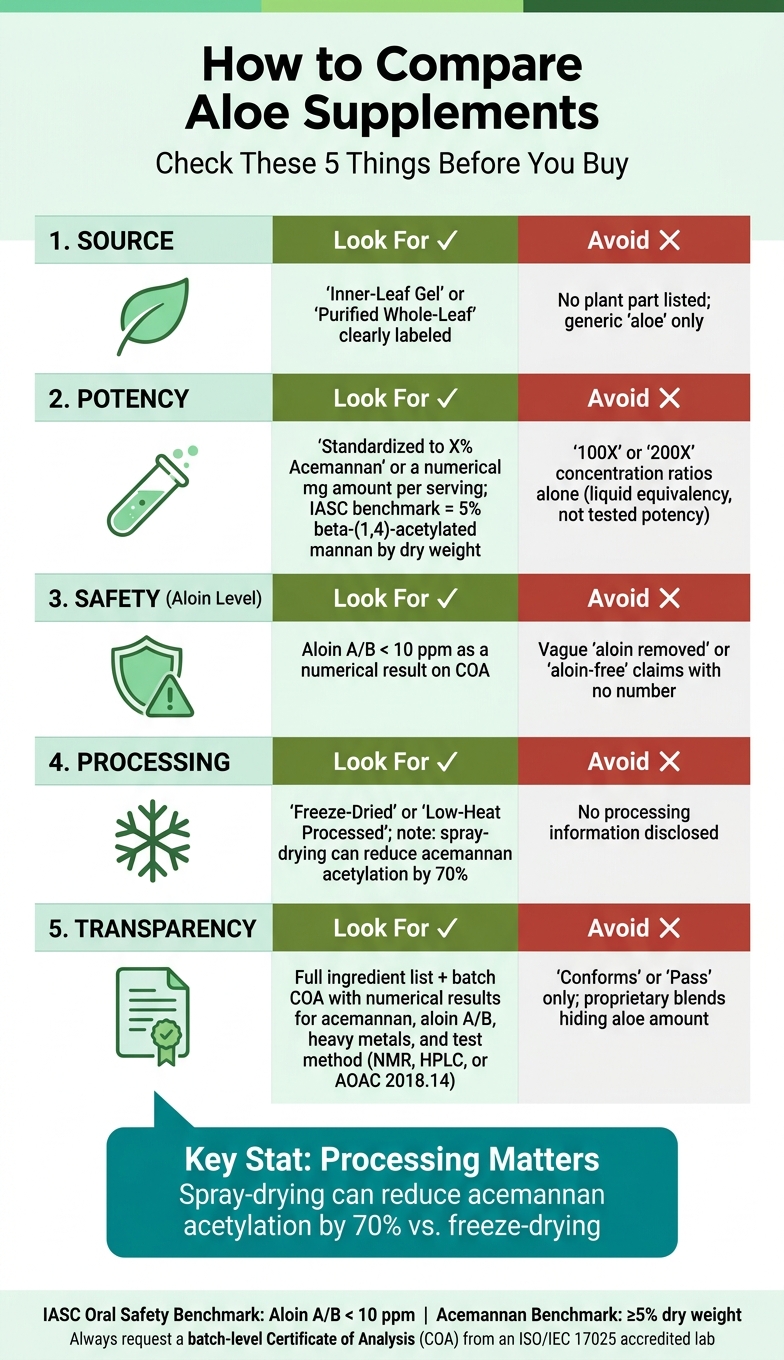
How to Compare Aloe Supplements: Purity, Potency & Processing Checklist
Quick Comparison
| What I check | What I want to see | What I avoid |
|---|---|---|
| Source | Inner-leaf gel, inner-leaf juice, or purified whole-leaf clearly named | No plant part listed |
| Species | Aloe barbadensis Miller | Generic “aloe” only |
| Strength | Acemannan % or mg per serving | “100X” or “200X” alone |
| Safety | Aloin A/B <10 ppm with a number | “Aloin removed” with no data |
| Additives | Full ingredient list, including maltodextrin if used | Hidden carriers or blends |
| Processing | Freeze-dried or low-heat details | No processing info |
| Proof | Batch COA with test method and lab info | “Conforms” or “pass” only |
Bottom line: I compare aloe supplements by asking 5 plain questions: What part of the plant is it from? How much acemannan is in it? How much aloin is left? How was it processed? Can the brand prove it with a batch COA? That gives me more useful info than any marketing claim on the front of the bottle.
sbb-itb-b88dd21
Purity: How to Check the Aloe Source, Ingredient List, and Label Transparency
Start with the label. It should tell you the aloe species, the plant part used, and any added carriers. In most cases, the species should be Aloe barbadensis Miller, along with wording that spells out the source and any additives. You’ll often see plant-part terms like inner-leaf gel, inner-leaf juice, purified whole leaf, or leaf powder. If that basic information isn’t there, move on. Then check whether the aloe comes from inner leaf or whole leaf.
Inner Leaf vs. Whole Leaf: Why the Source Matters
The part of the plant used has a direct effect on what ends up in the supplement. Inner-leaf gel comes from the clear, gel-filled center of the leaf. Since the rind and latex are removed before processing, it’s naturally low in aloin. Whole-leaf aloe is different. It’s made by grinding the entire leaf, including the rind. That means it contains higher levels of anthraquinones such as aloin and needs extra purification, like activated carbon filtration, before it’s fit for oral use.
Here’s the difference at a glance:
| Feature | Inner-Leaf Gel | Whole-Leaf Extract |
|---|---|---|
| Source | Inner parenchyma (pulp) | Entire leaf (rind + pulp) |
| Primary Components | Acemannan-rich gel | Leaf compounds, including aloin |
| Aloin Risk | Naturally low | High (requires filtration) |
| Processing | Rind/latex removed first | Homogenized then filtered |
If the source isn’t clear, the rest of the label doesn’t mean much.
Label Red Flags: Unclear Aloe Amounts, Fillers, and Proprietary Blends
A few label issues should stop you in your tracks:
- No mg or % per serving - if the amount isn’t listed, you can’t judge the dose.
- 100X/200X claims without a matching mg amount - these point to a liquid-equivalency idea, but they don’t tell you how much active aloe the product contains.
- Proprietary blends - if aloe is grouped with other botanicals under one total blend weight, the aloe amount is hidden.
- Carrier ingredients such as maltodextrin must appear on the label - maltodextrin is the most common substance used to adulterate aloe gel powder. If it isn’t declared, that counts as adulteration under IASC standards.
A front-label claim by itself doesn’t prove the formula is accurate. After you confirm purity, the next step is checking acemannan strength.
What Purified or Decolorized Aloe Labels Tell You
With whole-leaf products, the next thing to check is whether the aloe was purified the right way. If the label says purified or decolorized, ask for a batch COA with a numeric aloin result, ideally 10 ppm or less. “Aloin removed” sounds good, but without a number, it doesn’t tell you much.
Once purity checks out, compare acemannan potency.
Potency: How to Spot Measurable Acemannan and Meaningful Strength Markers
Potency should come down to measured acemannan so you can compare products side by side.
How Acemannan Potency Is Disclosed: Percent, Milligrams, or Per Serving
Once you know the source, look at the measured acemannan content and its health benefits. The most dependable potency disclosures usually show up in one of two ways: a standardized dry-weight percentage, such as "standardized to 10% acemannan," or a stated milligram amount per serving. The International Aloe Science Council uses 5% beta-(1,4)-acetylated mannan by dry weight as a raw-material benchmark. That gives you a useful baseline when you compare products.
Ratio labels tell you about concentration, not confirmed acemannan content.
It also helps to check for the word "acetylated" mannan on the label. Processing can strip acetyl groups from acemannan, which may lower its activity. And "total polysaccharides" is too broad to use as a potency marker.
Why a Certificate of Analysis or Batch-Level Testing Adds Confidence
A label shows what a brand plans to deliver. A COA shows what was actually measured.
Independent testing of commercial aloe products has found acemannan levels ranging from as low as 1% to over 23 mg/g dry weight. That's a big spread, and it shows why label claims by themselves don't tell the whole story.
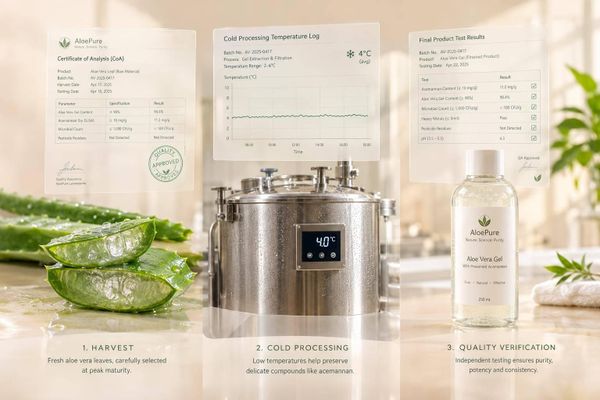
When you read a COA, look for hard numbers, not vague terms like "conforms" or "pass." The document should list a numeric acemannan result, an aloin result, and any carriers that were added. It should also name the test method. Common options include NMR, HPLC, and AOAC Official Method 2018.14.
| COA Element | What to Look For |
|---|---|
| Acemannan result | Numerical value, such as ≥5% dry weight |
| Aloin A and B | <10 ppm for oral-use products |
| Carrier declaration | Percentage of maltodextrin or other fillers |
| Testing method | NMR, HPLC, or AOAC 2018.14 |
| Botanical identity | Aloe barbadensis Miller, plant part specified |
| Testing lab | ISO/IEC 17025 accreditation |
If the potency numbers look good on paper, the next step is to see whether processing kept that strength intact during manufacturing.
Processing: How Heat, Drying, Filtration, and Decolorization Affect Aloe Quality
After purity and potency, processing tells you if that value survived the trip from plant to finished product. A high-purity aloe ingredient can still lose acemannan during processing.
Heat Treatment, Spray Drying, and Freeze-Drying: What Each Method Does to Aloe
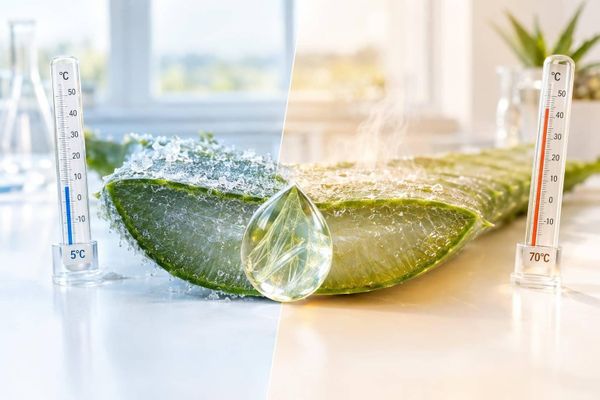
The drying method makes a big difference. Research that compared common drying methods found that spray-drying reduced acemannan acetylation by 70%, while Refractance Window Drying and Radiant Zone Drying reduced it by 52% and 60%, respectively. When acetylation drops, acemannan may lose some of its activity.
Freeze-drying tends to protect heat-sensitive polysaccharides better. The catch? It costs more and can be harder to scale. Spray-dried products may also include carriers such as maltodextrin to help with flow and consistency, and the label should say so clearly.
Next, look at what purification may have changed in the finished extract.
What Filtration and Decolorization Reveal About the Finished Product
Filtration and decolorization matter most for whole-leaf aloe. These products usually need stronger purification to lower aloin A and B. Activated carbon can remove aloin, but it can also strip out flavonoids and tannins.
So when a label says purified or decolorized, that tells you aloin was lowered - but it doesn't tell you how much, or what else may have been removed along the way. That's why a COA with a numerical aloin result is more useful than a generic pass statement.
Use these processing clues alongside the label checks in the next section.
A Simple Buying Checklist to Compare Aloe Supplements
Use this quick checklist to compare aloe labels fast.
Five Label Checks Before You Buy
| # | Check | What to Look For | Why It Matters |
|---|---|---|---|
| 1 | Source | "Inner-Leaf Gel" or "Purified Whole-Leaf" | Helps show the laxative latex layer was removed |
| 2 | Potency | "Standardized to X% Acemannan" or a numerical acemannan amount | Shows whether the main active marker is listed at a meaningful level |
| 3 | Safety | "Aloin A/B < 10 ppm" as a numerical result | This is the IASC oral safety benchmark; a vague "aloin-free" claim without a number isn't enough |
| 4 | Processing | "Freeze-Dried" or "Low-Heat Processed" | Helps show heat-sensitive polysaccharides were protected during manufacturing |
| 5 | Transparency | Full ingredient list + batch COA | Helps check that the label matches what's actually in the bottle |
There’s one label trick worth calling out: concentration ratios like "200X" do not tell you acemannan levels. They usually refer to liquid equivalency, not tested potency.
Also check for carriers. If the product uses maltodextrin or anything else, it should be listed clearly.
Use the batch COA to verify acemannan, aloin A/B, and heavy metals.
That batch COA is your last gut-check on acemannan, aloin, and heavy metals.
FAQs
How much acemannan is a good amount?
A useful benchmark for aloe raw materials is at least 5% acemannan by dry weight. Acemannan refers to acetylated polysaccharides, and this dry-weight detail matters a lot.
Here’s why: aloe gel is about 99% water. So manufacturers and labs often report acemannan content on a dry-weight basis instead of the product’s wet form.
Some higher-quality products test above that mark. In some research, about 10% (w/w) has been identified as satisfactory.
When you compare labels or test results, check one thing first: is the percentage listed as-is or on a dry basis? That small detail can change how the number should be read.
Is whole-leaf aloe safe to take by mouth?
Whole-leaf aloe is safe to take by mouth only when it has been processed the right way to remove anthraquinones like aloin. Aloin comes from the outer leaf rind and latex, and it works as a strong laxative.
When you shop for a whole-leaf supplement, look for labels like decolorized or aloin-removed. Better-made products are often purified with activated-carbon filtration to bring aloin down to safe levels, often 10 ppm or less.
Why does processing matter so much?
Processing matters because raw aloe vera spoils fast. Once it’s harvested, it can lose its functional properties in a short window.
Processing also helps with safety. It removes unwanted compounds like aloin while helping retain key bioactive compounds such as acemannan.
That balance is where things get tricky. Methods like pasteurization, heat treatment, or aggressive filtration can break down these compounds. By contrast, freeze-drying is often used to better preserve aloe’s natural properties and extend shelf life.