A Guide to Choosing Aloe Products for Digestive Wellness Support
Pick inner-leaf, low-aloin aloe (cold-processed or standardized acemannan) for daily gut support; avoid whole-leaf/latex for routine use.

Most aloe products are not the same for gut support. If I want aloe for day-to-day digestive use, I’d look for inner-leaf aloe, low or no aloin, and cold-processed or freeze-dried forms that help keep acemannan in the product.
Here’s the short version:
- Inner-leaf juice or gel is usually the best fit for gentle daily use.
- Purified capsules or powders work well if I want a set serving and easier travel use.
- Whole-leaf or latex aloe is more tied to stimulant laxative effects and can lead to cramping or diarrhea.
- If a label does not mention aloin-free, decolorized, or purified, I’d be careful.
- Some brands list aloin at 10 ppm or less, which is one of the clearest label details to check.
A few label words can save a lot of guesswork: inner leaf, purified, decolorized, aloin-free, standardized acemannan, and third-party tested. I’d also keep the ingredient list short and skip products packed with sweeteners, dyes, or vague proprietary blends.
Quick Comparison
| Product type | Best use | What I’d check first | Main concern |
|---|---|---|---|
| Inner-leaf juice | Daily gut support | Inner leaf, decolorized, aloin-free | Heat/light during storage |
| Inner-leaf gel | Upper digestive comfort | Inner leaf, purified | Bulkier, harder to travel with |
| Capsules/powders | Set daily serving | Standardized acemannan, few fillers | Hidden blends, unclear dose |
| Whole-leaf/latex | Short-term laxative use only | Aloin content, purification details | Cramping, diarrhea, repeat use issues |
If I had to boil the whole guide down to one line, it would be this: pick inner-leaf aloe for routine support, and avoid whole-leaf or latex products unless the goal is short-term laxative use.
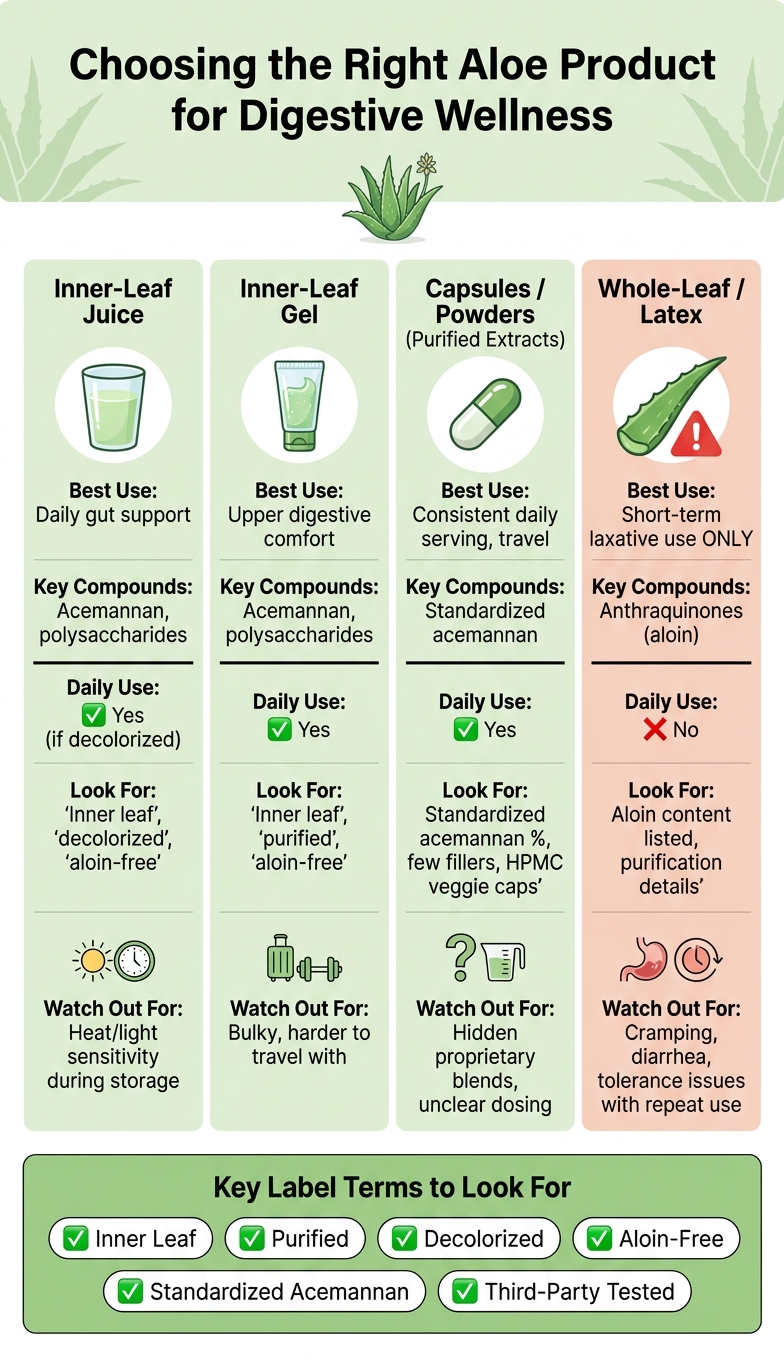
Aloe Vera Product Types for Digestive Health: A Visual Comparison Guide
How To Use Aloe Vera | Gut Healing Superfood
sbb-itb-b88dd21
Step 1: Know which aloe form you are buying
The form of aloe matters a lot. It affects aloin levels, how easy the product is on your stomach, and whether it makes sense for daily use. Start by checking which part of the leaf was used and how it was processed. Those two details tell you most of the story.
Inner-leaf juice and drinkable gel for gentle daily gut support
Inner-leaf juice and drinkable gel come from the inside of the aloe leaf. This part is rich in acemannan and is linked to gentle gut-soothing and prebiotic support. You can also boost these gut benefits by pairing aloe with specific prebiotic foods. Since processing cuts down aloin, these products are a better fit for day-to-day use.
On the label, look for terms like "inner leaf," "inner fillet," "purified," or "decolorized." Those words usually signal that the product is made for daily digestive wellness support, not harsh laxative effects.
If you want something even simpler to take each day, purified extracts are the next thing to check.
Purified extracts and acemannan-focused supplements for consistent daily use
If you don’t want to pour out a liquid every morning, purified extracts in capsules or powders can be a good option. They’re often more concentrated, and the better products tell you exactly how much acemannan or how many polysaccharides you get per serving.
That kind of label detail matters. It gives you a clearer sense of what you’re taking each time. For daily digestive support, this format is often easier to stick with.
Whole-leaf and latex-containing products for short-term laxative use only
Whole-leaf and aloe latex products are a different story. They include the outer rind and the yellow latex layer under it. Both contain high levels of anthraquinones, including aloin.
These compounds work as stimulant laxatives. That means they can cause cramping, diarrhea, and tolerance issues if used often. So while they may have a short-term use, they are not a fit for routine digestive support.
| Aloe Form | Primary Compound | Daily Use? |
|---|---|---|
| Inner-Leaf Juice/Gel | Acemannan, polysaccharides | Yes, if decolorized |
| Purified Extracts/Capsules | Standardized acemannan | Yes, convenient |
| Whole-Leaf/Latex | Anthraquinones (aloin) | No - cramping risk |
Once you know the form, the next step is to read the label for aloin limits and a short, simple ingredient list.
Step 2: Match the product to your digestive goal
Once you know which type of aloe you’re looking at, the next step is pretty simple: match it to what you want help with. The best format depends on whether you want occasional relief, steady day-to-day support, or a more focused supplement for long-term wellness.
For occasional digestive discomfort or upper digestive soothing
If you’re dealing with occasional stomach irritation or upper digestive discomfort, go with a purified inner-leaf juice or gel that’s labeled aloin-free. Liquids are easier to measure, and they’re simpler to adjust based on how much support you want.
Look for labels that say inner-leaf, aloin-free, and concentrated. That mix lines up better with gentle digestive support and helps you steer clear of the stimulant-laxative effects linked to whole-leaf or latex-containing aloe.
If you want something built more for routine use, standardized capsules or extracts make more sense.
For daily digestive support and regular wellness routines
For day-to-day use, label consistency matters more than picking the strongest option.
Choose a product with a short ingredient list, listed acemannan or polysaccharides, and no fillers.
It’s also smart to skip whole-leaf or latex-containing products for daily support. Those forms are tied more closely to stimulant-laxative use than to routine digestive wellness.
For gentle supplementation with acemannan-centered wellness support
If your goal is acemannan-centered wellness support, focus on products that list standardized acemannan and use cold-extracted or freeze-dried processing.
For this use case, check for a standardized acemannan percentage and low-heat processing. Cold-extraction or freeze-drying may help preserve acemannan more effectively.
Use the table below to line up your goal with the best format.
| Digestive Goal | Best Format | What to Look For |
|---|---|---|
| Occasional soothing/reflux | Purified inner-leaf juice or gel | Inner-leaf, aloin-free, concentrated |
| Daily wellness/regularity | Standardized inner-leaf capsules | Short ingredient list, consistent dose, no fillers |
| Gut-immune/microbiome support | Acemannan-focused supplement | Standardized acemannan, cold-extracted or freeze-dried |
Step 3: Read the label for purity, aloin content, and processing quality
Once you’ve matched the product type to your goal, the label does most of the heavy lifting. It can tell you if the aloe is clean enough for daily use and less likely to upset your gut. A handful of terms matter more than the rest.
Look for inner leaf, purified, or decolorized on the label
Check for "inner leaf", "inner fillet," or "100% pure inner leaf aloe vera extract." Those phrases usually point to inner-leaf aloe, not outer-rind material that tends to carry more aloin.
For daily digestive support, it’s smarter to pass on "raw aloe" and "whole leaf" unless the label also says purified or decolorized.
Check aloin limits, ingredient simplicity, and third-party verification
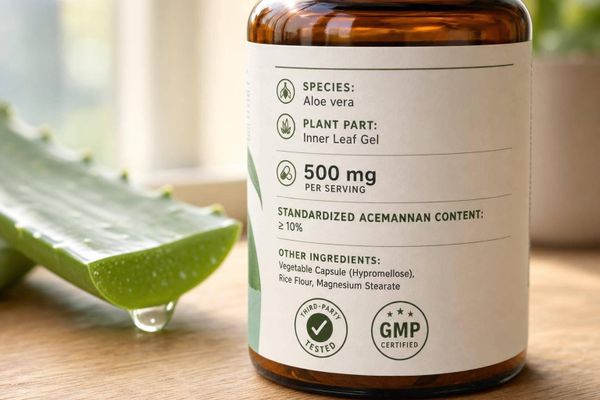
Look for "aloin-free" or "low anthraquinone" claims. Some brands go a step further and list aloin at 10 ppm or less. If the label says nothing about aloin or purification, that’s a sign to slow down and read more closely.
A short ingredient list is usually a good sign:
- Aloe should come first
- Skip fillers, dyes, and heavy sweeteners
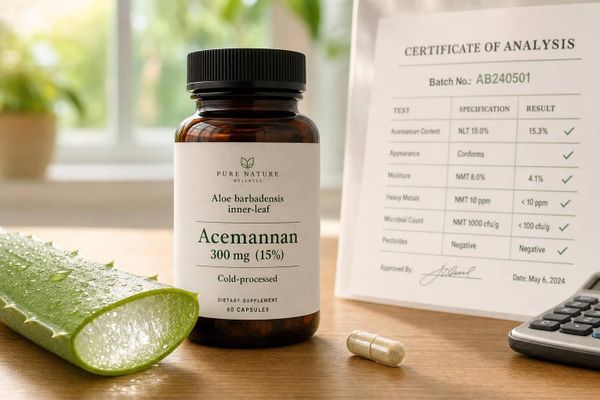
- Look for IASC certification or a Certificate of Analysis (COA) backed by third-party testing
Choose processing that protects acemannan and avoids unnecessary fillers
Terms like "cold-processed", "cold-extracted," or "freeze-dried" are worth looking for. Heat-heavy processing, spray drying, and strong concentration methods can damage acemannan. Put simply, better processing gives you a better shot at keeping acemannan intact and making the product easier to take on a regular basis.
If you’re buying capsules, HPMC veggie shells are a better sign for protecting moisture-sensitive ingredients.
Next, compare juice, gel, capsules, and powders for serving style and safety.
Step 4: Compare format, serving style, and safety before you buy
When juice, gel, capsules, or powders make the most sense
Once you've checked purity and aloin, the next step is simple: pick the format that fits your day-to-day routine and your comfort level.
Liquid aloe juice is a good fit for home use when you want flexible serving sizes. It gives you room to adjust how much you take without much hassle.
Inner-leaf gel works well for people who like a thicker texture, especially for upper-GI comfort.
Capsules and powders make the most sense if you want a set daily amount and something easy to carry. They're handy for travel, don't need refrigeration, and spare you from dealing with measuring cups. Hypromellose (HPMC) veggie capsules are odorless, neutral-tasting, and help reduce aloe powder's bitterness. Their low moisture content also helps protect acemannan during storage.
After that, it comes down to a few practical points: how you'll store it, how easy it is to dose, and whether you'll stick with it.
| Format | Best Use | Label Features to Check | Main Cautions |
|---|---|---|---|
| Aloe Juice | Flexible servings; home use | "Inner leaf", "decolorized" | More sensitive to heat and light |
| Inner-Leaf Gel | Upper-GI soothing; texture preference | "Inner leaf", "aloin-free" | Bulkier to store and travel with |
| Purified Extract (Capsules or Powders) | Consistent daily intake; travel | "Aloin-free", standardized acemannan | Check for fillers or proprietary blends |
| Acemannan-Focused Supplement | Targeted gut support | "Cold-extracted", standardized acemannan, third-party verification | Make sure the processing and standardization are clearly stated |
Safety checks for medications, pregnancy, kidney concerns, and sensitive digestion
Before buying, it's smart to do a quick safety check.
Acemannan has shown a wide safety margin in testing. Still, timing matters. If you take oral medications and tend to have fast digestion, space your aloe supplement away from your medication window.
A few groups should be more careful. Pregnant people, anyone with kidney issues, and people prone to diarrhea should ask a healthcare professional before use.
Conclusion: A short checklist for choosing a better aloe product
Start with your goal: occasional digestive discomfort, daily digestive support, or acemannan-focused supplementation. Then use this checklist.
Before you buy, check the label. Don’t let the big promise on the front of the bottle make the decision for you.
| What to Check | What to Look For | What to Avoid |
|---|---|---|
| Source | "Inner-leaf" or "purified" | Unlabeled whole-leaf or latex-heavy formulas |
| Aloin status | "Aloin-free" or "decolorized" | No mention of aloin removal |
| Processing | "Cold-extracted" or "freeze-dried" | Heat-processed or spray-dried |
| Standardization | Specific acemannan percentage | Generic "aloe vera powder" with no details |
| Verification | Third-party testing, COA, or batch QR code | No testing claims or unverifiable sourcing |
Liquid, capsule, or powder can all work. The key is to use the product as directed and give it enough time before you decide how it’s working for you.
FAQs
How can I tell if an aloe product is safe for daily use?
Put clear labels and lab data ahead of marketing copy. Look for inner-leaf gel or purified whole-leaf on the label, since those forms help keep laxative anthraquinones like aloin low.
It also helps to check for a batch-specific Certificate of Analysis that shows aloin at 10 ppm or less. Skip fuzzy claims like “aloin-free” or “pass.” Instead, pick products that state a standardized acemannan percentage or the milligrams per serving, and watch for hidden carriers like maltodextrin.
What does acemannan do for digestive wellness?
Acemannan is a water-soluble polysaccharide found in aloe’s inner gel. In simple terms, it can support digestive wellness by working like a prebiotic. That means it helps feed helpful gut bacteria and may help spur the production of short-chain fatty acids, or SCFAs.
Because the body doesn’t digest acemannan, gut microbes ferment it into SCFAs. Over time, that process may help support a more comfortable, steady gut environment. It can also fit into a daily digestive support routine.
Should I choose aloe juice, gel, or capsules?
The form matters less than source, standardization, and purity.
Capsules can make measured dosing simpler and more consistent. Whatever form you choose, look for:
- a clearly labeled inner-leaf gel
- a standardized acemannan percentage or milligram amount
- a batch COA showing aloin at 10 ppm or less