Acemannan Wound Research: Study Quality Checklist
Judge acemannan wound studies by methods, formulation, dose, and outcomes—not just faster closure.
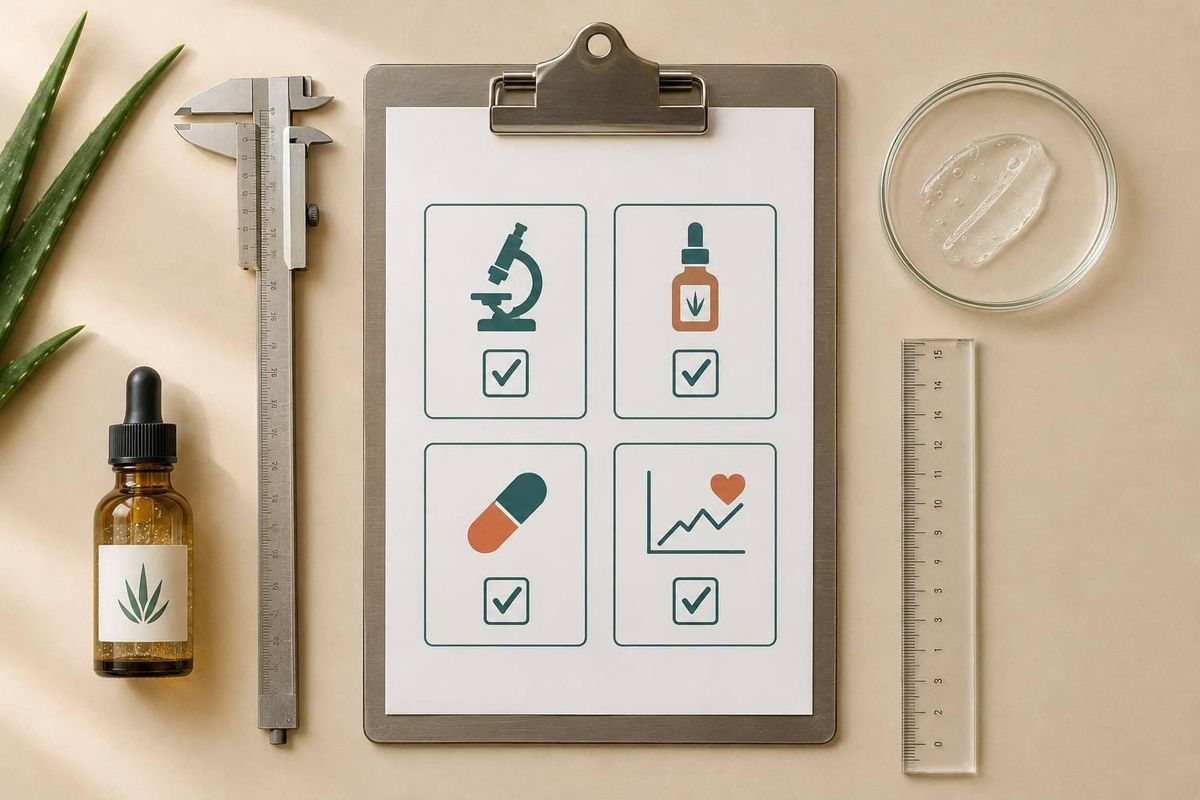
Acemannan wound research should be judged by what was tested - not just whether wounds closed faster. Cell and animal results do not prove that a treatment works in people, and no oral dose is established for wound healing.
Check each study for:
- Study design: Suitable controls, randomization, blinded assessment, enough independent samples, and clear reporting of uncertainty.
- Treatment details: The wound model, acemannan purity and structure, dose, route, and treatment duration.
- Healing and safety: Confirmed closure, tissue strength, enough follow-up, and reported side effects.
- Human relevance: Patients, wound types, and care settings that match the intended use.
Purified acemannan and mixed aloe products are not interchangeable. Neither are oral and topical treatments. Supplements should not replace professional wound care, and oral formulations should never be applied to open wounds.
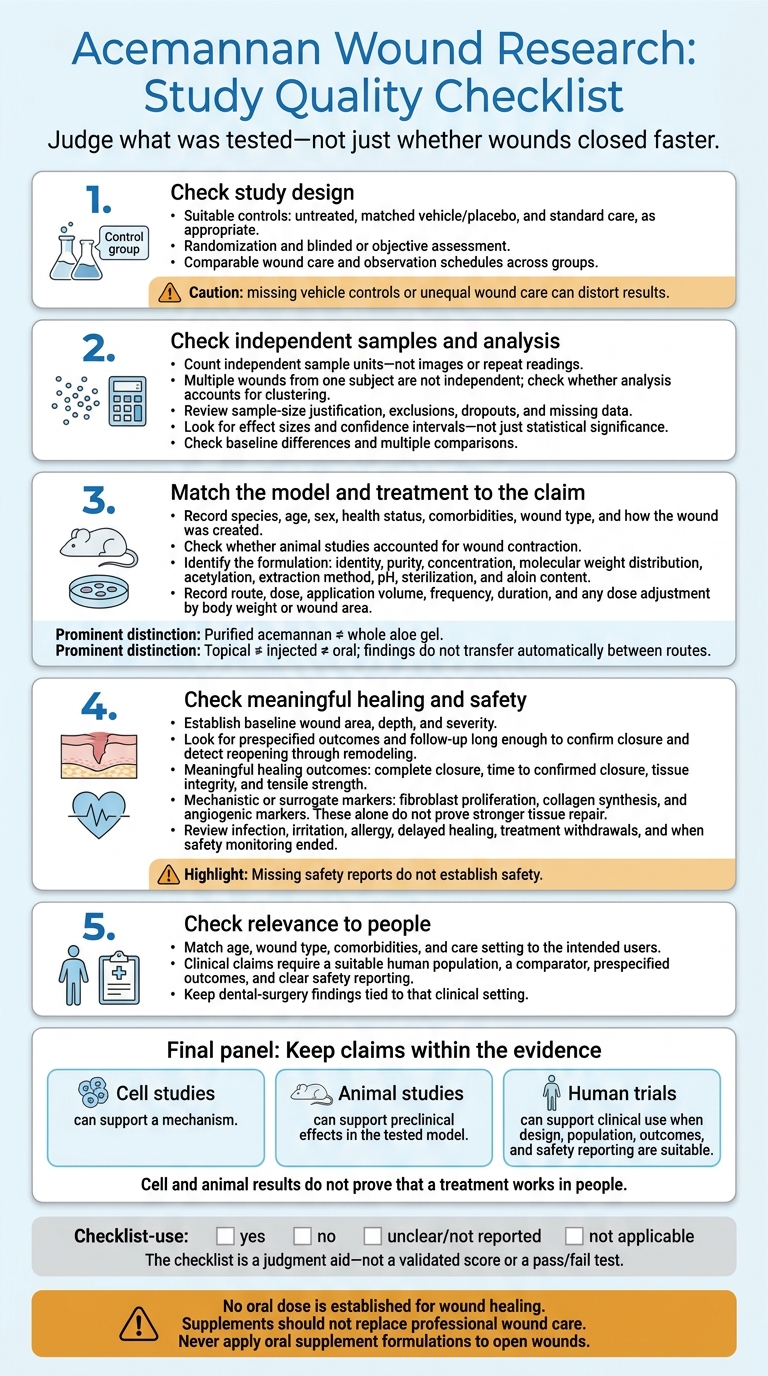
Acemannan Wound Research: Study Quality Checklist
2. Review Controls, Sample Size, and Analysis
Check Control Groups, Randomization, and Blinding
Check what differed between groups besides acemannan. An untreated control helps account for natural healing. A matched vehicle or placebo helps separate acemannan’s effect from that of the gel, dressing, or carrier. Standard-care controls show whether treatment adds value to routine care.
Flag missing vehicle controls or unequal wound care, since delivery materials can affect healing. Weak controls can make a treatment look effective when the wound simply healed on its own.
Look for randomization, and check whether wound care, animal housing, and observation schedules were the same across groups. Also check whether researchers were blinded when measuring wounds, analyzing images, and scoring histology.
Check Independent Sample Units and Uncertainty
Next, check whether the study had enough independent samples to support its claim.
Count independent sample units - not images or repeat readings. Multiple wounds from one subject are not independent. Repeated measurements and technical replicates don’t increase the independent sample size, either. Check whether the analysis accounts for this clustering.
Review the primary paper for sample size, power calculation, attrition, and how missing data were handled.
- Sample unit: Identify participants, animals, independently treated wounds, or independent cell experiments. Verify how the analysis handled related observations.
- Sample size: Check the number of independent units, the sample-size justification, exclusions, and dropouts.
- Uncertainty reporting: Look for effect sizes and confidence intervals - not just statistical significance or reported improvements. These show the estimated treatment difference and its uncertainty.
Check for baseline differences and how researchers handled multiple comparisons. Treat small or uncontrolled studies as hypothesis-generating only.
sbb-itb-b88dd21
3. Review the Wound Model, Formulation, and Dose
After reviewing controls and uncertainty, check whether the wound model, product, and dose support the claim.
Match the Wound Model to the Claim
Record the species and strain, age, sex, health status, and comorbidities, along with the wound type and how it was created. Check whether procedures were consistent and whether animal studies accounted for wound contraction. These details help show how closely the model reflects the intended human use.
Match the evidence to the claim: cell data can support a mechanism, animal data can support preclinical effects, and human trials can support clinical use. Applicability depends on how closely the model, population, and outcome match the intended human use.
Findings from dental surgery, for instance, need to stay tied to that clinical setting.
If the model fits, check whether the formulation is described well enough for others to reproduce it.
Check the Formulation, Route, and Dose
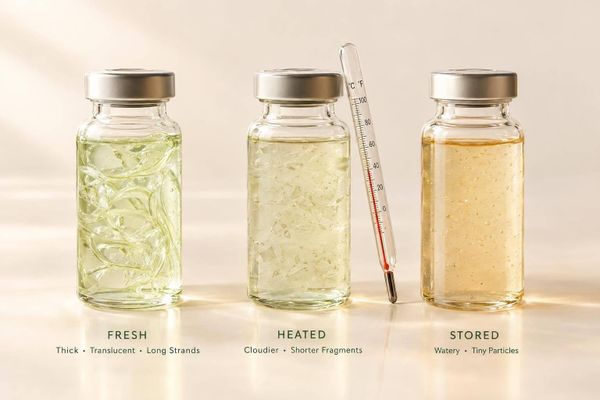
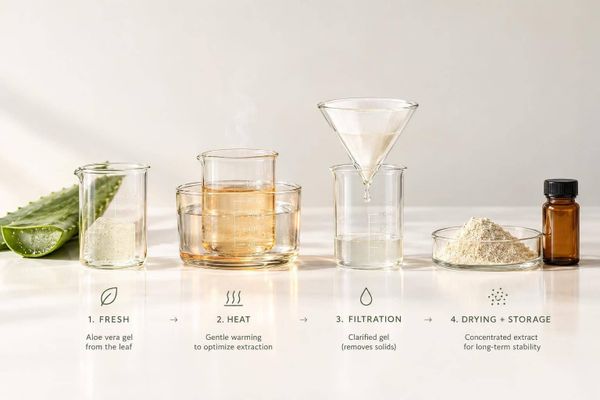
Identify the material - not just “aloe.” Purified acemannan and whole aloe gel aren't interchangeable. Molecular structure and processing can affect biological activity, so missing details make the treatment harder to reproduce.
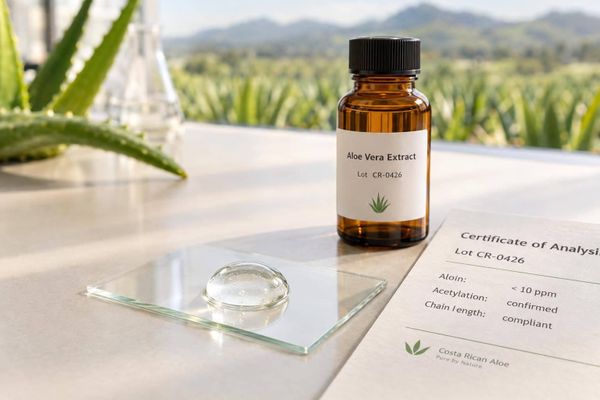
Record identity, purity, concentration, molecular weight distribution, acetylation, extraction method, pH, sterilization, route, dose, frequency, and duration.
Go to the primary paper for exact formulation and dose details. Summary-level descriptions aren't enough.
Also record application volume and any reported dose adjustments per kilogram of body weight or per unit of wound area. Findings for one route don't transfer to another: topical, injected, and oral use must be assessed separately.
4. Review Follow-Up, Healing Outcomes, and Safety
After reviewing the model and dose, check whether the wound stayed closed and whether treatment caused harm.
Check Baseline Measurements and Follow-Up Length
Look for baseline wound area, depth, and severity score. Follow-up should last long enough to confirm closure and detect reopening - not just early wound contraction. That means tracking the wound through the remodeling phase.
Assess Repair Quality and Side Effects
Next, separate actual repair from lab markers. Check whether researchers specified their primary outcomes before the study began. Meaningful healing outcomes include complete closure, time to confirmed closure, tissue integrity, and tensile strength. These measures help show whether the wound healed well, rather than simply shrank.
By contrast, surrogate markers - such as fibroblast proliferation, collagen synthesis, and angiogenic markers - can help explain a biological response. But they cannot, on their own, prove stronger tissue repair. Check whether researchers reported all planned outcomes and whether any statistically significant difference led to a clinically meaningful benefit.
Review adverse events in both groups, including infection, irritation, allergy, delayed healing, and treatment withdrawals. Check when safety monitoring ended, since short follow-up can miss delayed harms. Missing safety reports do not establish safety.
5. Conclusion: Do the Findings Apply to People?
Complete the Study Quality Checklist
Use this checklist to judge whether the study supports science-backed health benefits for people. For each item, record yes, no, unclear/not reported, or not applicable. The checklist is a judgment aid - not a validated score or a pass/fail test.
- [ ] Suitable control group, randomization where applicable, and blinded or objective assessment.
- [ ] Justified sample size, enough independent samples, and sound analysis.
- [ ] Relevant wound model, with a clearly defined acemannan formulation, dose, route, and exposure duration.
- [ ] Prespecified healing outcomes, adequate follow-up, and clear safety reporting.
- [ ] Human data from the intended population.
- [ ] Clear formulation quality data, including aloin content and molecular weight distribution.
Keep Claims Within the Evidence and Continue Wound Care
Check whether the study population matches the intended users in age, wound type, comorbidities, and care setting. Clinical claims require a suitable human population, a comparator, prespecified outcomes, and clear safety reporting. A mechanism does not prove that a treatment works, and animal findings apply only to the model tested.
If the study does not match the intended population, keep the claim limited to the tested model.
Do not replace professional wound care with supplements, especially for deep, infected, diabetic, ischemic, serious burn-related, or nonhealing wounds. Discuss any changes with a clinician, and never apply oral supplement formulations to open wounds.
FAQs
How can I verify an acemannan study’s quality?
Look for controlled human trials that test your product’s specific oral ingredient and measure symptoms that matter in patient care - not just lab biomarkers. Check the preparation, acemannan amount, how it was given, dosing frequency, study duration, and population studied.
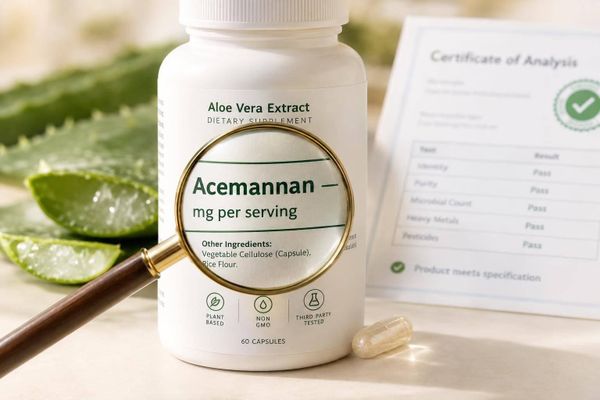
Results differ by preparation. Animal and cell studies can’t establish whole-body benefits from oral supplements. Review independent, lot-specific Certificates of Analysis (COAs) to check whether your product meets the standards and purity levels used in the research.
What counts as meaningful improvement in wound healing?
Look for controlled human trials that show faster wound closure, less pain, or measurable tissue regeneration - not just changes in biomarkers such as cell proliferation or collagen synthesis.
Lab and animal results don’t guarantee the same effects in people. Check whether the study tested the same oral ingredient and preparation you’re considering. That helps you judge whether the findings apply to your health goals.
What evidence would support oral acemannan for wounds?
Evidence for taking acemannan by mouth to support wound healing is limited. Lab and animal studies do not show that oral supplements help wounds heal in humans. Human studies have mostly tested applications to the skin, teeth, or lining of the mouth. No oral dose has been established for wound repair.
Look for controlled human trials that measure actual wound healing, not just biomarkers. Current findings do not confirm whole-body healing benefits in people.