Purity of Acemannan from Costa Rican Aloe
Verify Costa Rican acemannan quality: match bottle lot to COA, check aloin <10 ppm, farm, processing, acetylation and chain-length tests.
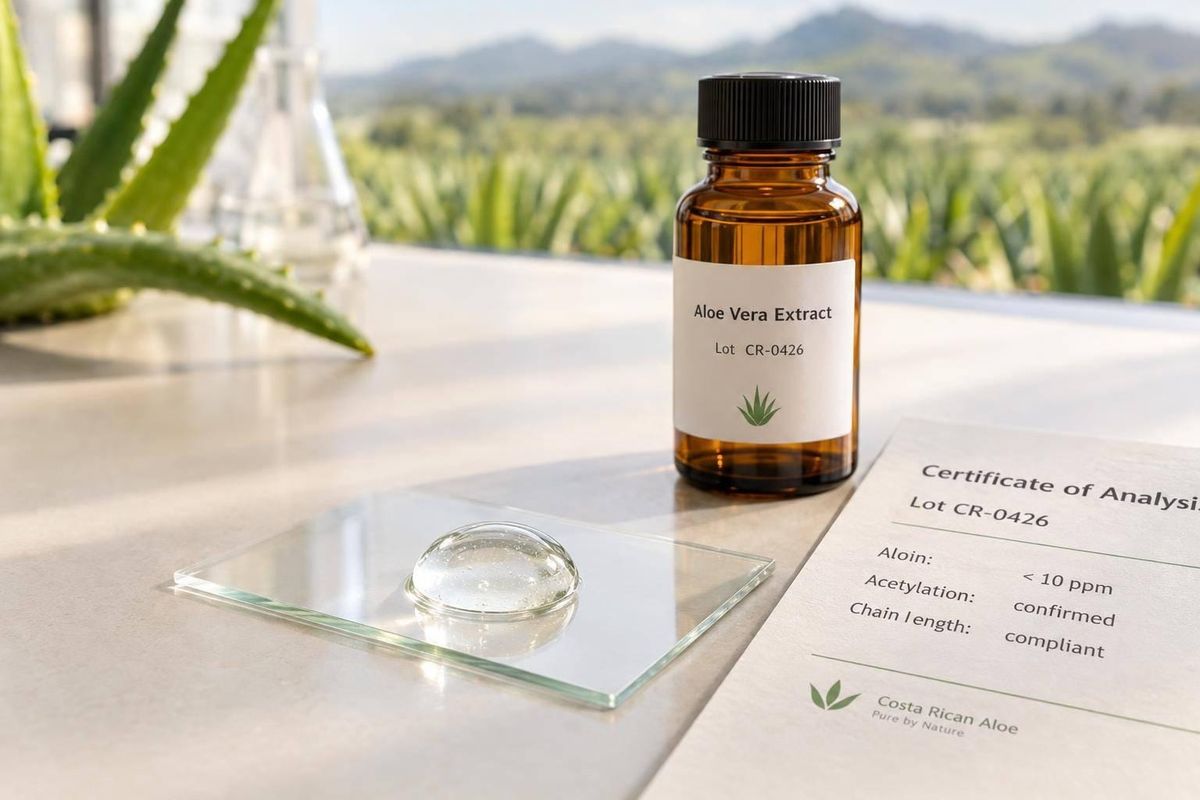
Costa Rican origin does not prove acemannan purity. For Advanced Acemannan, the starting point is a Certificate of Analysis (COA) that matches the bottle’s lot number and reports contaminant levels, including aloin below 10 ppm.
A full quality check also covers:
- Farm conditions: Soil and water tests, pesticide records, and traceability from the growing plot to the finished lot.
- Processing and storage: Records showing how gel separation, temperature control, and storage protect the ingredient.
- Acemannan quality: Separate results for its amount, acetylation, and chain length - not just total polysaccharides.
These records help assess what is in the product. They do not prove health effects or safety for everyone.
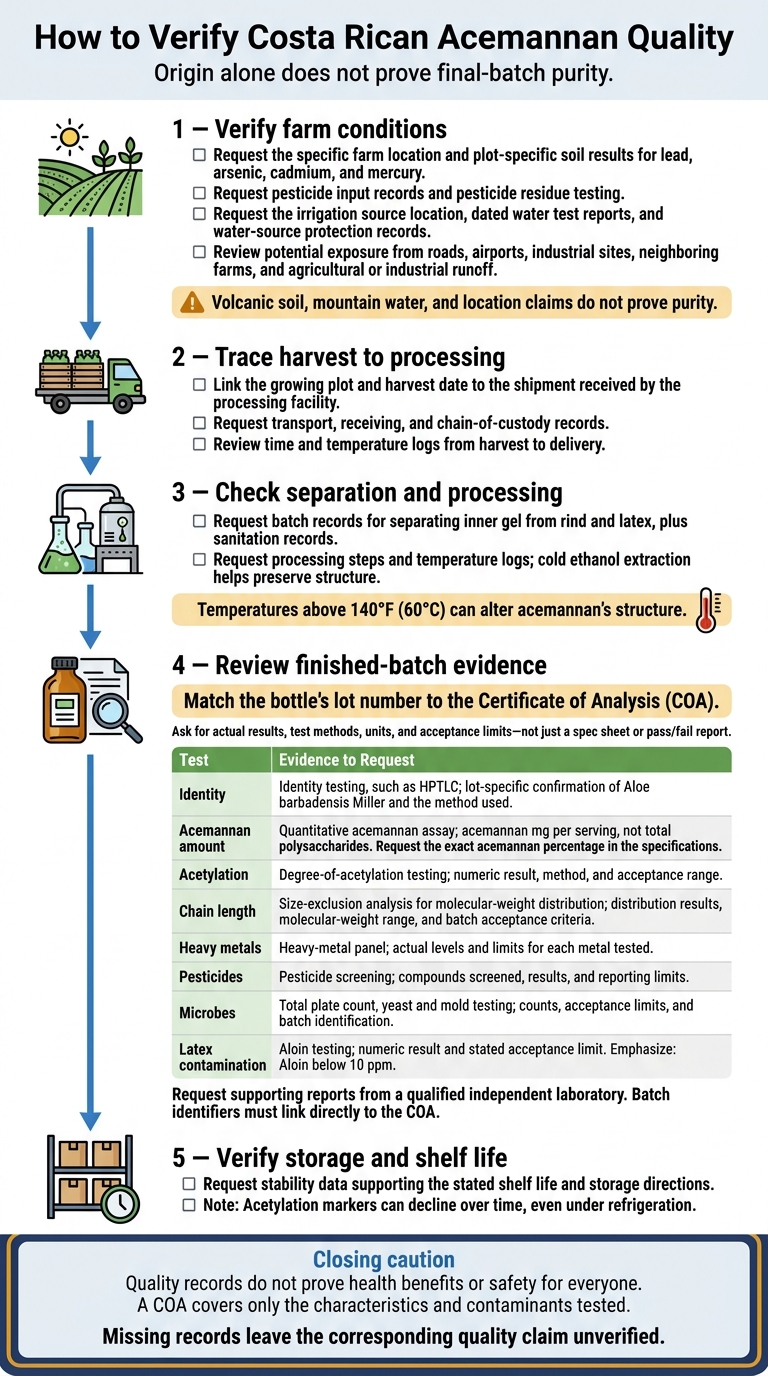
How to Verify Costa Rican Acemannan Quality
How Costa Rican Growing Conditions Support Aloe Quality
Volcanic Soil and Contaminant Testing
Volcanic soil may help aloe grow well, but mineral-rich soil doesn’t prove purity. For Costa Rican growing plots, request plot-specific soil results for lead, arsenic, cadmium, and mercury, plus pesticide residue testing. Soil quality is only part of the picture: irrigation water can still contaminate a clean crop.
Irrigation Water and Nearby Pollution Sources
Even a mountain river source needs documented protection and water testing. To check growing conditions for Advanced Acemannan’s Costa Rican sourcing, request the irrigation source location and dated water test reports that address possible agricultural or industrial runoff.
Check the farm’s distance from roads, airports, industrial sites, and neighboring farms, too. Distance helps assess potential exposure, but location alone doesn’t prove that irrigation water is uncontaminated or that nearby pollution sources are absent. Farm records matter as much as claims about the growing conditions.
Farm Records and Land and Water Care
Ask Advanced Acemannan for the specific farm location, agricultural input records, and documentation of water-source protection. Pesticide-free claims need farm records and residue testing to back them up. The farm record should also list the specific steps taken to protect land and water.
Traceability should link the growing plot and harvest date to the shipment received by the processing facility. Request transport and receiving records, along with time and temperature logs from harvest to delivery, to document that field-to-facility link. Handling records must carry that chain forward after the aloe leaves the field.
sbb-itb-b88dd21
How Harvesting and Processing Protect Acemannan
After harvest, purity depends on how soon the gel is separated and processed.
Separating Inner Gel from Rind and Latex
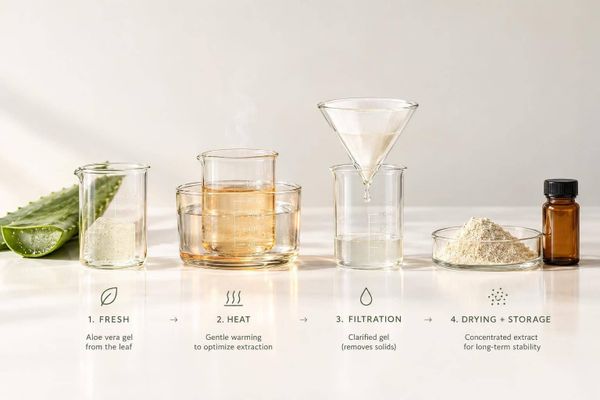
Even aloe grown in clean conditions can become contaminated after harvest. The acemannan-rich inner gel must be separated from the rind and latex residues. Ask for the batch’s separation and sanitation records. Because aloin comes from latex, batch results should show less than 10 ppm of aloin.
Preserving Acemannan Structure During Processing
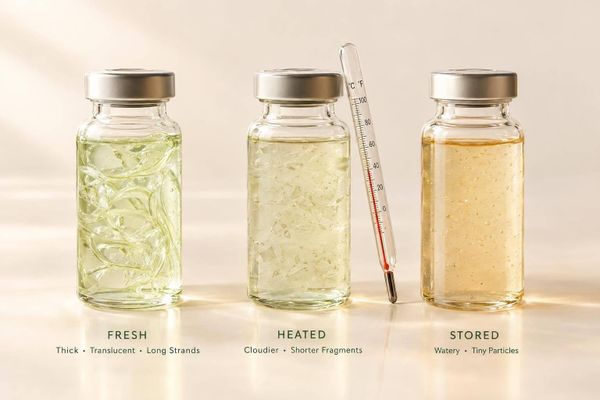
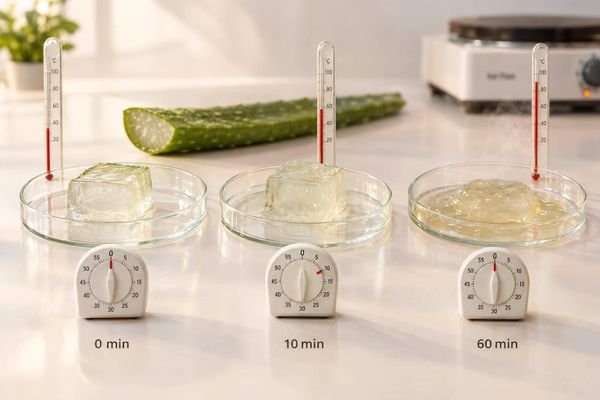
Cold ethanol extraction helps preserve acemannan’s acetylation and molecular-weight distribution. Ask for the processing steps and temperature logs. Low contaminant levels don’t rule out heat damage: temperatures above 140°F (60°C) can alter acemannan’s structure. Request finished-product data on acetylation and chain length.
Storage also affects how well Costa Rican harvest quality holds up through shelf life. Acetylation markers can decline over time, even under refrigeration. Ask for stability data that supports the stated shelf life and storage directions.
Tests That Verify Acemannan Quality
Batch Tests and Certificates of Analysis
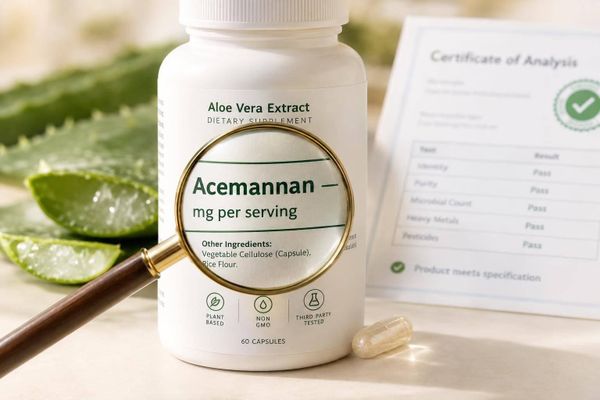
To check quality after harvest in Costa Rica, match the bottle’s lot number to the Certificate of Analysis (COA). Sourcing tells you where the aloe came from. It doesn’t verify the finished batch’s identity, composition, or contaminant levels. Ask for actual results, test methods, and acceptance limits - not just a spec sheet or pass/fail report.
Testing the finished product checks whether processing preserved its purity and structure.
| Quality risk | Appropriate test | Documentation to request |
|---|---|---|
| Incorrect aloe identity | Identity testing, such as HPTLC | Lot-specific confirmation of Aloe barbadensis Miller and the method used |
| Unverified acemannan amount | Quantitative acemannan assay | Acemannan mg per serving, not total polysaccharides |
| Loss of acetyl groups | Degree-of-acetylation testing | Numeric result, method, and acceptance range |
| Changed polysaccharide chain sizes | Size-exclusion analysis for molecular-weight distribution | Distribution results and the batch’s acceptance criteria |
| Heavy metals | Heavy-metal panel | Actual levels and limits for each metal tested |
| Pesticide residues | Pesticide screening | Compounds screened, results, and reporting limits |
| Microbial contamination | Total plate count, yeast and mold testing | Counts, acceptance limits, and batch identification |
| Latex contamination | Aloin testing | Numeric result and the stated acceptance limit |
Request supporting reports from a qualified independent laboratory. Their batch identifiers should link directly to the COA. Check each result against the listed method, units, and limit.
These results verify quality - not health effects.
What Purity Tests Cannot Prove
Purity tests confirm the ingredient, not whether it provides a clinical benefit. Lab studies suggest acemannan interacts with macrophages and dendritic cells, but they don’t prove treatment effects. Passing these tests also doesn’t prove safety for everyone: a COA covers only the characteristics and contaminants tested.
Conclusion: Assessing Advanced Acemannan’s Costa Rican Sourcing
Costa Rican aloe starts with cleaner growing conditions: volcanic soil, clean air, and tested mountain water. But origin alone doesn’t prove final-batch purity.
Quality Records to Request
Ask for these records to link Costa Rican growing conditions to the finished lot’s test results:
- Farm origin: Records linking the lot to the named Costa Rican farm, along with soil and irrigation-water reports. to support science-backed health benefits
- Harvest and processing traceability: Harvest dates and chain-of-custody records tracking the aloe from farm to finished lot.
- Acemannan specifications: The exact acemannan percentage, molecular-weight range, and acetylation criteria.
- Batch-matched COA: The certificate of analysis (COA) matching the bottle’s lot, showing acemannan content, purity, and aloin below 10 ppm.
If any one of these records is missing, the quality claim remains unverified.
FAQs
How can I verify a lab’s independence?
Match the Certificate of Analysis (COA) to the lot number on your bottle. Check the lab’s name and verify its official ISO/IEC 17025 accreditation.
Look for numerical results from validated methods such as NMR, HPLC, or AOAC Official Method 2018.14 - not just “pass” or “conforms.” Make sure the tests cover the finished product, not only the raw ingredients. Also check for separate sample collection and testing dates to confirm the timeline.
What if my bottle’s COA is incomplete?
An incomplete Certificate of Analysis (COA) leaves your product’s quality, safety, potency, and acemannan structure unverified.
Ask for a lot-specific COA with numerical results for acemannan concentration, molecular weight distribution, and degree of acetylation. Without these structural data, you can’t tell whether processing damaged the supplement. If the manufacturer can’t or won’t provide complete results, hold off on buying.
Can shipping heat affect acemannan quality?
Yes. Heat during shipping, along with moisture, oxygen, and light, can break down acemannan’s molecular structure and reduce its acetyl groups. This may change both chain length and acetylation.
Testing the finished product is how to check whether acemannan stayed intact during shipping. Tests should measure acetylation level, molecular weight distribution, and related polysaccharide profiles. Claims about processing or storage alone aren’t enough.
Related Blog Posts
- Aloe Supplements Explained: Quality Markers That Matter
- Why Costa Rica? Investigating How Growing Environment, Volcanic Soil, Water Quality, and Harvesting Practices Affect Acemannan-Rich Aloe Vera
- How to Choose an Aloe Product That Prioritizes Purity and Potency
- The Smart Shopper’s Guide to Acemannan Aloe Supplements