How Heat Changes Acemannan Structure in Aloe Vera
Heat, time, and processing change acemannan's acetylation and chain size - structure matters, but it doesn't prove health benefits.

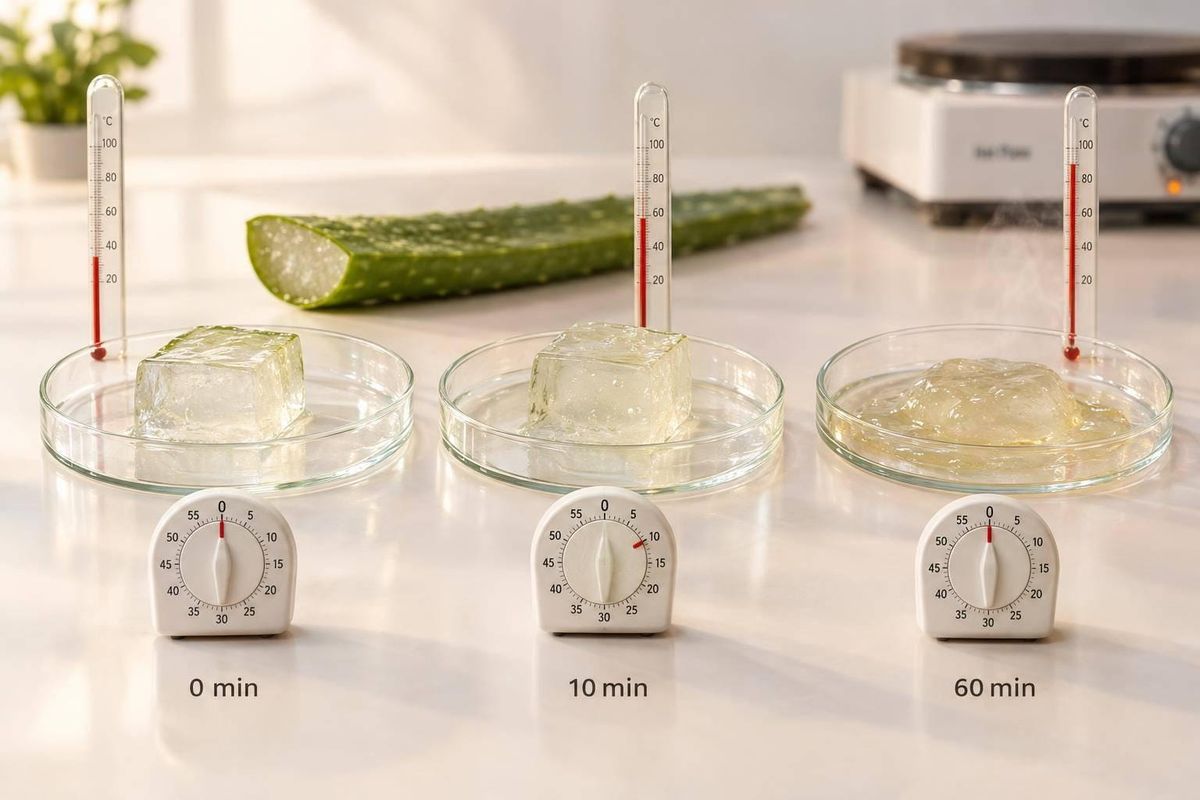
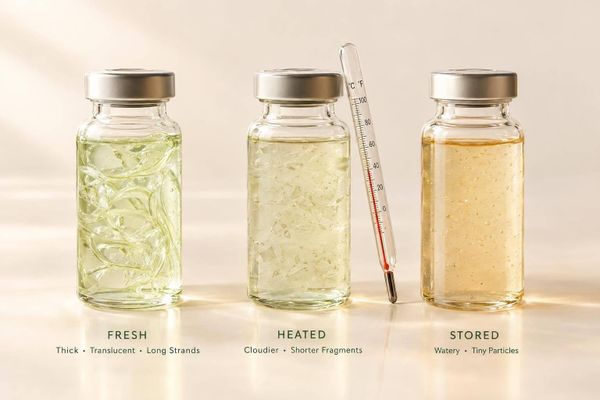
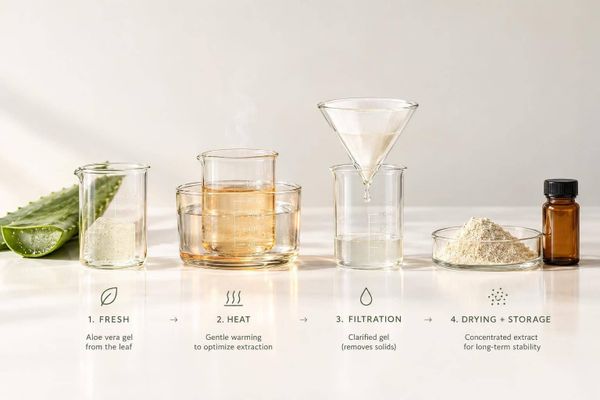
Heat can change acemannan’s acetyl groups and chain size - but temperature alone doesn’t tell the whole story. When I assess an aloe processing claim, I look for the heating temperature, exposure time, and tests on the finished product - not just a “cold-processed” label.
Here’s what I look for:
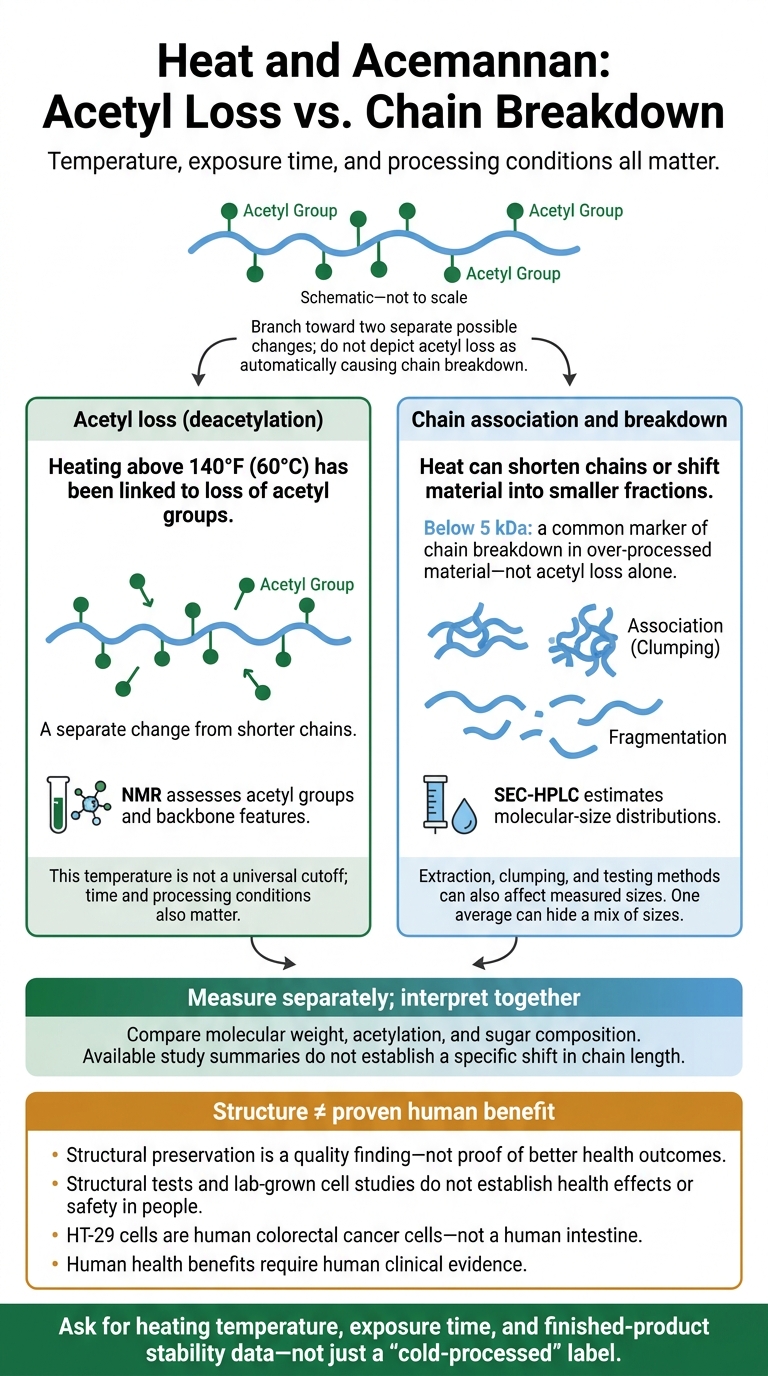
- Acetyl loss: Heating above 140°F (60°C) has been linked to loss of acetyl groups. That’s a separate change from shorter chains.
- Chain-size changes: Smaller measured sizes may reflect chain breakdown, but extraction, clumping, and testing methods can also affect results.
- Separate tests: NMR checks acetylation; SEC-HPLC estimates molecular-size distributions. One average can hide a mix of sizes.
- Human research: Structural tests and lab-grown cell studies - including HT-29 cancer cells - do not establish health benefits or safety in people.
My takeaway: <u>preserving acemannan’s structure is a quality measure, not proof of better health outcomes.</u>
Heat and Acemannan: Acetyl Loss vs. Chain Breakdown
How Heat Can Change Acemannan
Acetyl Loss and Changes in Sugar Composition
Heating Aloe vera above 140°F (60°C) is linked to acemannan deacetylation, or the loss of acetyl groups. This chemical change is separate from changes in chain length.
Chain Association and Breakdown
Heat can also shorten acemannan chains or shift them into smaller fractions. Over-processing is linked to material below 5 kDa, a common marker of chain breakdown - not acetyl loss alone. Structural tests are needed to tell actual chain cleavage apart from extraction or measurement effects.
How Time and Processing Conditions Affect Heat Responses
Temperature isn’t the only factor: heat effects also depend on processing conditions. Pasteurization, for example, can reduce acemannan’s acetylation.
sbb-itb-b88dd21
What Heat-Processing Studies Found
Measured Changes in Molecular Weight and Composition
Heat-based processing can reduce measurable polysaccharide signals. But the available summaries don’t include full experimental conditions. That limits what we can say about acemannan’s structural changes: the findings don’t establish a specific shift in chain length.
Comparing Heating and Pasteurization Studies
Heat above 140°F (60°C) is linked to deacetylation. Commercial aloe products also often show lower acetylated-polysaccharide signals, but those results alone don’t tell us which processing conditions caused the reduction.
To compare studies, we need separate data on molecular weight, acetylation, and sugar composition.
What Structural Tests Can Show
NMR assesses acetyl groups and backbone features. SEC-HPLC measures molecular-weight distribution and can show shifts toward lower molecular weights.
These tests describe structure - not human health effects.
Structural Changes Do Not Prove Human Health Effects
What Structural Findings Mean for Human Research
These lab findings describe structure, not patient outcomes. Acetylation and molecular weight may affect biological activity, but they do not predict gut or immune outcomes in people.
The table separates what each test shows from what it cannot prove in humans.
| Structural or laboratory finding | What it establishes | What remains unproven in humans |
|---|---|---|
| Degree of acetylation | Chemical integrity and potential for biological interaction | Specific clinical immune response or disease prevention |
| Molecular-weight distribution | The sizes of molecules in the tested preparation | Whether those sizes improve gut health |
| Macrophage activation in vitro | A response in the tested laboratory model | Actual immune boosting or safety in a living human system |
| Fibroblast proliferation in vitro | Increased cell growth under experimental conditions | Faster wound healing in patients |
Lab responses can guide further research. But they do not account for digestion, absorption, or interactions throughout the body.
Limits of HT-29 Cancer Cell Studies
HT-29 cells are human colorectal cancer cells - not a human intestine. Results from this model show how cells respond under lab conditions. They do not prove a health benefit or establish safety in people.
How to Assess Supplement Research
Study methods show what researchers measured and how they processed the material. Check whether they used SEC-HPLC or NMR to measure molecular weight and acetylation, and whether they reported processing conditions.
Those details help you judge whether the tested material matches the supplement being discussed. A cold-processed label alone does not prove a health benefit in humans.
Conclusion: Processing Conditions Shape Heat Effects
Heat effects depend on temperature, time, and processing conditions. These factors can change acetyl groups and chain length.
Average molecular weight can mask a mix of fragments and aggregates. These measurements describe structure - not biological activity in humans. However, certain foods that boost acemannan's gut benefits may help optimize its impact.
When reviewing processing claims, ask for the heating temperature, exposure time, and finished-product stability data, rather than just the amount of aloe retained. Structural preservation is a quality finding; human health benefits require human clinical evidence.
FAQs
Can brief heating preserve acemannan’s structure?
Yes, brief, low-heat processing can help preserve acemannan’s structure. Research indicates that processing at around 140°F (60°C) keeps most of its structure intact, with about a 14% loss of acetyl groups - a process called deacetylation.
At 176°F (80°C) or higher, the structure breaks down faster, often with more than 46% deacetylation. Spray-drying can cause up to a 70% loss of acetylation. These structural findings alone do not establish effects on immune or gut health in humans.
What test results should I request for my aloe supplement?
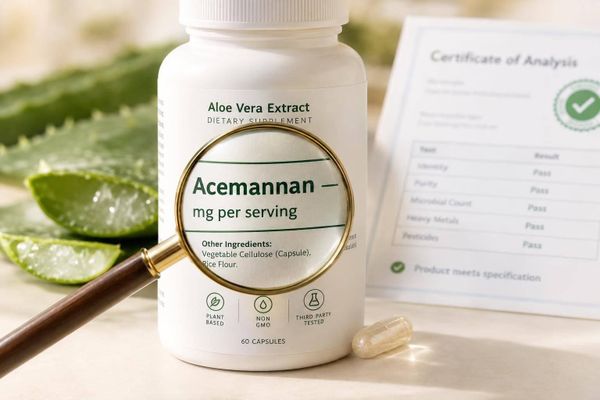
Ask the manufacturer for a Certificate of Analysis (COA) that confirms:
- Acemannan amount per serving, preferably measured using HPLC, NMR, or FTIR, along with degree of acetylation - ideally above 85%, a key factor in bioactivity - and molecular weight data.
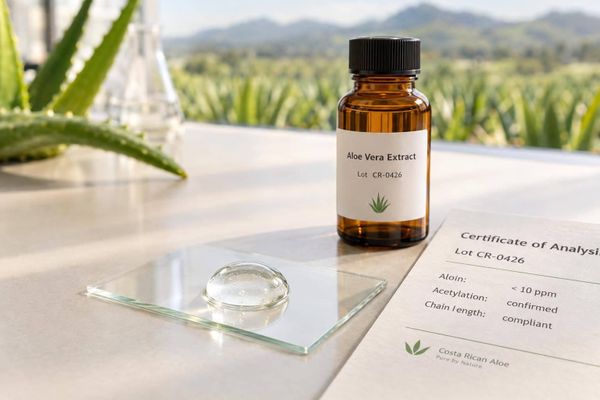
- Aloin levels below 10 ppm for safety, plus heavy metal levels and microbial counts that meet established purity standards.
What human studies would establish acemannan’s health benefits?
To establish acemannan’s health benefits, researchers need clinical trials that measure specific outcomes. Lab and animal studies alone aren’t enough. Human studies have measured CD4 cell counts, wound-healing rates, and tissue regeneration in dental applications.
High-heat processing can change acemannan’s molecular weight (chain length) and degree of acetylation (acetyl groups). Both affect its biological activity. But findings about these structural changes are separate from evidence of health benefits in humans.