How to Spot an Aloe Product Designed for Daily Digestive Support
Skip vague aloe labels — check inner-leaf source, acemannan amount, <10 ppm aloin, simple ingredients, and clear daily directions.

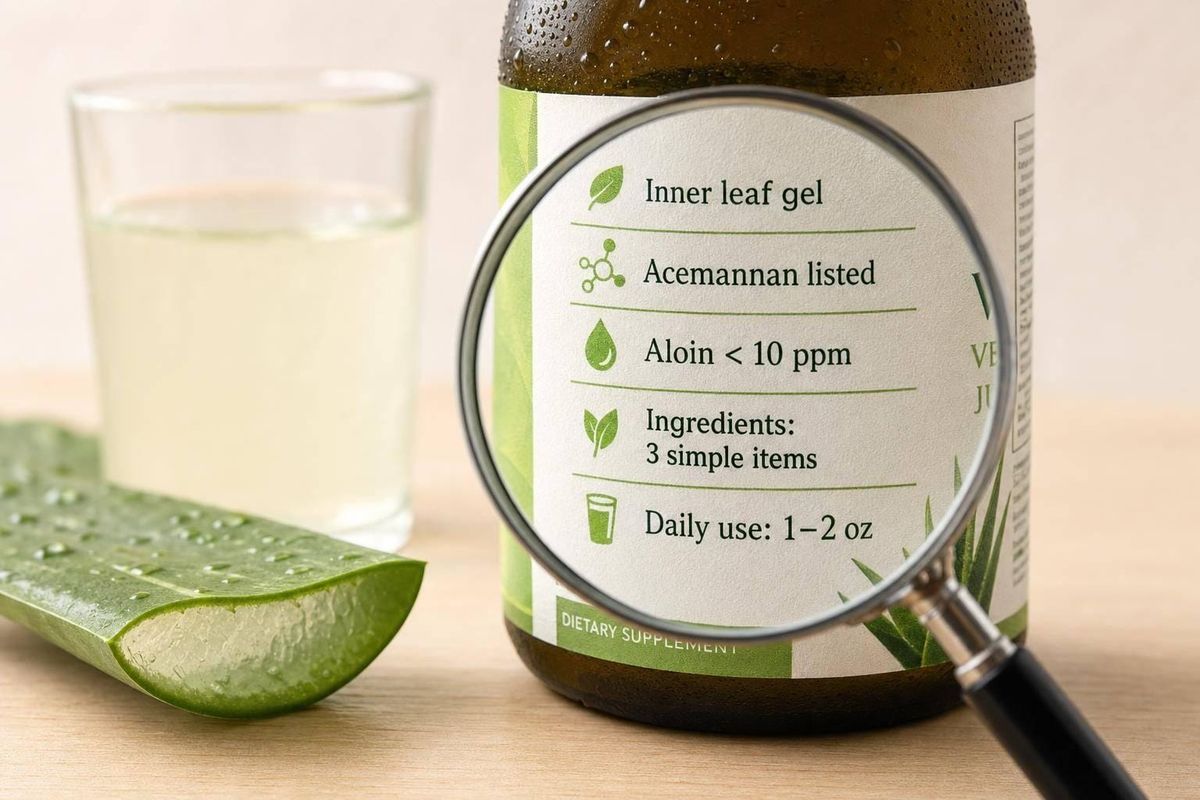
If I want aloe for daily gut support, I skip vague labels and check 4 things first: the plant part, acemannan listed on the label, low-aloin wording, and clear daily directions. If a product does not say inner leaf, does not show acemannan or aloe polysaccharides, and does not mention aloin testing, I treat it as a weak daily-use option.
Here’s the short version:
- Look for inner-leaf aloe, not just “aloe vera” or “whole leaf”
- Check for acemannan or aloe polysaccharides with a stated mg or %
- Look for low-aloin wording, such as decolorized, aloin-tested, or less than 10 ppm
- Avoid stimulant laxative add-ons like senna and cascara sagrada
- Read the serving size and directions so I know it fits daily use
- Check storage and testing details, like a lot number, QR code, or COA
One number matters right away: for daily use, the article points to 10 ppm or less of combined aloin A and B as the target. Another useful point: aloe products aimed at steady gut support may need 4 to 8 weeks of regular use before I can judge how they’re working.
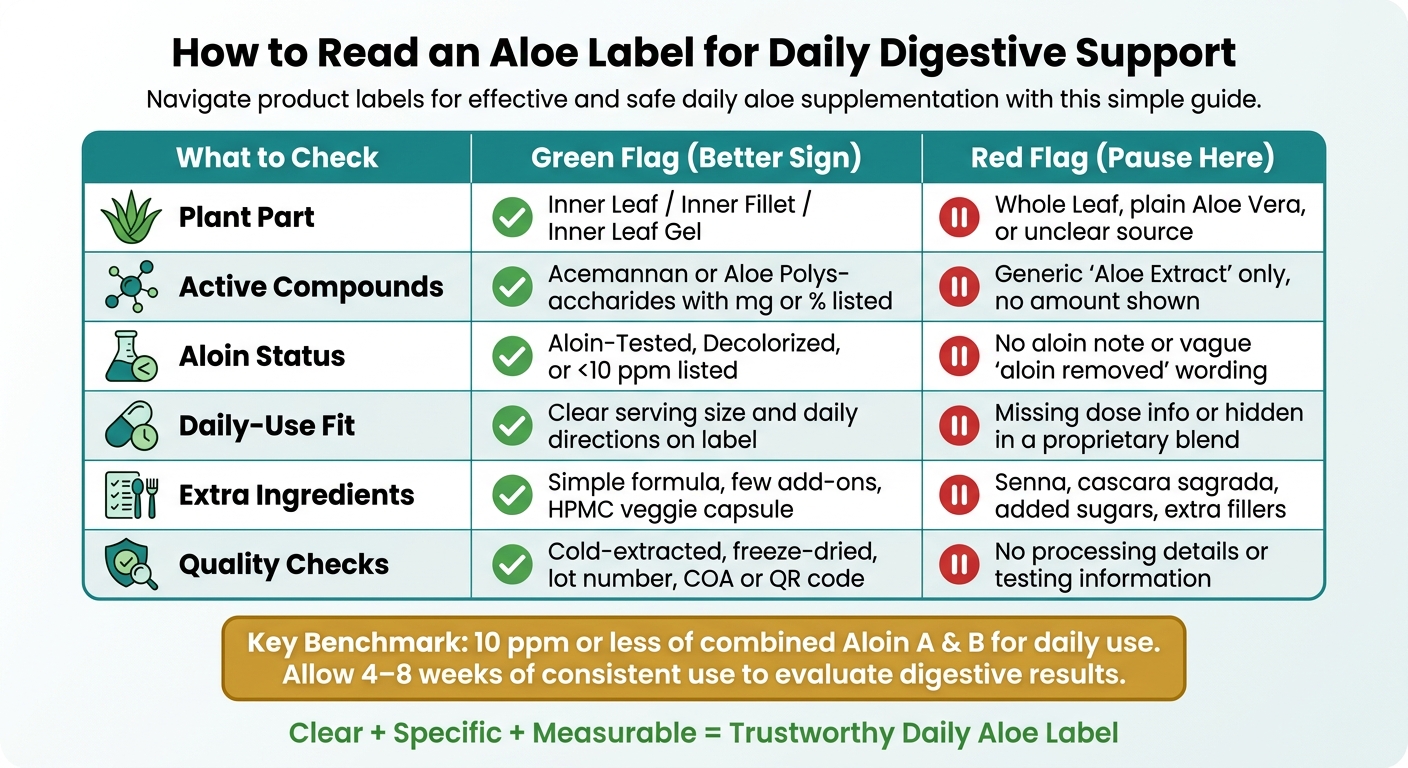
How to Read an Aloe Label for Daily Digestive Support
Quick comparison
| What I check | Better sign | What makes me pause |
|---|---|---|
| Plant part | Inner leaf / inner fillet / inner leaf gel | Whole leaf, plain aloe vera, or unclear source |
| Active compounds | Acemannan or aloe polysaccharides with mg/% | Generic aloe extract only |
| Aloin status | Aloin-tested, decolorized, <10 ppm | No aloin note or vague “aloin removed” wording |
| Daily-use fit | Clear serving size and daily directions | Missing dose info or proprietary blend |
| Extra ingredients | Simple formula, few add-ons | Senna, cascara, added sugars, extra fillers |
| Quality checks | Cold-extracted, freeze-dried, lot number, COA | No processing or testing details |
My rule of thumb: if the label is clear, specific, and measurable, it’s easier to trust for daily digestive support. If the label is vague, I move on.
sbb-itb-b88dd21
Check the Aloe Source and Plant Part
For daily digestive support, start with the plant part. You want inner leaf gel, where acemannan is concentrated, not the outer rind or latex layer.
Look for Inner-Leaf or Inner-Fillet Aloe on the Label
If the label spells out the plant part, inner leaf is the main thing to look for. The clearest signs are phrases like "100% Pure Inner Leaf Aloe Vera Extract," "Inner-Fillet," or "Inner Leaf Gel." Those terms point to the inner leaf, the part most closely linked with acemannan.
Pause When the Label Says Whole Leaf or Leaves the Plant Part Unclear
Terms like "Whole Leaf," "Aloe Powder," or just "Aloe Vera" without any plant-part detail call for extra care. Whole-leaf aloe includes the outer rind and latex, which can contain anthraquinones like aloin and may be too laxative for daily use.
If a whole-leaf product still looks like a good option, check for backup wording such as "Aloin-Free," "Decolorized," or "Tested for Aloin."
| Label Term | What It Signals | Daily Use Fit |
|---|---|---|
| Inner-Leaf / Inner-Fillet | Acemannan-rich inner leaf gel | ✓ Strong fit |
| Whole Leaf + Aloin-Free / Decolorized | Whole-leaf formula with aloin addressed | ✓ Acceptable with verification |
| Whole Leaf (no aloin testing listed) | May contain aloin from outer rind/latex | ✗ Proceed with caution |
| "Aloe Vera" or "Aloe Powder" (unspecified) | Plant part unclear; may be diluted | ✗ Not enough information |
Verify Acemannan Disclosure and Processing Quality
Once you’ve checked the aloe source and the part of the plant used, the next step is simple: see whether the label shows what was kept and what was taken out.
Check Whether Acemannan or Aloe Polysaccharides Are Named
Start with the Supplement Facts panel. You want to see standardized acemannan or aloe polysaccharides listed with a milligram amount per serving.
If the label only says “Aloe vera extract,” that’s not enough. It doesn’t tell you how much acemannan you’re getting, which makes daily-use value tough to judge. When acemannan appears in milligrams, that’s the clearest sign the formula is built around the active inner-leaf fraction.
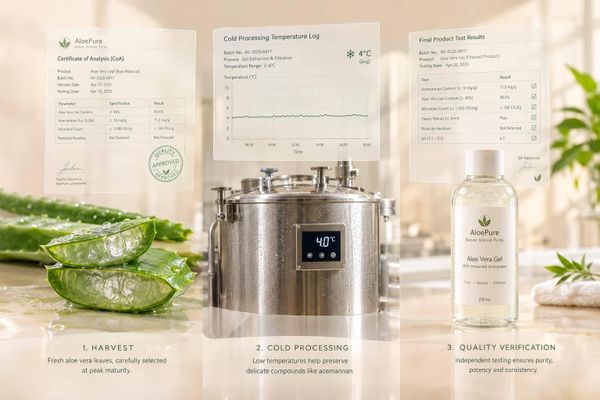
Processing matters too. Terms like cold-extracted or freeze-dried usually point to gentler handling, which can help preserve polysaccharides. It also helps to see third-party testing or a batch-specific COA.
Look for Low-Aloin, Decolorized, or Aloin-Tested Language
For daily use, the benchmark is 10 parts per million (ppm) or less of combined aloin A and B. That’s why exact wording matters.
Phrases like Aloin-Tested, Decolorized, or <10 ppm aloin give you more confidence because they suggest the product was measured. By contrast, vague wording like “aloin removed” leaves too much open to guesswork.
| Label Wording | What It Tells You | Daily-Use Confidence |
|---|---|---|
| Aloin-Tested / <10 ppm | Measured against the daily-use benchmark | High |
| Decolorized | Aloin was addressed during processing | Good |
| Aloin-Free | Worth verifying with test data | Moderate |
| "Aloin Removed" | Too vague to confirm the result | Low |
| No aloin mention | Not enough information | Low |
If a product doesn’t disclose aloin at all, it’s best to treat it as a weak option for daily use.
Read the Supplement Facts and Ingredient List for Daily Use
Once you’ve checked the aloe source and aloin status, turn to the Supplement Facts panel. This is where you can tell if the product makes sense for day-to-day use.
Confirm the Aloe Amount, Serving Size, and Daily Directions
Start with the basics: the label should show a clear aloe amount per serving, a defined serving size, and exact daily directions. If any of that is missing, it becomes much harder to tell whether the product is set up for regular use.
The best labels go a step further and list acemannan or aloe polysaccharides in milligrams, not just a total aloe powder weight. That matters because a concentrated extract can give you a useful amount in fewer milligrams.
Daily directions should also be plain and specific. Something like "Take 1 capsule daily, preferably in the morning with water" makes it much easier to build a steady routine. One more thing to check: servings per container. A 30-day supply is the bare minimum if you’re using aloe for gut support, since digestive effects from acemannan usually need 4 to 8 weeks of steady use before you can judge them fairly.
Choose Simple Ingredient Lists and Watch for Add-Ons
The “Other Ingredients” section is easy to skip, but it can tell you a lot. For a daily digestive formula, simpler is usually better. Good signs include standardized acemannan, inner-leaf extract, and preservative-free inner fillet juice. Hypromellose (HPMC) veggie capsules also point to a simple, plant-based formula.
A few ingredients should put you on alert:
- Senna
- Cascara sagrada
- Added sugars
- Artificial colors
- Extra fillers that don’t need to be there
These add-ons can work against the gut comfort you want to support. And if aloe is tucked inside a proprietary blend without its own milligram count, that’s another red flag. You can’t judge the dose, which makes daily use tougher to assess.
| Ingredient Type | Look For | Pause If You See |
|---|---|---|
| Active Aloe | Standardized acemannan, inner-leaf extract | Generic aloe powder, no mg listed |
| Capsule | Hypromellose (HPMC), veggie capsule | Gelatin, unnecessary fillers |
| Sweeteners | No added sugars | Added sugars |
| Digestive Herbs | None, or prebiotic polysaccharides | Senna, cascara sagrada |
| Low-Aloin Verification | Aloin-tested, <10 ppm listed | No aloin data, proprietary blend |
A clean label and a short ingredient list usually point to a formula that fits daily use. The next step is to review storage and safety details before you buy.
Confirm Safety, Storage, and the Final Label Check
Review Daily-Use Safety and Storage Details
After you check the aloe source and active compounds, take one more look at whether the bottle can protect those ingredients day to day.
Even a solid aloe formula can lose strength if it’s stored the wrong way. Heat, moisture, and harsh processing can weaken acemannan. That’s why a good label should include storage directions that keep the product away from heat and humidity.
For capsule products, HPMC veggie capsules are a good sign. They help keep moisture low during storage and shipping, which matters because it helps protect the inner-leaf compounds you checked earlier. If the label only says “capsule” and doesn’t name the capsule type, make a note of that.
It also helps to see a lot number or a QR code that links to a COA.
Then check whether the label makes sense for long-term use. Daily digestive support depends on formula quality, but also on safe use over time. For daily use, look for products labeled aloin-free, decolorized, or aloin-tested. If you have a digestive condition, take medication, or are pregnant or breastfeeding, talk with a healthcare professional first.
Use a Short Label Checklist Before You Buy
Use this last scan to make a fast buy-or-pass call:
- Inner-leaf or inner-fillet aloe listed as the source
- Acemannan or aloe polysaccharides with a specific mg or % listed
- Aloin-free, decolorized, or aloin-tested wording on the label
- Clear serving size and daily directions on the Supplement Facts panel
- Gentle processing listed
- HPMC veggie capsule or other moisture-stable packaging
- Lot or batch number plus a third-party testing seal or QR code
| Label Phrase | What It Tells You | What to Verify Next |
|---|---|---|
| Inner-Leaf Aloe | Uses the gel portion and avoids aloe latex | Confirm "Aloin-Free" or decolorized testing |
| Standardized Acemannan | Gives a specific amount of the active prebiotic | Check the exact mg or % on the Supplement Facts |
| Cold-Extracted / Freeze-Dried | Helps preserve the bioactive structure without heat damage | Look for third-party testing that confirms potency |
| "Detox Support" | Vague marketing term with no legal definition | Look for specific plant parts and active compounds |
| GMP / NSF Certified | Made under strict quality standards | Check for a lot or batch number for full accountability |
A label that answers these points is set up for daily use.
FAQs
How can I tell if an aloe product is too harsh for daily use?
Check the label to see which part of the plant the product uses and whether aloin is present.
Try to avoid whole-leaf products unless they’re clearly purified. The reason is simple: the outer rind and latex contain anthraquinones like aloin, and those can act as strong laxatives.
For daily digestive support, inner-leaf gel is usually the better pick because it’s naturally lower in aloin.
If you’re looking at a whole-leaf product, check for a batch certificate of analysis that shows aloin A/B levels below 10 ppm.
Does inner-leaf aloe always mean the product is low in aloin?
No. Inner-leaf aloe is often lower in aloin because the rind and latex are removed. But you shouldn’t assume it’s low in aloin unless the product shows a numeric test result.
If you plan to use aloe orally, look for batch testing that shows aloin A/B under 10 ppm. The label “aloin-free” by itself isn’t enough without a number to back it up.
Processing quality matters too, especially with whole-leaf products.
What should I do if the label does not list acemannan?
If the label doesn't show a measurable amount of acemannan, skip it. No standard percentage. No exact milligrams per serving. That means you can't judge the dose or check the product's strength.
For daily digestive support, look for brands that clearly list acemannan content and provide a batch-specific Certificate of Analysis.