Aloe Supplements Explained: Quality Markers That Matter
Most aloe labels hide potency — check acemannan, Aloe barbadensis inner-leaf sourcing, cold extraction, aloin-free tests, and COAs.
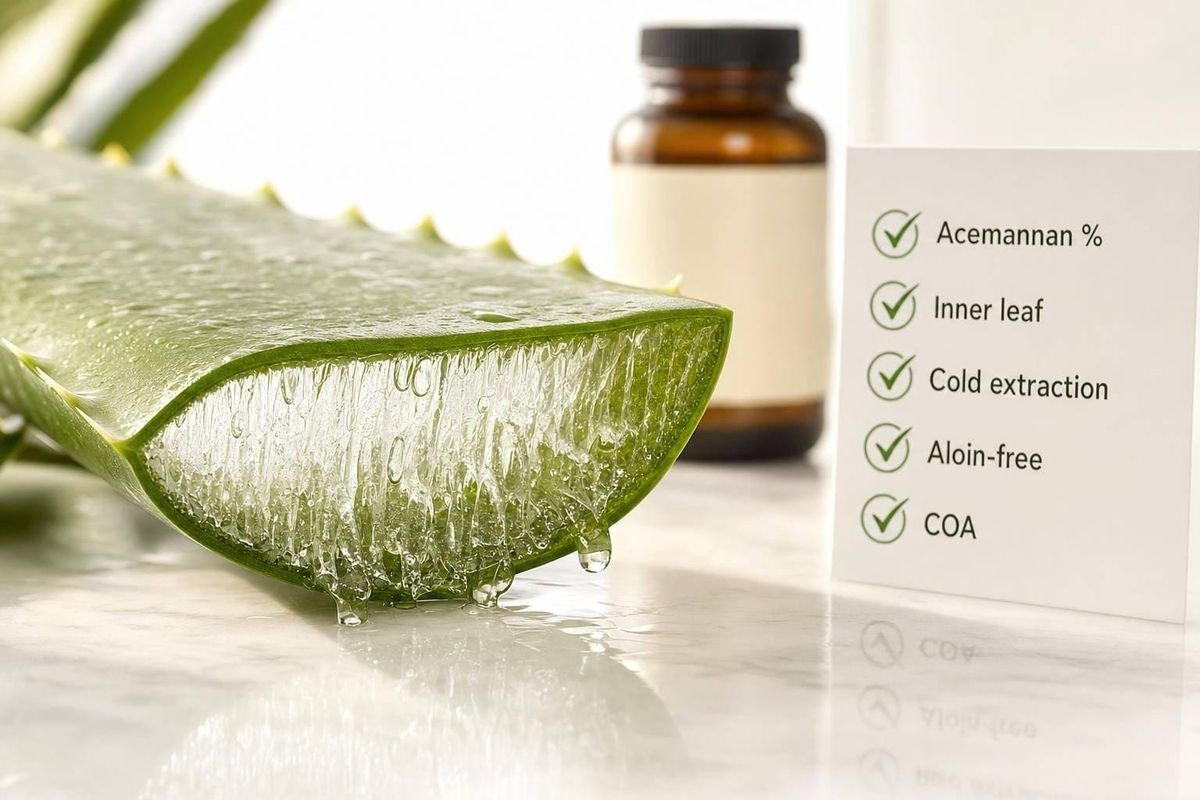
Most aloe supplement labels do not tell you enough to judge quality. When I check one, I focus on a short list: acemannan amount, Aloe barbadensis Miller, inner-leaf sourcing, cold processing or freeze-drying, aloin-free testing, and a batch COA.
Here’s the short version: if a label only says “aloe vera” or “aloe extract,” I still don’t know the strength, the plant part used, or how clean the product is. And that matters, because whole-leaf aloe can contain aloin residue, while heat or spray-drying can damage acemannan, the main marker many buyers want to see.
Before I buy, I look for:
- A measured acemannan amount in mg per serving or % by weight
- Aloe barbadensis Miller named on the label
- Inner-leaf or inner-fillet sourcing
- Cold-extracted or freeze-dried processing
- Aloin-free labeling or test results
- Third-party testing for heavy metals, pesticides, and microbes
- A short Other Ingredients list, often with HPMC veggie capsules
- cGMP, NSF, or a batch-specific COA, ideally easy to access by QR code
If even one of those details is missing, I treat that as a gap. If several are missing, I move on.
| What I Check | Better Sign | Red Flag |
|---|---|---|
| Acemannan | Amount listed | No amount listed |
| Species | Aloe barbadensis Miller | Generic aloe wording |
| Plant part | Inner-leaf | Whole-leaf or not stated |
| Processing | Cold-extracted / freeze-dried | Heat-processed / spray-dried |
| Purity | Aloin-free + third-party tests | No test info |
| Proof | COA, cGMP, NSF | No records or certifications |
That’s the core of the article: read past the front label and judge the supplement by what the brand is willing to show.
Avoid Fake Aloe Vera! 5 Tips for Picking a Supplement that Actually Works
sbb-itb-b88dd21
Common Problems With Low-Quality Aloe Supplements
A lot of aloe supplements look almost the same at first glance. Same plant, similar claims, similar packaging. But once you read the label, the gaps start to show. And those gaps make it hard to tell whether you're buying a solid product or just a weak formula.
Missing Sourcing Details and Potency Information
The biggest issue is vague labeling. Many products list "aloe extract" or "aloe polysaccharides" but leave out the details that matter most: the aloe species, the part of the plant used, and how much acemannan you get per serving. Without that, there's no clear way to compare strength from one product to another.
The plant part matters more than many labels make it seem. Inner-leaf gel is where acemannan is concentrated. Whole-leaf powder can contain latex residue, including aloin, and it may be less concentrated than inner-leaf gel. So if a label only says "Aloe Vera", you're still missing a big piece of the story.
Another common problem: no listed acemannan percentage or concentration ratio. If the label skips that number, you have no baseline for judging potency. Those missing details are exactly why the next quality markers matter so much.
Safety Concerns From Latex Residue, Contaminants, and Additives
Whole-leaf or poorly refined aloe products can contain aloin residue, an anthraquinone found in aloe latex. If a product doesn't say "inner-leaf only" or show an "Aloin-Free" certification, that risk hasn't been clearly addressed.
Aloe products can also carry heavy metals, pesticide residue, or microbes. At the label level, third-party purity testing is the main way to check for those issues. On top of that, some formulas include fillers, colors, or preservatives that water down the product and add ingredients that may not need to be there. If those details aren't disclosed, buyers can't make a clean side-by-side comparison.
How Processing Can Reduce Aloe Quality
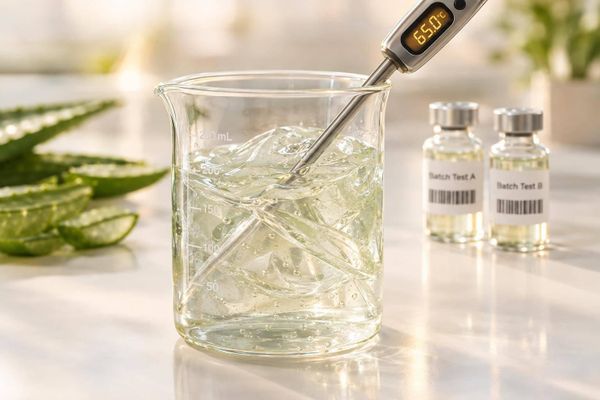
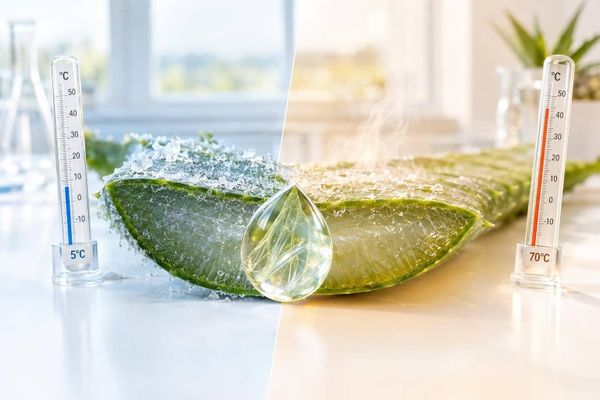
Even when aloe is sourced the right way, processing can still lower product quality. High-heat processing or spray drying can reduce acemannan quality, yet labels rarely say how the aloe was processed. Cold extraction or freeze-drying do a better job of preserving quality, but that only helps if the method is actually listed.
That gap is why the next section looks at the label markers that point to a better product.
The Quality Markers To Look For in Aloe Supplements
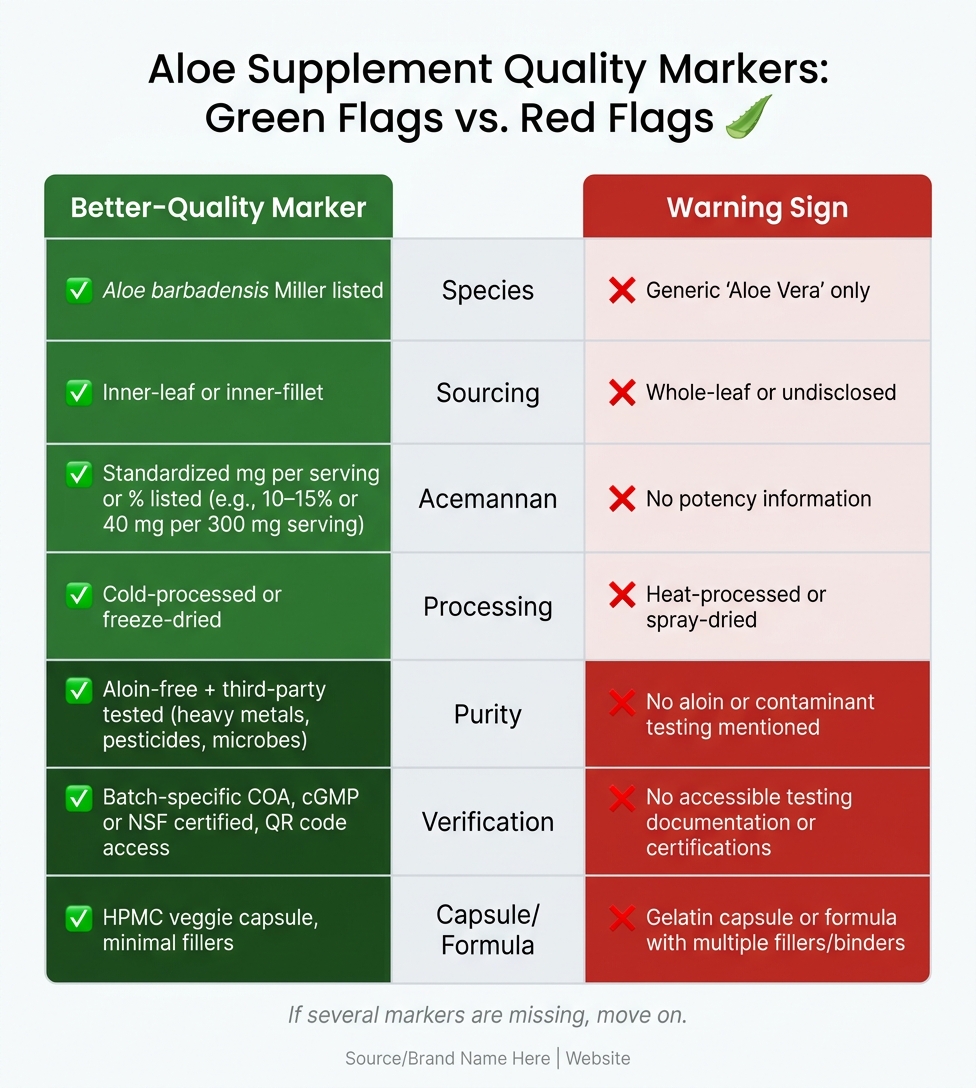
Aloe Supplement Quality Markers: Green Flags vs. Red Flags
Once you know what weak labels leave out, the good signs get much easier to spot. A small set of markers can tell you a lot about potency, safety, purity, and consistency.
Acemannan Content, Aloe Species, and Inner-Leaf Sourcing
Start with the plant itself. Look for Aloe barbadensis Miller on the label, along with inner-leaf or inner-fillet sourcing. After that, check whether the product lists standardized acemannan either in milligrams per serving or as a percentage by weight, such as 10–15% or 40 mg per 300 mg serving.
If the label doesn't show acemannan per serving or as a percentage by weight, there's no clear way to judge potency.
Processing Quality and Purity Testing
Processing matters more than many shoppers think. Look for cold extraction or freeze-drying, and steer clear of heat-processed or spray-dried formulas.
For purity, check for "Aloin-Free" labeling or test results showing aloin has been removed. Third-party testing for heavy metals, pesticides, and microbial contamination is another strong sign. Botanical ID testing also helps confirm that the aloe species on the label matches what's in the product.
Other Ingredients, cGMP, and Third-Party Verification
The "Other Ingredients" list should stay short. HPMC veggie capsules are usually a cleaner pick than formulas loaded with fillers or binders. Gelatin capsules, or products with several fillers and binders, deserve a closer look.
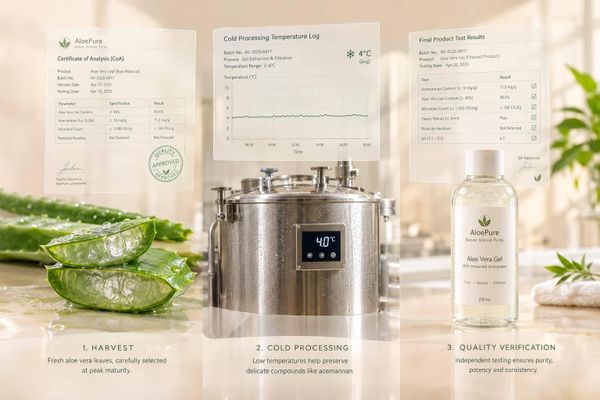
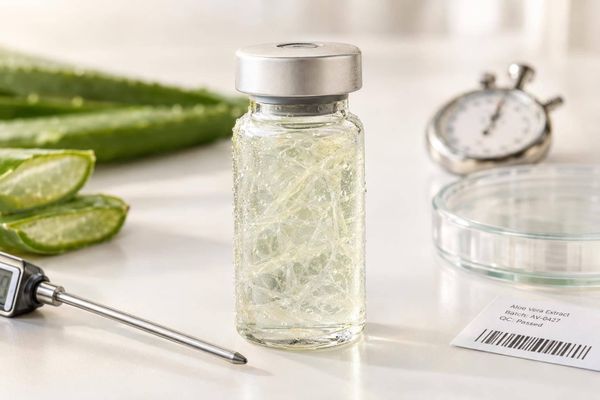
On the manufacturing side, cGMP and NSF certification show that the facility meets audited quality standards. The strongest signal is a batch-specific Certificate of Analysis (COA), ideally available through a scannable QR code on the package. If a brand makes COA records hard to find, that's a gap worth noting.
| Quality Marker | Positive Indicator | Warning Sign |
|---|---|---|
| Species | Aloe barbadensis Miller listed | Generic "aloe vera" only |
| Sourcing | Inner-leaf or inner-fillet | Whole-leaf or undisclosed |
| Acemannan | Standardized mg per serving or % listed | No potency information |
| Processing | Cold-processed or freeze-dried | Heat-processed or spray-dried |
| Purity | Aloin-free, third-party tested | No aloin or contaminant testing mentioned |
| Verification | Batch-specific COA, cGMP, NSF | No accessible testing documentation |
| Capsule | HPMC veggie capsule | Gelatin or formulas with fillers/binders |
Use this checklist to compare labels side by side in the next section.
How To Compare Aloe Supplements Step by Step
A Label-Reading Checklist
When you compare two aloe supplements, use the same order every time. It keeps things simple and makes weak spots jump out fast.
Start with the species. You want to see Aloe barbadensis Miller. After that, look for clear inner-leaf sourcing. Then check whether acemannan is listed as a standardized percentage. If there’s no acemannan number, there’s no clear potency benchmark.
Next, look at processing. Labels that say cold-extracted or freeze-dried are a better sign. Then check for an aloin-free claim or a test result, along with third-party contaminant testing. Last, read the Other Ingredients list. A short list, especially one with HPMC veggie capsules, usually points to a cleaner formula.
If key details are missing, treat that as a warning sign.
Better-Quality Markers vs. Warning Signs
Use the table below for a quick side-by-side label check.
| Criteria | Better-Quality Marker | Possible Warning Sign |
|---|---|---|
| Acemannan Disclosure | Standardized % listed | Not listed, or proprietary blend only |
| Species Identification | Aloe barbadensis Miller | Generic "Aloe Vera" or "Aloe extract" |
| Inner-Leaf Sourcing | Inner-leaf stated | Whole-leaf or unspecified |
| Aloin Testing | Aloin-free claim or test result | No aloin or latex removal mentioned |
| Contaminant Screening | Third-party tested | No independent verification listed |
| Processing Method | Cold-extracted or freeze-dried | Heat-processed or spray-dried |
| Other Ingredients | Minimal fillers; HPMC capsule | Fillers, additives, or gelatin shells |
| Third-Party Verification | GMP or NSF certified; batch-specific COA available | No certifications or accessible test records |
Conclusion: What To Check Before You Buy
Use the checklist above for one last label check before you buy. The front label can sound good, but it matters less than the Supplement Facts panel, Other Ingredients list, and any verification details.
Disclosed acemannan content is the clearest sign of quality. If a product doesn’t give you a standardized amount, potency is basically guesswork. You’ll also want to look for Aloe barbadensis Miller, inner-leaf sourcing, cold extraction or freeze-drying, and an aloin-free claim.
The last step is third-party verification. GMP or NSF certification, along with batch-specific COAs, can show whether the product is clean and consistent. Use the checklist before you buy. When key details are missing, that’s your warning sign.
FAQs
How much acemannan is a good amount?
There’s no single daily intake recommendation for acemannan. Results can vary based on molecular weight and the person taking it.
A useful quality marker is the acemannan content in the raw aloe material. It should contain at least 5% acemannan by dry weight, and some higher-end products test at 10% or more.
When you compare options, look for:
- a clear mg amount per serving
- a stated dry-weight percentage
- gentle processing, which can help preserve the compound
Why is inner-leaf aloe preferred?
Inner-leaf aloe is preferred because it’s the main source of acemannan, a bioactive polysaccharide tied to aloe’s immune-modulating and prebiotic effects.
Unlike whole-leaf products, inner-leaf gel is naturally low in aloin, a strong laxative found in the outer leaf. Using the clear inner gel helps deliver useful compounds while keeping unwanted anthraquinones to a minimum.
How do I verify a batch COA?
Look for specific, measurable results - not vague terms like “pass” or “conforms.” A reliable COA should show numeric results for acemannan content, aloin A and B, and heavy metals.
It should also state the test method used, confirm that the lab has ISO/IEC 17025 accreditation, identify the botanical source and plant part, and list any added carriers or fillers.