The Ultimate Guide to Acemannan and Wellness
Explains acemannan, its potential immune/gut benefits, processing impact, and how to choose quality aloe products.

If you only remember one thing, make it this: “aloe vera” on a label does not tell you how much acemannan you’re getting. Product type, processing, and testing matter more than the front label.
Here’s the short version:
- Acemannan is a sugar compound from the inner leaf gel of aloe vera.
- It is not the same as the yellow aloe latex, which contains aloin, a laxative that may upset the gut.
- Research points to possible support for immune response, gut health, antioxidant activity, and tissue repair.
- But most of the research is still from lab, animal, or small human studies.
- A 2023 study found large gaps between aloe drinks: one sample had 250 mg acemannan per 100 g, while some products labeled “99% aloe” had less than 35 mg per 100 g.
- Heat and some drying methods can damage acemannan. Freeze-dried and cold-processed products tend to make more sense.
- For daily use, many labels suggest 100–500 mg of a standardized extract.
- Before buying, I’d check for inner-leaf source, standardized acemannan content, third-party testing, and wording like “aloin-free” or tested for aloin and related anthraquinones.
If I were judging an acemannan product fast, I’d use this filter:
| What I’d Check | What I’d Want to See | What Would Make Me Skip It |
|---|---|---|
| Source | Inner leaf aloe vera extract | Whole leaf with no extra detail |
| Active compound | Standardized acemannan amount | “Aloe blend” with no acemannan listed |
| Processing | Freeze-dried or cold-processed | Heavy heat processing or spray-dried only |
| Safety | Third-party tested, aloin-free | No safety or purity details |
| Format | Capsules, powder, or plain aloe drink | Sugary flavored aloe drink with weak labeling |
So, my takeaway is simple: acemannan looks promising, but the product itself matters as much as the research. The rest of this guide explains what acemannan is, what studies have found so far, and how I’d look at quality and safety before using it.
What Acemannan Is and Where It Comes From
Acemannan is a complex sugar found in the clear inner-leaf gel of aloe vera. More specifically, it’s a polysaccharide with acetyl groups that help shape how soluble it is and how well it works. When those acetyl groups are stripped away, its activity drops.
Acemannan vs. Aloe Vera: A Key Difference
It helps to separate aloe vera from acemannan. Aloe vera has many compounds, but acemannan is the main polysaccharide researchers look at for immune and tissue support.
Just as important is where acemannan does not come from. It isn’t found in the yellow latex layer under the leaf skin. That part contains aloin, a laxative compound that can irritate the gut. Acemannan is found only in the clear inner-leaf gel. So when you look at an aloe-based product, the source material isn’t a small detail. It changes what’s actually in the product.
How Processing Changes Acemannan Content
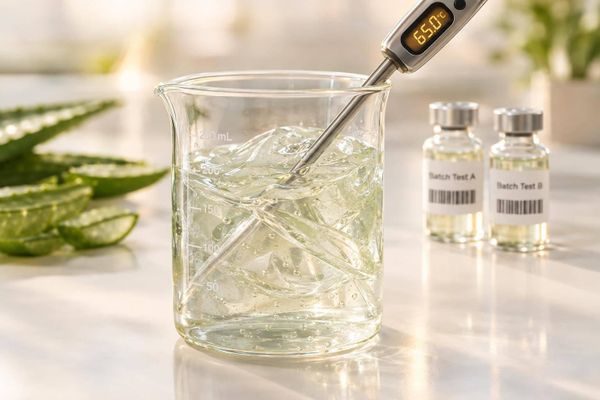
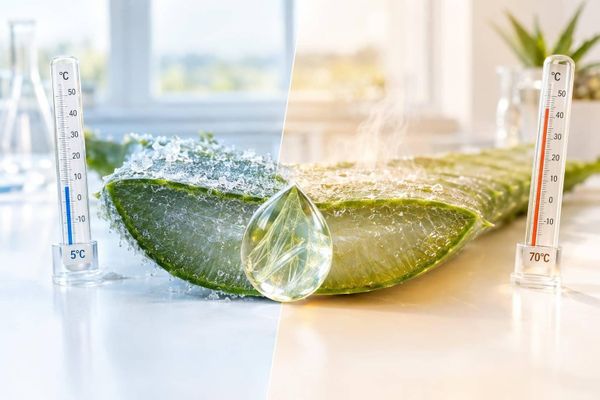
Processing can lower acemannan content. Heat is one of the main problems. Standard pasteurization can break down the polysaccharide chains and remove the acetyl groups that help keep acemannan active. In plain English: how a product is made has a direct effect on how much acemannan is left.
Drying method matters too:
| Drying Method | Acetylation Loss |
|---|---|
| Freeze-Drying | Minimal |
| Refractance Window Drying | ~52% |
| Radiant Zone Drying | ~60% |
| Spray-Drying | ~70% |
A 2023 study in the journal Gels looked at 15 commercial aloe vera beverages and found huge variation between products. One unflavored sample kept a degree of acetylation above 99% and had 250 mg of acemannan per 100 g. Four other products labeled as "99% aloe" had less than 35 mg per 100 g.
Flavored aloe drinks did even worse. Many showed 0% acetylation. And price didn’t predict acemannan content.
That’s the big takeaway here: two products can both say aloe vera on the label and still be very different when it comes to acemannan.
With source and processing clear, the next question is what the research actually supports.
sbb-itb-b88dd21
What Research Says About Acemannan and Wellness
Most of the research on acemannan is still preclinical, though human trials are starting to build.
Immune Modulation and Immune Resilience
The best-studied role for acemannan is immune signaling. It binds to receptors on immune cells and triggers cytokine activity, which helps switch on the body's response to pathogens.
A 2023 randomized, triple-blind, placebo-controlled trial looked at 50 healthy adults ages 40 to 80. In that study, an acemannan-rich aloe formula increased influenza B-specific IgG by 15.6% after vaccination (p = 0.0006). That points to possible support for immune response.
Acemannan isn't just being studied for immune effects, though. Researchers are also looking at oxidative stress, gut function, and tissue repair.
Antioxidant, Gut, and Tissue Support
Its acetyl groups may help interrupt free-radical reactions. In that same 2023 trial, supplementation also increased circulating glutathione peroxidase (GSH-Px) by Day 28 (p = 0.0214), which matters because this enzyme helps neutralize free radicals.
For gut health, acemannan acts as a prebiotic. In plain English, it feeds helpful gut bacteria. In the colon, those bacteria ferment it into short-chain fatty acids, or SCFAs, especially butyrate, which helps support the gut lining.
On the tissue side, lab and animal studies show that acemannan stimulates fibroblasts to produce collagen and promotes M2 macrophage polarization, which is a shift toward repair.
Here’s a side-by-side look at the four main wellness areas researchers keep coming back to:
| Wellness Area | What Is Studied | Why It Matters | Evidence Type |
|---|---|---|---|
| Immune Support | Macrophage activation and cytokine signaling (IL-1, TNF-α) | Immune resilience and pathogen response | Strong mechanistic and early human trials |
| Antioxidant Activity | Free radical scavenging and GSH-Px levels | Oxidative stress support | Mechanistic and small human crossover studies |
| Gut Health | SCFA production (butyrate) and prebiotic effects | Gut balance and digestive comfort | Animal models and early human metabolic studies |
| Tissue Repair | Fibroblast stimulation and M2 macrophage polarization | Recovery support for minor skin or mucosal injuries | Preclinical studies, case reports, and small clinical studies |
What the Evidence Does and Does Not Confirm
There’s good reason to be careful here. The cell-level mechanisms are fairly well documented. The harder question is whether those same effects show up in a steady, measurable way in day-to-day wellness for healthy adults.
That’s where the research is still thin. Most human studies are small, short-term, or tied to narrow settings like vaccine response or post-meal metabolic markers.
Tissue repair has some of the strongest applied evidence, especially in dental use and wound-healing settings. The immune and antioxidant data look promising, but much of that support still comes from preclinical work. Gut health research is even earlier, with many findings coming from animal models rather than large human trials.
That puts the next issue front and center: product format and label accuracy.
How People Use Acemannan Day to Day
Supplements, Drinks, and Aloe-Based Formats
Most acemannan research focuses on immune and gut support. That’s why format matters almost as much as dose.
You’ll usually see acemannan sold as capsules, powders, or drinks. Each one has trade-offs. Capsules and tablets give you a fixed amount, which makes daily use simple. Powders and sachets give you more room to adjust how you take it, especially if you like mixing things into water or smoothies. The downside? They’re less handy when you’re out of the house.
Aloe drinks can be a bit tricky. Flavored versions often have less aloe and more sugar. So an “aloe drink” on the label doesn’t tell you much about how much acemannan you’re getting. In plain terms, processing and format matter more than front-of-label marketing.
Matching Product Format to Your Wellness Goals
If your main goal is immune support, capsules with standardized acemannan content are usually the easiest pick. Common guidance points to 100–500 mg of standardized extract per day for general immune and digestive support.
If you care more about digestive comfort, liquids and powders may make more sense. In the colon, microbes ferment acemannan into short-chain fatty acids, which help support the gut microbiome.
| Format | Best For | Key Consideration |
|---|---|---|
| Capsules/Tablets | Immune support, daily routine | Standardized dosing; most portable |
| Powders/Sachets | Versatile use, smoothies | Requires mixing; good for home routines |
| Unflavored Aloe Drinks | General wellness, hydration | Check acemannan content; often >99% aloe |
| Flavored Aloe Drinks | General wellness, taste preference | Often more sugar and juice; may contain less aloe overall |
Whatever format you choose, stick with it for several weeks before deciding whether it’s helping. That’s why labeling and standardization deserve a close look.
How to Check Quality, Safety, and Research Fit
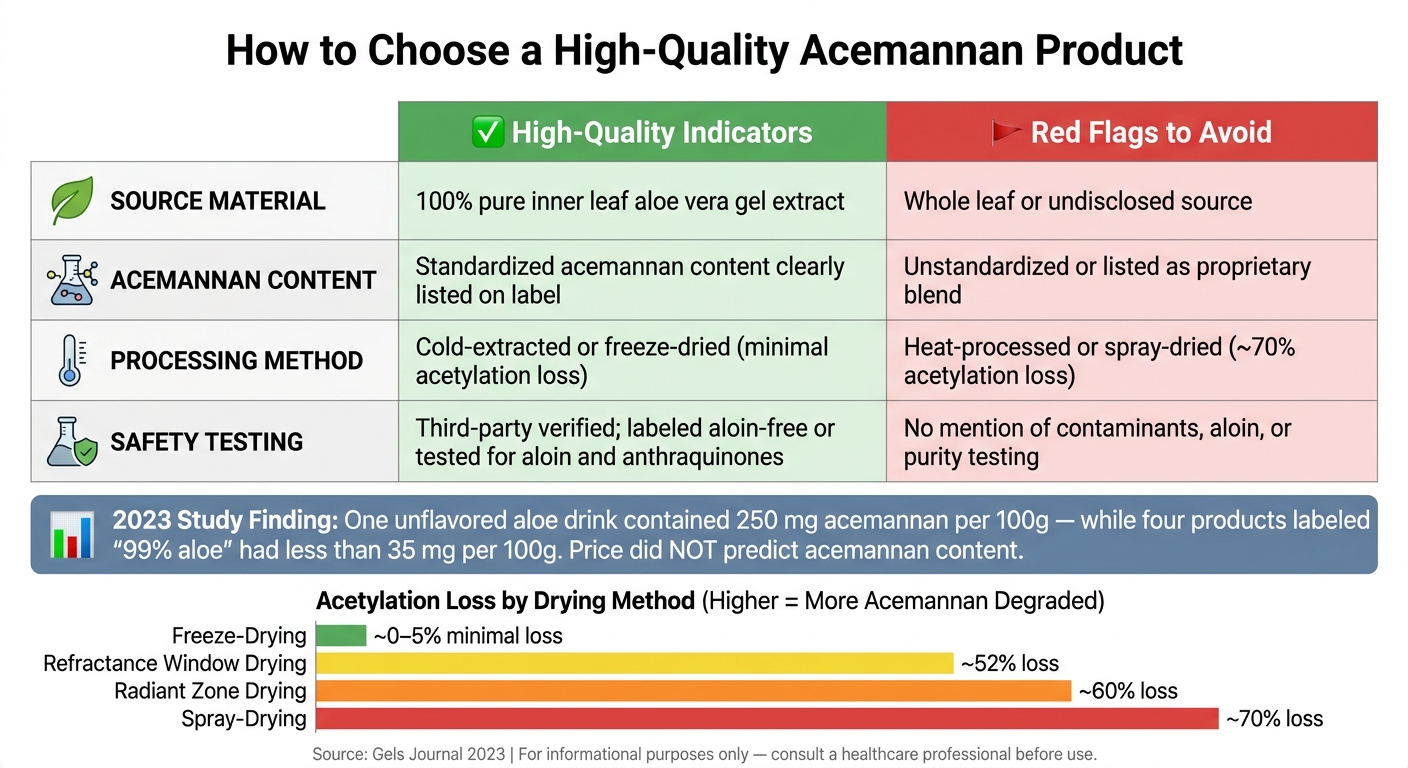
Acemannan Product Quality: What to Look For vs. What to Avoid
What to Look for on the Label
After you pick a format, the next step is simple: check whether the product gives you a meaningful amount of acemannan.
Start with the label. A generic term like "aloe vera powder" doesn't tell you much. It gives you no clear acemannan dose. Instead, look for "Inner Leaf Aloe Vera Extract" plus the serving size and a listed standardized acemannan content.
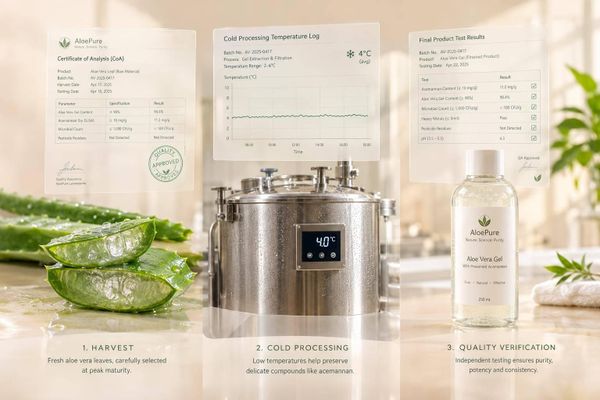
Processing matters too. Cold-extracted or freeze-dried products are the better bet, since heat and spray-drying can reduce acetylation. Researchers track acetylation as one way to judge quality, so those processing terms on the label aren't just filler.
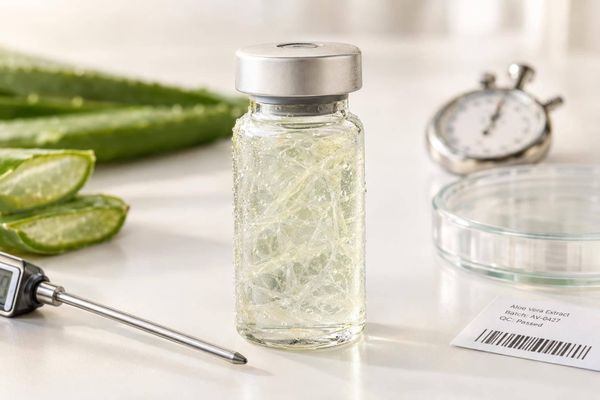
Testing is another big checkpoint. Look for third-party testing, such as a Certificate of Analysis (COA) or IASC (International Aloe Science Council) certification. That should cover purity, potency, heavy metals, microbial contamination, and aloin levels. If the label says whole leaf, make sure it also says the extract is decolorized and tested aloin-free.
| Quality Factor | High-Quality Indicator | Red Flag |
|---|---|---|
| Source Material | 100% pure inner leaf gel | Whole leaf or undisclosed source |
| Acemannan Content | Standardized acemannan content listed | Unstandardized or "proprietary blend" |
| Processing | Cold-extracted / freeze-dried | Heat-processed / spray-dried |
| Safety Testing | Third-party verified; aloin-free or tested for aloin and related anthraquinones | No mention of contaminants or aloin |
Once you've checked the source and the testing, the next thing is tolerability - and whether oral use makes sense for you.
Safety, Tolerability, and When to Ask a Professional
The main safety issue is whole-leaf or latex-derived products. Aloin is a strong laxative and can lead to abdominal cramping and diarrhea. Before taking any aloe product by mouth, confirm that it is clearly labeled "aloin-free" or "tested for aloin and related anthraquinones."
A cautious place to start is about 100 mg of standardized extract to see how you tolerate it. Some people notice gas, bloating, or loose stools.
A few groups should talk with a healthcare professional first:
- People with autoimmune conditions such as lupus or rheumatoid arthritis
- Anyone taking immunosuppressants
- People using diabetes medications, since acemannan may modestly affect blood sugar
- Pregnant or breastfeeding women, because safety data is insufficient
Key Takeaways for Smarter Acemannan Use
Acemannan is a specific polysaccharide in aloe vera's inner leaf gel. It's not a catch-all term for every aloe product on the shelf. Research suggests possible roles in immune modulation, antioxidant activity, gut support, and tissue health, but the evidence is still taking shape, and results can shift based on study design and product quality.
That last part matters a lot. If the product isn't well made, the research doesn't mean much for day-to-day wellness. Put your focus on standardized inner-leaf extracts, cold or freeze-dried processing, and verified third-party testing. And keep your expectations tied to what current research supports - not what the front label tries to sell.
FAQs
How is acemannan different from aloe vera?
Aloe vera refers to the entire plant. Acemannan, on the other hand, is one specific polysaccharide found in the inner gel of its leaves.
Aloe vera has a mix of vitamins, minerals, and other plant compounds. But acemannan is widely seen as the main active component tied to many of the plant’s immune-supporting and healing effects.
How can I tell if an aloe product has enough acemannan?
Check for 100% pure inner leaf gel. That’s the part where acemannan is most concentrated. Try to skip whole-leaf powders, which may have less acemannan and more anthraquinones than you want.
It also helps to look for cold-extracted or cold-processed products, because heat can lower bioactivity. And when you’re reading the label, products that show a standardized acemannan amount and include third-party potency testing tend to be a safer bet than vague wording like aloe powder.
Who should avoid acemannan or ask a doctor first?
Acemannan is usually well tolerated, but some people can have digestive upset or allergic reactions. And because human research is still limited, it’s smart to talk with a healthcare provider before you start taking it. That way, you can get advice that fits your health history and your goals.
This matters even more if you have a medical condition, take medications, or are thinking about adding a new supplement to your routine. Product quality also counts. Pick a high-quality option so you’re less likely to get unwanted compounds from the outer leaf rind.