Acemannan in Raw vs Dried Aloe: Study Review
Drying method, not label, determines acemannan integrity—freeze-dried preserves most; raw gel spoils quickly.

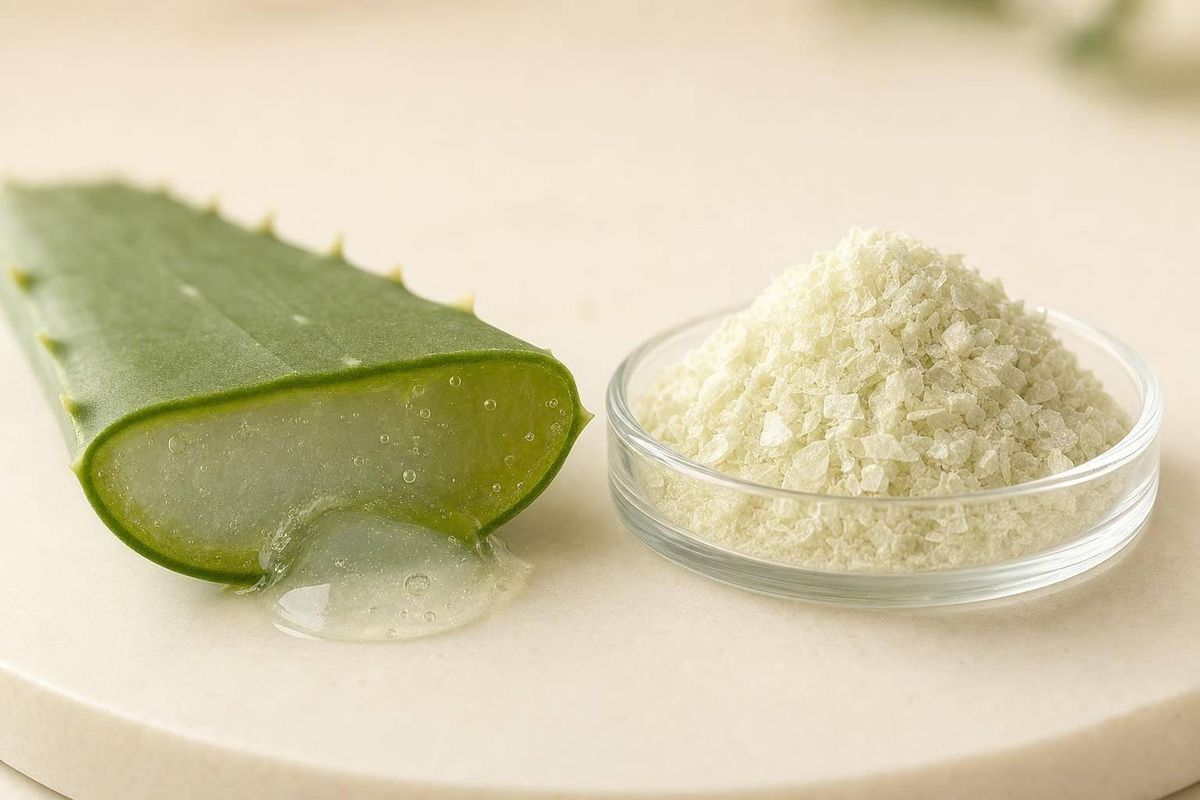
If you want aloe with more intact acemannan, the drying method matters more than the label. Based on the studies reviewed, raw inner-leaf gel starts with the closest form of acemannan, but it can begin to break down within 24 to 48 hours after harvest. Among dried forms, freeze-dried aloe powder tends to hold acemannan structure better than spray-dried powder because it uses low heat.
Here’s the short version:
- Raw inner-leaf gel: starts closest to aloe’s native state, but spoils fast and is hard to store
- Freeze-dried powder: the best dried option for keeping acemannan more intact
- Spray-dried powder: stores well, but heat can strip acetyl groups and lower activity
- Acemannan supplements: easy to use, but only worth much if a lab report shows acemannan per serving, acetylation, and molecular weight
Acemannan is the main compound people look for in aloe. But how much is there is only part of the story. Its structure also matters - especially acetylation and molecular weight. The article compares all four forms using the same four checks:
- Acemannan retention
- Structural integrity
- Storage stability
- Wellness relevance
Quick Comparison
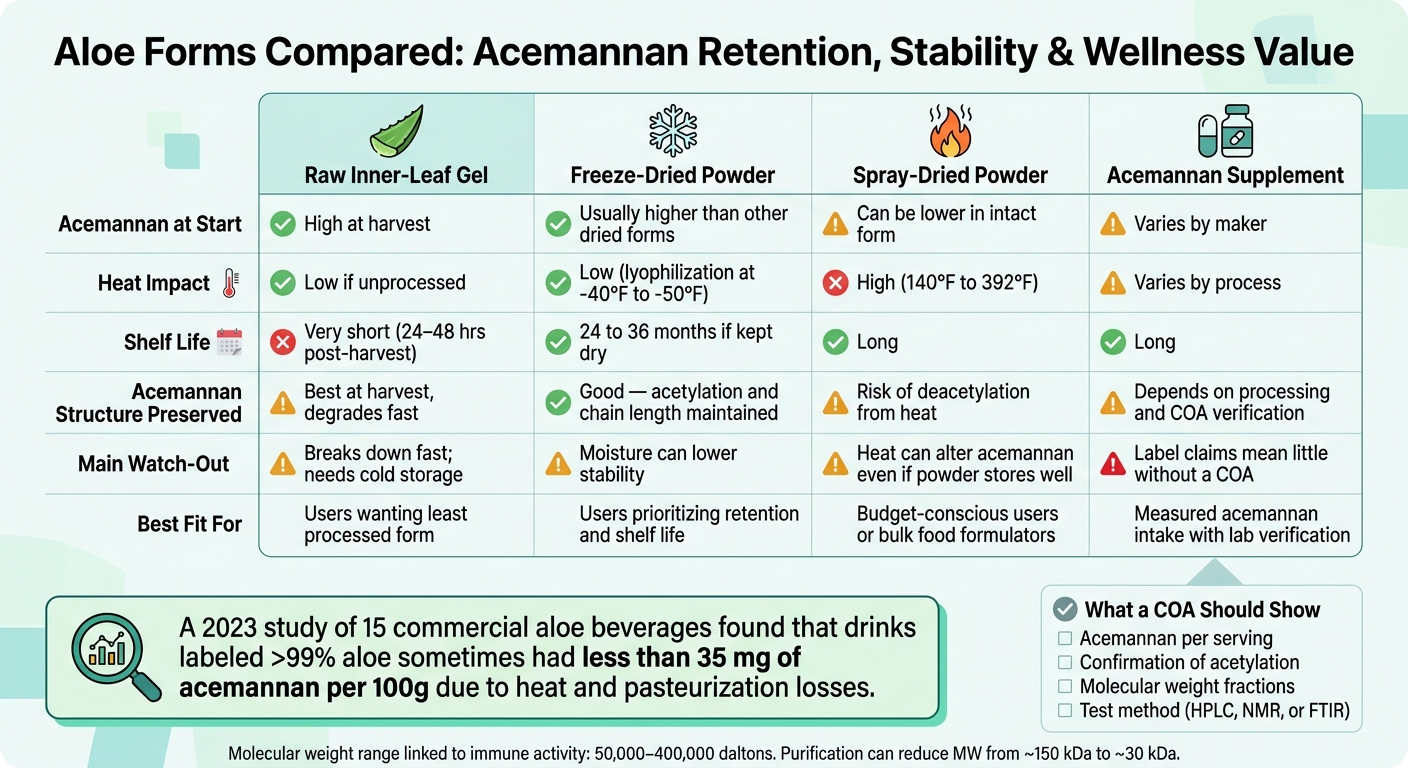
Aloe Forms Compared: Acemannan Retention, Stability & Wellness Value
| Form | Acemannan at Start | Heat Impact | Shelf Life | Main Watch-Out |
|---|---|---|---|---|
| Raw inner-leaf gel | High at harvest | Low if unprocessed | Very short | Breaks down fast; needs cold storage |
| Freeze-dried powder | Usually higher than other dried forms | Low | 24 to 36 months if kept dry | Moisture can lower stability |
| Spray-dried powder | Can be lower in intact form | High | Long | Heat can change acemannan even if powder stores well |
| Acemannan supplement | Varies by maker | Varies by process | Long | Label claims mean little without a COA |
One study cited in the article found that some commercial aloe drinks labeled “>99% aloe” still had less than 35 mg of acemannan per 100 g after processing losses. So if I were comparing products, I’d look past “aloe” on the front label and check for lab-tested acemannan data and choose a quality acemannan supplement carefully.
sbb-itb-b88dd21
1. Raw aloe inner leaf gel
Raw aloe inner leaf gel is the freshest form of aloe, and it gives you the clearest baseline for acemannan before processing changes the picture. Fresh aloe gel is about 97% to 99% water. Of the small amount left, polysaccharides make up most of the solids, and acemannan accounts for more than half of that solid portion (what is acemannan?). In plain English, the gel is mostly water, but the small solid fraction carries most of the polysaccharides.
Acemannan Retention
At harvest, raw gel contains acemannan in its long-chain, acetylated form. Fresh liquid gel has a molecular weight of about 145 kDa. But that window doesn’t stay open for long. Once the leaf is cut, enzymes start breaking those chains down, and the gel begins to lose viscosity.
Structural Integrity: Acetylation and Molecular Weight
Acemannan’s activity depends a lot on two things: its degree of acetylation and its molecular weight. Both are sensitive to processing. In gel that has gone through very little processing, those traits stay closest to the plant’s native state. Add heat, and things can shift. Pasteurization, for example, can cause deacetylation.
That matters because these chemical changes don’t just alter the compound on paper. They also affect how the raw gel behaves over time in storage.
Storage Stability
Raw gel spoils fast. Freezing does a better job of preserving it than room-temperature storage. By contrast, shelf-stable storage often calls for pasteurization or stabilizers, and both can cut into acemannan levels.
So this is where the trade-off shows up: raw gel gives you the closest form to fresh aloe in the plant, but it’s also the least stable. That tension is what separates raw gel from the other aloe forms.
Wellness Relevance
Inner leaf gel has long been used for topical soothing. Current research suggests its polysaccharides may also relate to immune signaling and gut barrier function. Based on that, the strongest wellness case points to fresh inner leaf gel with as little heat exposure as possible. Freshness is the main edge raw gel has, while the way it’s preserved becomes the next big variable.
2. Freeze-dried aloe gel powder
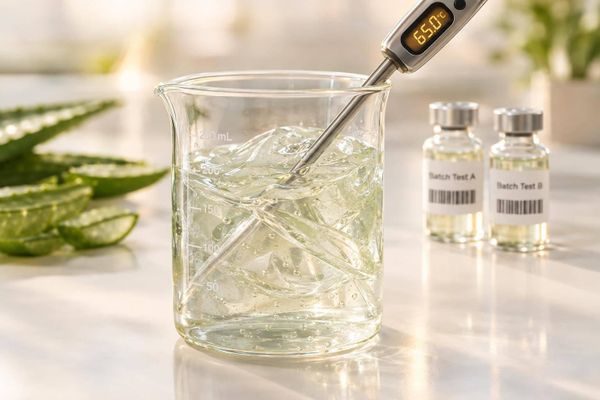
Freeze-drying fixes raw aloe’s biggest problem: it starts to break down soon after harvest. With lyophilization, aloe gel is dried at low heat, which helps protect acemannan after harvest. The process removes most of the water without high heat, so it preserves polysaccharides better than heat-based drying.
Acemannan Retention
Low temperatures help keep acemannan closer to its native form. But there’s a catch: enzymes need to be inactivated before drying. If that step is missed, degradation keeps going even during processing.
Structural Integrity: Acetylation and Molecular Weight
Keeping acemannan intact isn’t just about having it there on paper. Its structure matters too.
Freeze-drying does a good job of preserving acetylation, but molecular weight can still shift after processing. For example, purification and fractionation can lower molecular weight from about 150 kDa in crude extracts to around 30 kDa in purified fractions. Research connects immune activity to molecular weights between 50,000 and 400,000 daltons. So biological activity depends on two things: how much acemannan is present and which molecular fractions remain.
Storage Stability
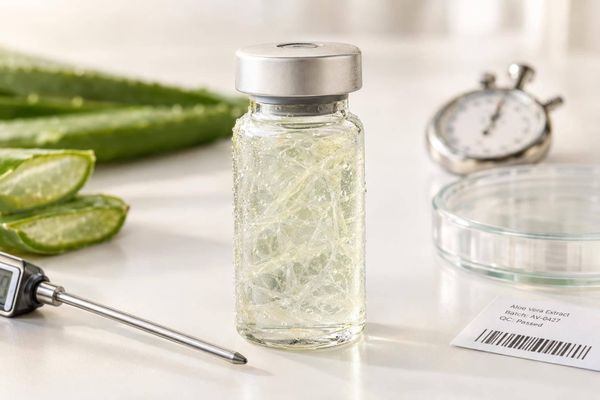
All of that structure means little if the powder doesn’t stay stable after drying. Once water is removed, the powder becomes shelf-stable and much easier to store than raw gel. Still, it needs to stay sealed and dry. If moisture gets in, stability starts to slip.
Wellness Relevance
This is why freeze-dried powder is the most practical dried option for wellness products. Freeze-dried inner-leaf gel powder works well for capsules and other wellness formats. When it’s stabilized well and processed at low heat, it can retain the acetylated acemannan structure that studies link to immune signaling and prebiotic activity.
If you’re checking product quality, don’t stop at total acemannan. Ask for a COA that shows molecular weight fractions too.
3. Spray-dried aloe powder
Spray-drying is a low-cost, high-volume way to make aloe powder. It’s also faster and cheaper than freeze-drying. The trade-off is simple: it uses more heat, and that heat can weaken acemannan.
Acemannan Retention
That’s the main downside. Spray-drying can reach 140°F to 392°F, and at those temperatures acemannan can become deacetylated, which may reduce its activity.
Structural Integrity: Acetylation and Molecular Weight
Some studies report a molecular weight of about 150 kDa for spray-dried powder, which is close to liquid extracts at about 145 kDa. But that number doesn’t tell the whole story.
Here’s why: molecular weight can look similar while the polysaccharide itself has still changed. If acetyl groups are removed, the structure of acemannan can be altered, and its bioactivity may drop even if the molecular weight stays in the same range.
Storage Stability
Spray-dried powder stores well. But storage doesn’t reverse what happened during drying. If acetyl groups were lost from heat, they don’t come back later in the jar.
Wellness Relevance
That’s why the wellness value depends on what makes it through the dryer intact, not just on the fact that it became a powder. For wellness use, the main question isn’t only whether the product is powdered aloe. It’s how much intact, acetylated acemannan is still there after processing.
4. Acemannan Supplement
A supplement takes aloe a step further. It turns acemannan into a product with a set serving size and a longer shelf life. In plain English, an acemannan supplement gives you standardized, concentrated acemannan in a format that's easy to store and use.
But the format alone doesn't tell you much.
What matters is whether the finished product still contains intact, measurable acemannan. Processing can change that. Heat and enzymatic steps can reduce acetylation and activity. Purification can shift molecular weight fractions too, moving from about 150 kDa in crude extracts down to roughly 30 kDa in purified fractions. That's why reported molecular weight isn't just a technical side note. It helps show what kind of acemannan is still there.
Storage Stability
The main upside here is consistency. Supplements usually give you a more controlled serving size and less batch-to-batch variation. They also tend to be shelf-stable, which makes them easier to keep on hand than less processed aloe formats.
Wellness Relevance
While supplements provide a concentrated source, you can also incorporate foods that boost acemannan’s gut benefits into your diet to support overall digestive health.
For wellness use, label claims only go so far. A bottle can say a lot, but the key question is simple: How much verified acemannan is in each serving?
The clearest products report that amount using methods such as HPLC, NMR, or FTIR. When a supplement shows verified acemannan per serving, it gives you a better basis for comparing one product with another.
So the next checks are pretty practical: how the product was processed, and whether lab testing backs up what's on the label.
Processing, Storage, and Study Findings
Once aloe is processed, the big issue is simple: what still holds up. Looking at aloe by product type alone can miss the point. These four factors - acemannan retention, structural integrity, storage stability, and wellness relevance - make it easier to compare all four forms side by side.
Acemannan Retention After Processing
Freeze-drying keeps more acemannan in place than spray-drying because it skips high heat and limits enzyme damage. During lyophilization, temperatures stay between -40°F and -50°F under vacuum, and that process can preserve up to 98% of bioactive ingredients.
Spray-drying is a different case. Heat can damage complex sugar chains and reduce acemannan integrity. And that loss shows up in finished products. A 2023 study of 15 commercial aloe beverages found that even drinks labeled as ">99% aloe" sometimes had less than 35 mg of acemannan per 100 g because of heat and pasteurization losses.
But retention numbers don't tell the whole story. Structure matters too.
Structural Integrity: Acetylation and Molecular Weight
Acemannan is an acetylated mannan. If processing removes those acetyl groups through heat or enzyme activity, the compound changes. And when acemannan loses acetyl groups, that shift is linked to lower activity. That's a real problem in spray-dried and heavily processed forms.
Molecular weight matters just as much. Research suggests that the fractions tied to immune-related activity tend to fall between 50,000 and 400,000 daltons. Industrial purification and processing can drive molecular weight down from about 150 kDa in crude extracts to as low as 30 kDa in purified fractions.
Freeze-dried powder tends to do a better job of keeping both acetylation and chain length intact than spray-dried options.
That gap helps explain why storage and shelf life come next.
Storage Stability: Refrigerated Gel vs Shelf-Stable Powders
Raw gel is the most fragile form. It needs refrigeration or freezing and still breaks down fast after harvest.
Freeze-dried powders are much easier to store. When moisture stays below 5%, they can remain shelf-stable for 24 to 36 months. Spray-dried powders also store well on the shelf, but the trade-off is lower bioactivity after processing. Supplements can be shelf-stable too, though the result depends on whether manufacturing protected the acemannan before it was bottled.
So yes, shelf life matters. But shelf life by itself doesn't tell you whether the key compound stayed in good shape.
Wellness Relevance: What the Evidence Does and Does Not Support
Preclinical findings are useful, but they do not prove the same effects in people. What the chemistry does show is more narrow and more practical: intact, acetylated, higher-molecular-weight acemannan is more likely to match what researchers studied than a deacetylated, broken-down version of that same compound.
That's the standard worth using when comparing aloe forms.
Those trade-offs set up the pros and cons of each form.
Pros and Cons
Each aloe form comes with its own trade-off. Some stay closer to fresh inner-leaf gel. Others last longer on the shelf. And some are simply easier to use day to day. The main thing is this: processing and storage can change how much usable acemannan you end up getting.
Use the table below to compare the four forms based on what tends to matter most - acemannan retention, stability, and practical use.
| Form | Main Pros | Main Cons | Best Fit | Key Caution |
|---|---|---|---|---|
| Raw Inner Leaf Gel | Closest to native acemannan, but unstable | Very high water content; highly unstable; short shelf life | Users wanting the least processed form | Must be carefully separated from the rind to avoid rind/latex contamination |
| Freeze-Dried Powder | Best acemannan retention and shelf life | Most expensive processing method; requires rehydration for some uses | Users prioritizing retention and shelf life | Confirm it is inner-leaf only to avoid rind/latex contamination |
| Spray-Dried Powder | Cost-effective; easy to blend into large-scale food products | Heat can weaken acemannan structure | Budget-conscious users or bulk food formulators | Often contains carriers or flow agents that dilute purity |
| Acemannan Supplement | Concentrated, portable, measurable dosage | Quality varies; some lack intact, acetylated acemannan | Measured acemannan intake | Only reliable if a COA confirms molecular weight and acetylation |
When it comes to supplements, the front label can sound good and still tell you very little. What matters more is verified acemannan data.
A COA should show:
- acemannan per serving
- confirmation of acetylation
- molecular weight
That’s the part worth checking if you want to know what you’re actually getting.
Conclusion
Raw aloe inner-leaf gel begins with the most intact acemannan. But it breaks down fast after harvest because it’s mostly water and highly unstable. Once aloe is dried, that gap gets smaller. Still, the drying method makes a big difference.
Freeze-dried powder tends to keep acemannan structure better than spray-dried powder because it uses less heat. Spray drying can change polysaccharides and reduce structure, which makes freeze-dried inner-leaf powder the more dependable dried form for keeping acemannan intact.
That puts labeling and lab verification front and center. If you’re judging a supplement, the processing method by itself isn’t enough. What counts is whether the product shows acemannan content per serving, acetylation status, and the test method used. Without that, a label doesn’t tell you much about what’s actually inside. If a product can’t verify acemannan content and structure, its wellness claim is weak.
In practical terms, the best pick is the form that both preserves acemannan and proves it on the label. The evidence points to one plain takeaway: low-damage processing, verified acemannan, and shelf stability matter more than freshness alone.
FAQs
How can I verify acemannan quality in a product?
Look past the marketing claims and look for proof.
A few signs can help:
- IASC certification
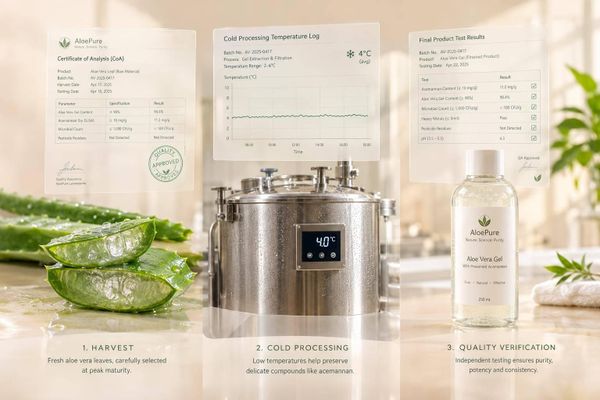
- A Certificate of Analysis (CoA) that shows acemannan content per serving
- The test method used, such as FTIR, NMR, or HPLC
It also helps to check how the product was made. Cold-pressed or low-heat processed aloe is often a good sign. And if inner-leaf aloe gel appears high on the ingredient list, that’s worth noting.
Some brands also share molecular weight distribution details. That kind of data can give you a clearer picture of what’s actually in the product.
Does higher acemannan always mean better aloe quality?
No. More acemannan doesn't automatically mean better quality.
What matters is molecular integrity and the degree of acetylation. Heat, oxidation, or extreme pH can break acemannan into smaller, less active fragments. Those same conditions can also strip away key acetyl groups.
So even if a product still shows measurable acemannan, it may have less functional biological activity for immune or cellular support.
What storage mistakes can damage acemannan?
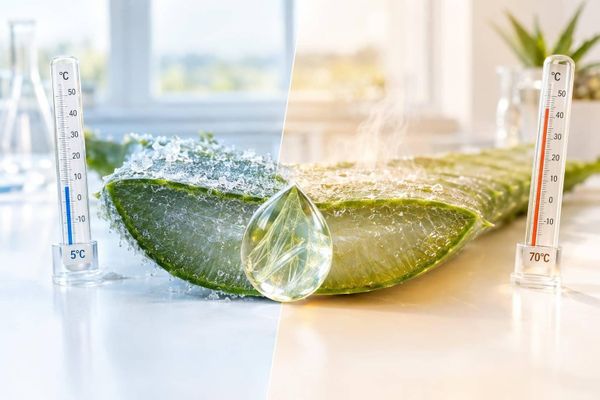
Acemannan is sensitive to heat, moisture, oxygen, pH extremes, and handling conditions. High heat - especially above 40°C to 60°C (104°F to 140°F) - can lead to degradation, polysaccharide breakdown, and loss of enzymatic activity.
Bulk storage before final packaging can also weaken its functional integrity if conditions aren’t controlled well. To help maintain potency, avoid thermal stress and storage setups that expose it to these degrading factors.